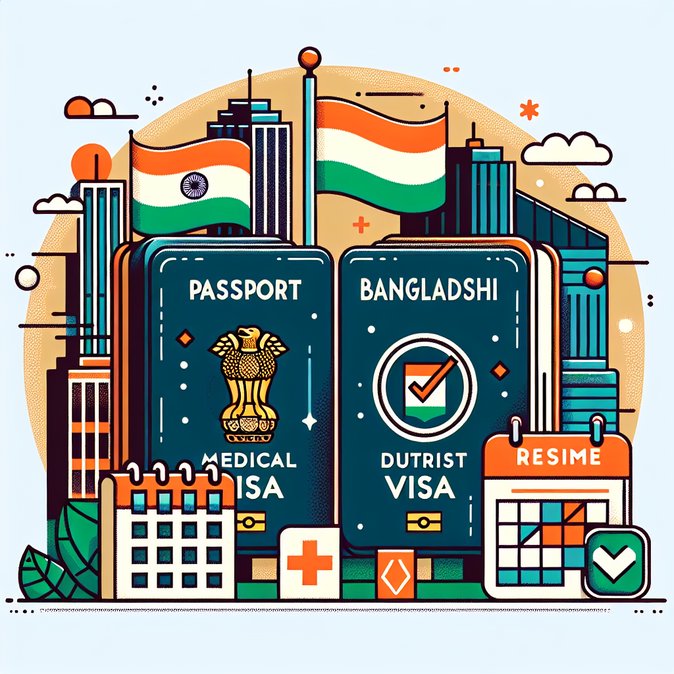
India’s decade-long standing as the largest source of foreign visitors to Bangladesh has been under strain for almost 18 months, ever since repeated street protests forced New Delhi to curtail operations at its mission and outsource centres. On 2 March the logjam began to ease: Bangladesh’s Home Minister Salahuddin Ahmed told reporters that visiting Indian High Commissioner Pranay Verma had “categorically assured a phased return to full-scale visa operations.” What changes first? According to Dhaka officials, India will reopen appointment slots for business, medical-attendant and diplomatic categories by mid-March, followed by family-reunion and conference visas in April.
Tourist visas—suspended since late-2024 after vandalism at the Chittagong centre—will remain on hold until security upgrades, including CCTV and access-control gates, are completed.
![India to Gradually Restore Full Visa Services in Bangladesh, High Commissioner Tells Dhaka]()
For Bangladeshi travelers looking to seize the re-opened appointment windows, VisaHQ’s online platform (https://www.visahq.com/india/) can streamline the process. The service pre-screens documents, grabs newly released slots in real time, and manages passport logistics—support that lets corporate travel planners and individual applicants sidestep bottlenecks while Indian visa operations scale back up.
For Bangladeshi corporates the news is significant: India is the gateway for much of their third-country travel, with 40 percent of business itineraries transiting Delhi or Kolkata. A smoother visa pipeline will cut lead-times for board meetings, supplier audits and after-sales servicing trips at Indian plants. Logistics firms also expect faster crew-change rotations at Petrapole and Benapole land ports once multiple-entry visas become available again. Indian employers with factories in Bangladeshi export processing zones, meanwhile, should plan for higher outbound mobility. HR teams are being advised to *budget extra processing days during the ramp-up period* and to keep digital copies of invitation letters ready for upload as the Visa Facilitation Centre’s revamped portal goes live.
Longer-term, Delhi’s willingness to restore a 500,000-visa annual ceiling is viewed in Dhaka as a signal that bilateral relations are back on a cooperative footing after January’s contentious elections. For global mobility managers the take-away is clear: start forecasting cross-border assignment volumes for H2 2026—India-Bangladesh corridors are reopening for business.
Tourist visas—suspended since late-2024 after vandalism at the Chittagong centre—will remain on hold until security upgrades, including CCTV and access-control gates, are completed.
For Bangladeshi travelers looking to seize the re-opened appointment windows, VisaHQ’s online platform (https://www.visahq.com/india/) can streamline the process. The service pre-screens documents, grabs newly released slots in real time, and manages passport logistics—support that lets corporate travel planners and individual applicants sidestep bottlenecks while Indian visa operations scale back up.
For Bangladeshi corporates the news is significant: India is the gateway for much of their third-country travel, with 40 percent of business itineraries transiting Delhi or Kolkata. A smoother visa pipeline will cut lead-times for board meetings, supplier audits and after-sales servicing trips at Indian plants. Logistics firms also expect faster crew-change rotations at Petrapole and Benapole land ports once multiple-entry visas become available again. Indian employers with factories in Bangladeshi export processing zones, meanwhile, should plan for higher outbound mobility. HR teams are being advised to *budget extra processing days during the ramp-up period* and to keep digital copies of invitation letters ready for upload as the Visa Facilitation Centre’s revamped portal goes live.
Longer-term, Delhi’s willingness to restore a 500,000-visa annual ceiling is viewed in Dhaka as a signal that bilateral relations are back on a cooperative footing after January’s contentious elections. For global mobility managers the take-away is clear: start forecasting cross-border assignment volumes for H2 2026—India-Bangladesh corridors are reopening for business.