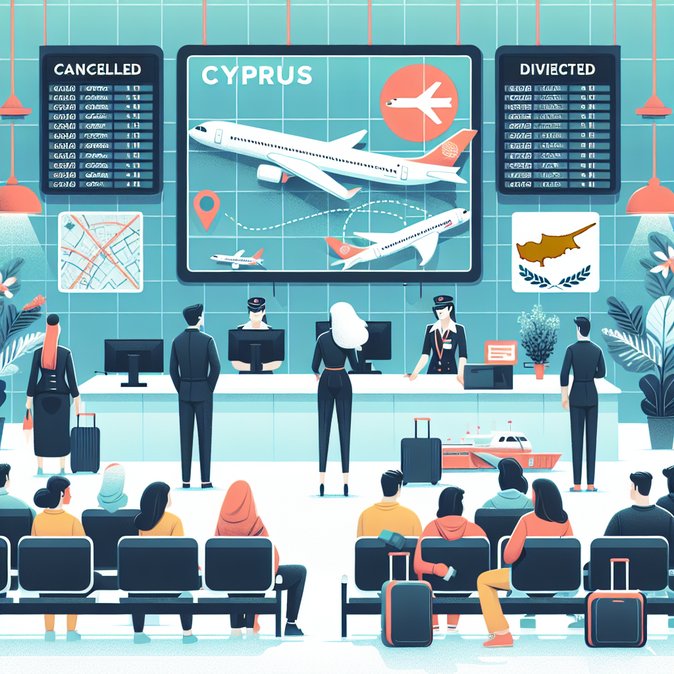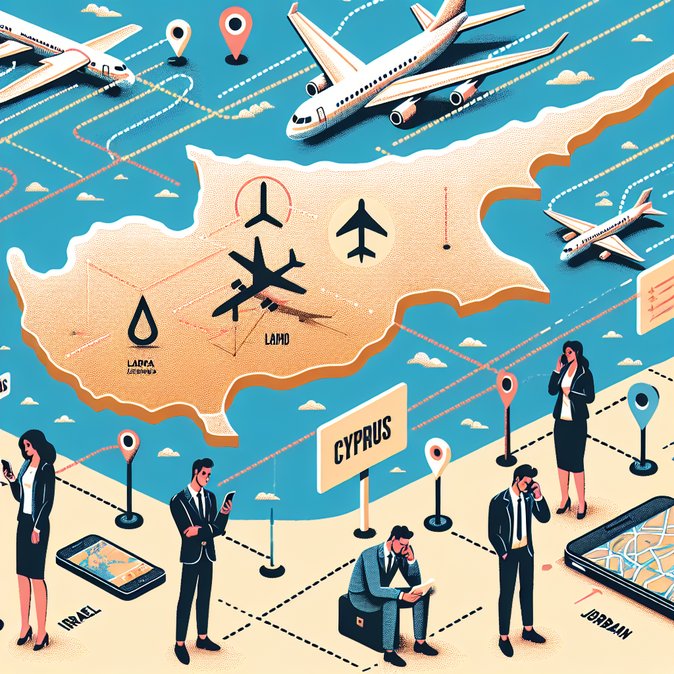
Cyprus’ two international gateways lost nearly a fifth of their Sunday schedule on 1 March 2026 after airlines axed 48 services in response to cascading air-space closures across Israel, Jordan, Iraq and the Gulf. Hermes Airports confirmed that 36 cancellations hit Larnaca International Airport and 12 affected Paphos, mostly on routes linking the island with Tel Aviv, Amman, Beirut and Doha. European leisure flights operated largely as normal, but passengers were urged to check status alerts before travelling.
![Forty-Eight Flights Cancelled at Larnaca and Paphos as Middle-East Airspace Shuts Down]()
In such fast-moving situations, VisaHQ can be a lifeline for both individual travellers and corporate mobility teams. The service helps secure urgent transit or destination visas when itineraries suddenly reroute through hubs like Athens, Istanbul, Paris or Cairo, and its real-time database keeps track of evolving entry requirements for more than 200 countries. Companies with staff based in or moving through Cyprus can tap the dedicated portal at https://www.visahq.com/cyprus/ to streamline documentation, monitor applications and reduce further disruption to their operations.
The wipe-out followed overnight US-Israeli strikes on Iranian targets, which spurred several Middle-East states to close their flight-information regions (FIRs). Airlines that overfly the Eastern Mediterranean had little choice but to trim schedules or undertake costly detours via Greek and Turkish airspace. Cyprus itself kept its FIR open, but planners faced a logistical jigsaw: airport stands filled with aircraft waiting out crew-duty limits, while ground-handlers scrambled to re-route baggage and reposition crews. For multinational companies that use Cyprus as a mini-hub for Levant and Gulf operations, the disruption triggered emergency protocols. Oil-services firms with technicians rotating between Limassol and Basra scrambled to rebook staff via Athens or Istanbul, adding 6–10 hours to journey times. Telco engineers bound for Beirut re-routed through Paris and Cairo, incurring extra hotel nights and visa costs. HR teams fielded a wave of travel-risk queries from secondees and short-term assignees. Hermes Airports said it was working with carriers to prioritise critical cargo—pharmaceutical cold-chain shipments and just-in-time automotive parts—on the limited departures still operating. Insurers reminded companies that EU Regulation 261 compensation does not apply when cancellations stem from extraordinary circumstances such as war-related air-space closures, though duty-of-care obligations remain. Analysts warn that if the regional conflict drags on, Cyprus could face a dual-hit: lost connectivity to high-yield Gulf markets and reputational damage just as the summer tourist-booking window opens. The episode underscores the need for diversified routing options and robust traveller-tracking tools for organisations with people or supply chains touching the Eastern Mediterranean.

In such fast-moving situations, VisaHQ can be a lifeline for both individual travellers and corporate mobility teams. The service helps secure urgent transit or destination visas when itineraries suddenly reroute through hubs like Athens, Istanbul, Paris or Cairo, and its real-time database keeps track of evolving entry requirements for more than 200 countries. Companies with staff based in or moving through Cyprus can tap the dedicated portal at https://www.visahq.com/cyprus/ to streamline documentation, monitor applications and reduce further disruption to their operations.
The wipe-out followed overnight US-Israeli strikes on Iranian targets, which spurred several Middle-East states to close their flight-information regions (FIRs). Airlines that overfly the Eastern Mediterranean had little choice but to trim schedules or undertake costly detours via Greek and Turkish airspace. Cyprus itself kept its FIR open, but planners faced a logistical jigsaw: airport stands filled with aircraft waiting out crew-duty limits, while ground-handlers scrambled to re-route baggage and reposition crews. For multinational companies that use Cyprus as a mini-hub for Levant and Gulf operations, the disruption triggered emergency protocols. Oil-services firms with technicians rotating between Limassol and Basra scrambled to rebook staff via Athens or Istanbul, adding 6–10 hours to journey times. Telco engineers bound for Beirut re-routed through Paris and Cairo, incurring extra hotel nights and visa costs. HR teams fielded a wave of travel-risk queries from secondees and short-term assignees. Hermes Airports said it was working with carriers to prioritise critical cargo—pharmaceutical cold-chain shipments and just-in-time automotive parts—on the limited departures still operating. Insurers reminded companies that EU Regulation 261 compensation does not apply when cancellations stem from extraordinary circumstances such as war-related air-space closures, though duty-of-care obligations remain. Analysts warn that if the regional conflict drags on, Cyprus could face a dual-hit: lost connectivity to high-yield Gulf markets and reputational damage just as the summer tourist-booking window opens. The episode underscores the need for diversified routing options and robust traveller-tracking tools for organisations with people or supply chains touching the Eastern Mediterranean.
More From Cyprus
View all
Cyprus National Security Council Convenes, Pledges ‘Steady Pillar of Stability’ Amid Mobility Turmoil

Lufthansa Suspends All Middle-East Routes, Cutting Cyprus-Gulf Connectivity Until at Least 8 March