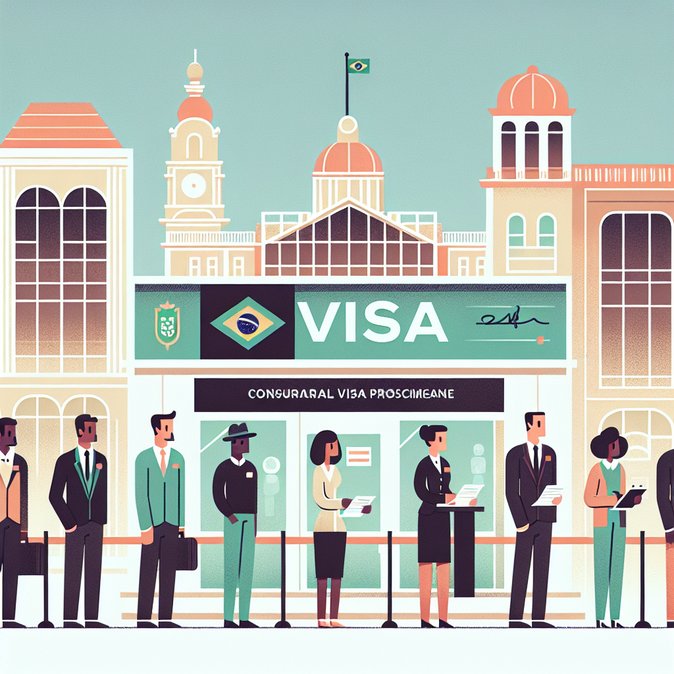
Brazilian and European travellers woke up to genuinely border-changing news on 1 March 2026: the amended short-stay visa-waiver agreement between the European Union and Brazil is now fully in force. Published in the EU’s Official Journal after both sides exchanged ratification notes, the accord legally cements the right of ordinary-passport holders to spend up to 90 days in any 180-day period in the other party’s territory without a visa.
Why it matters. Until now, Brazilian tourists and business people relied on a patchwork of bilateral understandings and consular practice to justify Schengen visits. The new treaty gives them a single, treaty-level guarantee, something in-house mobility teams and travel managers have lobbied for since negotiations began in 2018. The agreement equally safeguards EU citizens’ long-standing visa-free access to Brazil, a reassurance for European corporates with Latin-American operations.
Practical implications. The 90-in-180 rule will now be enforced uniformly at all external Schengen borders. Brazilian frequent flyers who split their time between São Paulo and European headquarters must track cumulative days more carefully; overstays can trigger entry bans of up to five years. Travel-tech providers have responded by adding automated Brazilian-Portuguese interfaces to Schengen-day calculators. For EU-based companies, the confirmation removes the need to budget for Brazilian entry visas when sending staff to Rio de Janeiro or Manaus on short projects.
![EU-Brazil visa waiver enters into force, confirming 90-day Schengen limit for Brazilians]()
Need guidance on the finer points of the new waiver or future requirements like ETIAS? VisaHQ’s Brazil hub (https://www.visahq.com/brazil/) lets travellers verify eligibility, monitor remaining Schengen days, and obtain any additional permits in one streamlined place, with experts on hand to flag when a full work visa might be the safer option.
Looking ahead. ETIAS—Europe’s electronic travel authorisation—remains on track for 2026, meaning Brazilians will still have to complete a low-cost online pre-screening before boarding flights to the bloc. In Brazil, officials say the accord’s entry into force bolsters their argument that reciprocity, not unilateral liberalisation, is the fastest route to true mobility for citizens.
Case study. Portuguese energy group EDP, which rotates engineers between Lisbon and its hydro plants in Paraná, told local media that it can now schedule one-month rotations every quarter without fear that staff will be refused entry for breaching day limits. That flexibility, managers say, cuts project costs by about 8 percent a year.
Why it matters. Until now, Brazilian tourists and business people relied on a patchwork of bilateral understandings and consular practice to justify Schengen visits. The new treaty gives them a single, treaty-level guarantee, something in-house mobility teams and travel managers have lobbied for since negotiations began in 2018. The agreement equally safeguards EU citizens’ long-standing visa-free access to Brazil, a reassurance for European corporates with Latin-American operations.
Practical implications. The 90-in-180 rule will now be enforced uniformly at all external Schengen borders. Brazilian frequent flyers who split their time between São Paulo and European headquarters must track cumulative days more carefully; overstays can trigger entry bans of up to five years. Travel-tech providers have responded by adding automated Brazilian-Portuguese interfaces to Schengen-day calculators. For EU-based companies, the confirmation removes the need to budget for Brazilian entry visas when sending staff to Rio de Janeiro or Manaus on short projects.

Need guidance on the finer points of the new waiver or future requirements like ETIAS? VisaHQ’s Brazil hub (https://www.visahq.com/brazil/) lets travellers verify eligibility, monitor remaining Schengen days, and obtain any additional permits in one streamlined place, with experts on hand to flag when a full work visa might be the safer option.
Looking ahead. ETIAS—Europe’s electronic travel authorisation—remains on track for 2026, meaning Brazilians will still have to complete a low-cost online pre-screening before boarding flights to the bloc. In Brazil, officials say the accord’s entry into force bolsters their argument that reciprocity, not unilateral liberalisation, is the fastest route to true mobility for citizens.
Case study. Portuguese energy group EDP, which rotates engineers between Lisbon and its hydro plants in Paraná, told local media that it can now schedule one-month rotations every quarter without fear that staff will be refused entry for breaching day limits. That flexibility, managers say, cuts project costs by about 8 percent a year.