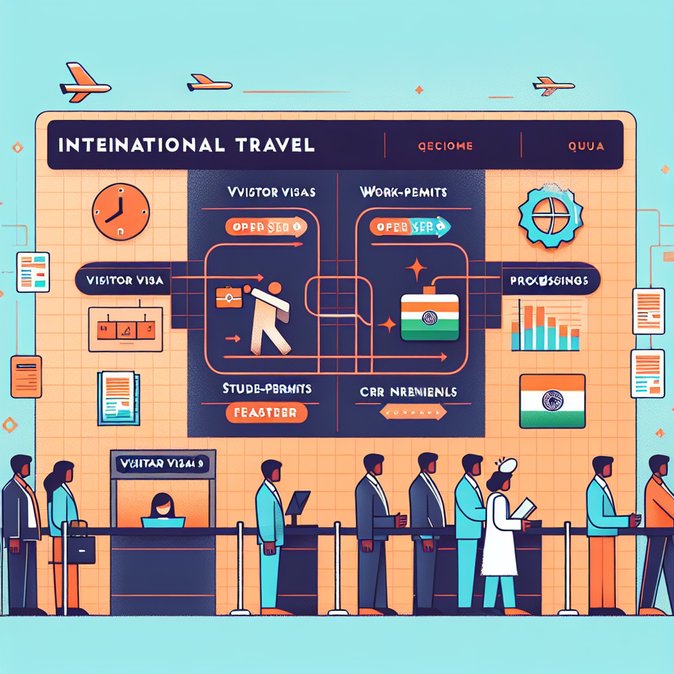
Immigration, Refugees and Citizenship Canada (IRCC) released its February dashboard just as Prime Minister Mark Carney landed in Mumbai, revealing that the processing time for Indian visitor-visa applicants has fallen from 78 to 71 days. Work-permit decisions remain steady at eight weeks, while study-permit turnaround stays at four weeks. The modest improvement comes after two years of chronic backlogs that frustrated India-based mobility managers moving staff for short client visits.
![Canada trims visitor-visa wait for Indians to 71 days, keeps work permits at eight weeks]()
To make navigating these fluctuating Canadian processing times easier, VisaHQ’s India portal (https://www.visahq.com/india/) provides real-time application tracking, document-checklist tools and concierge support for visitor, study and work visas, helping employers and individual travelers sidestep delays and avoid costly rework.
Although 71 days is still far above the pre-pandemic norm of 15 days, employers say the trend is encouraging and could help salvage early-summer travel plans for sales teams and tech-consulting benches. IRCC’s data also show super-visa processing for parents and grandparents now averages 210 days, three days quicker than January, while permanent-residence renewals sit at 29 days. The Federal Skilled Worker queue remains at seven months, but the Canadian Experience Class jumped to seven months, hinting at renewed demand among Indian STEM talent already in Canada. Visa lawyers note that a major driver of the improved visitor-visa metric is IRCC’s redeployment of 200 adjudicators to New Delhi and Chandigarh, plus AI-assisted triaging of low-risk applications. The agency is under political pressure to demonstrate progress ahead of negotiations on a possible labour-mobility annex to the India-Canada CEPA. Action points for employers: build the new 71-day benchmark into project lead times, continue to file complete client-invitation letters to avoid secondary screening, and monitor super-visa tweaks if planning extended family visits for senior executives relocated to Canada.

To make navigating these fluctuating Canadian processing times easier, VisaHQ’s India portal (https://www.visahq.com/india/) provides real-time application tracking, document-checklist tools and concierge support for visitor, study and work visas, helping employers and individual travelers sidestep delays and avoid costly rework.
Although 71 days is still far above the pre-pandemic norm of 15 days, employers say the trend is encouraging and could help salvage early-summer travel plans for sales teams and tech-consulting benches. IRCC’s data also show super-visa processing for parents and grandparents now averages 210 days, three days quicker than January, while permanent-residence renewals sit at 29 days. The Federal Skilled Worker queue remains at seven months, but the Canadian Experience Class jumped to seven months, hinting at renewed demand among Indian STEM talent already in Canada. Visa lawyers note that a major driver of the improved visitor-visa metric is IRCC’s redeployment of 200 adjudicators to New Delhi and Chandigarh, plus AI-assisted triaging of low-risk applications. The agency is under political pressure to demonstrate progress ahead of negotiations on a possible labour-mobility annex to the India-Canada CEPA. Action points for employers: build the new 71-day benchmark into project lead times, continue to file complete client-invitation letters to avoid secondary screening, and monitor super-visa tweaks if planning extended family visits for senior executives relocated to Canada.