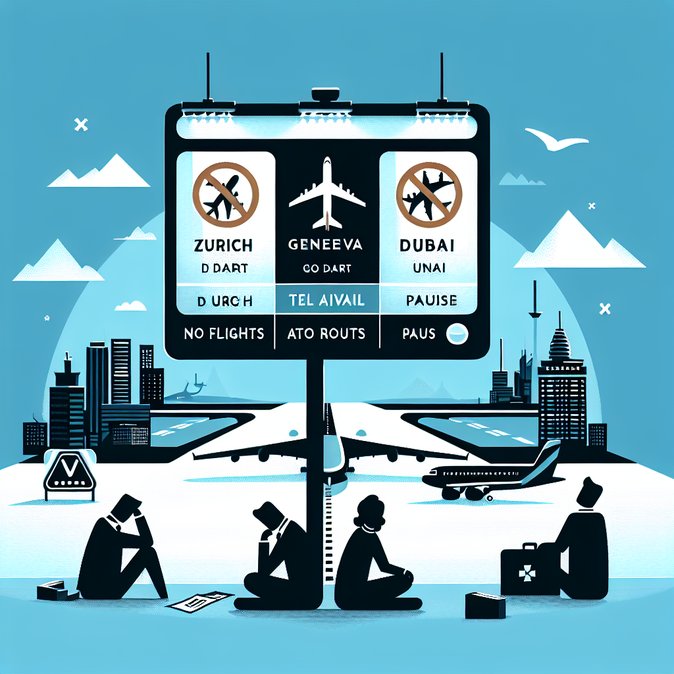
Swiss International Air Lines deepened its response to the regional security crisis on 28 February by suspending all passenger flights between Switzerland and both Tel Aviv and Dubai. In a statement issued that morning the carrier said safety of passengers and crews left it no alternative after Israeli and Gulf authorities declared states of emergency and restricted their skies. The decision immediately removed 14 rotations on the lucrative Zurich–Tel Aviv route and grounded multiple daily Dubai services out of Zurich and Geneva. The fallout is significant for Swiss business mobility. Tel Aviv is a vital corridor for the country’s pharma and tech sectors, while Dubai functions as a key link to Asian, African and Australasian markets. Multinationals that route staff through the Emirates’ mega-hub now face lengthier detours via Doha, Istanbul or European gateways still operating east-bound flights. Freight flows are also hit: belly-hold cargo on SWISS wide-bodies regularly carries time-critical medical and luxury goods. Corporate travel managers are scrambling to rearrange itineraries. Lufthansa Group has authorised fee-free rebooking on alternative routings within seven days, but seat capacity is scarce as rival airlines also trim Middle-East operations. Travel-risk consultancies recommend that companies invoke emergency policies allowing premium-cabin purchase when security concerns dictate.
![SWISS Suspends Tel Aviv and Dubai Services Until 7 March Amid Security Fears]()
VisaHQ can ease some of that administrative headache: through its Switzerland-focused portal (https://www.visahq.com/switzerland/) the service accelerates transit and destination visas for travellers forced onto new routings, offers real-time guidance on entry rules that shift with security alerts, and provides corporate dashboards that keep staff movements compliant even as airlines scramble their schedules.
Employees already in Israel or the UAE have been told to monitor the Swiss foreign ministry’s Travel Admin app and keep documents handy for rapid departure. The suspension underscores a broader trend: airlines now adjust networks almost in real time to geopolitical flashpoints, and Switzerland’s reliance on foreign airspace makes it particularly exposed. In the post-pandemic era, involuntary itinerary changes have climbed sharply, prompting insurers to design new ‘geopolitical disruption’ add-ons that cover extra hotel nights and remote-work equipment. Legal experts add that EU261 compensation is unlikely here, but refunds and duty-of-care obligations remain. SWISS says it is “continuously evaluating” the situation in coordination with the Federal Office of Civil Aviation and hopes to resume flights from 8 March, subject to security assessments. Even then, crews may still circumnavigate certain FIRs, extending block times and shrinking network resilience well into spring. Customers are urged to leave contact details in their bookings and to reconfirm departure times no earlier than 24 hours before travel.

VisaHQ can ease some of that administrative headache: through its Switzerland-focused portal (https://www.visahq.com/switzerland/) the service accelerates transit and destination visas for travellers forced onto new routings, offers real-time guidance on entry rules that shift with security alerts, and provides corporate dashboards that keep staff movements compliant even as airlines scramble their schedules.
Employees already in Israel or the UAE have been told to monitor the Swiss foreign ministry’s Travel Admin app and keep documents handy for rapid departure. The suspension underscores a broader trend: airlines now adjust networks almost in real time to geopolitical flashpoints, and Switzerland’s reliance on foreign airspace makes it particularly exposed. In the post-pandemic era, involuntary itinerary changes have climbed sharply, prompting insurers to design new ‘geopolitical disruption’ add-ons that cover extra hotel nights and remote-work equipment. Legal experts add that EU261 compensation is unlikely here, but refunds and duty-of-care obligations remain. SWISS says it is “continuously evaluating” the situation in coordination with the Federal Office of Civil Aviation and hopes to resume flights from 8 March, subject to security assessments. Even then, crews may still circumnavigate certain FIRs, extending block times and shrinking network resilience well into spring. Customers are urged to leave contact details in their bookings and to reconfirm departure times no earlier than 24 hours before travel.