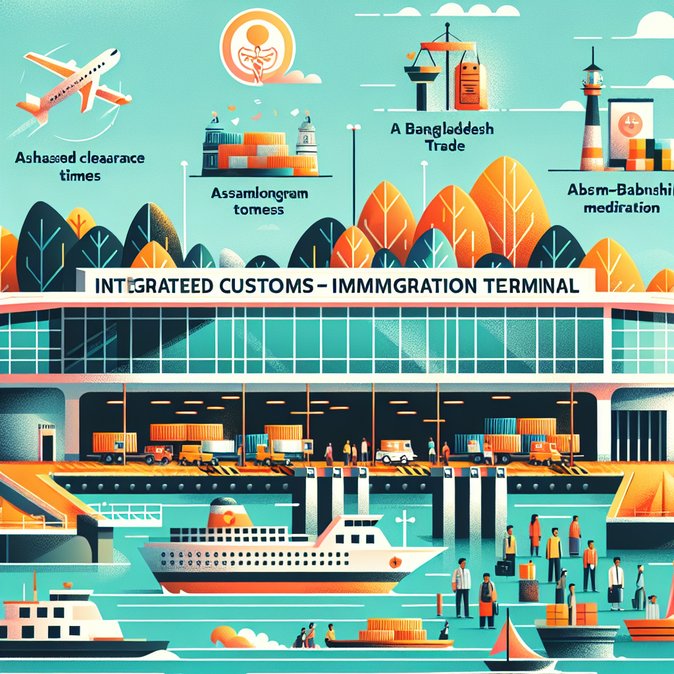
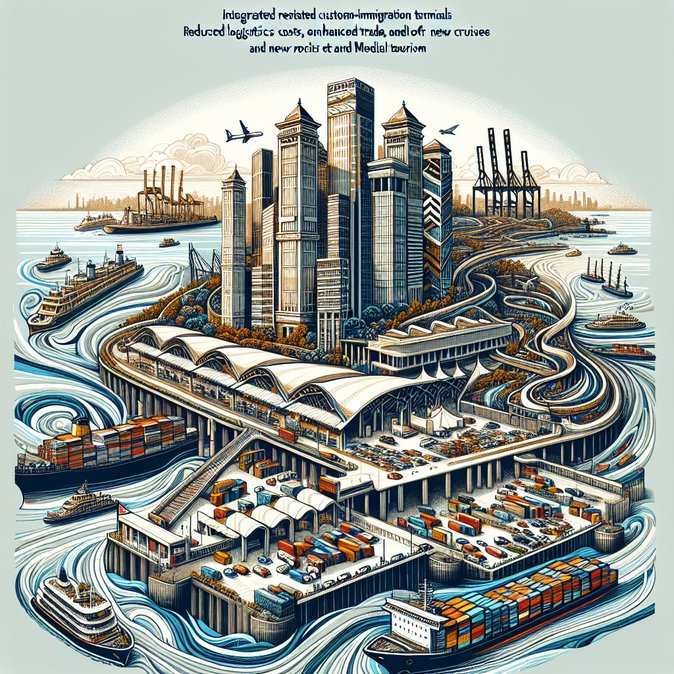
Union Minister Sarbananda Sonowal inaugurated state-of-the-art Customs and Immigration Complexes at Bogibeel (Dibrugarh) and Dhubri on 27 February 2026, marking a major milestone for National Waterway-2 on the Brahmaputra River. The twin facilities are India’s first inland ports to integrate cargo clearance, passenger immigration, and security screening under one roof—mirroring airport-style processes for river transport. Each complex houses dedicated counters for passport control, x-ray baggage scanners, bonded warehouses and cold-chain rooms for perishables. An electronic “single-window” system links the sites with the Central Board of Indirect Taxes & Customs and the Bureau of Immigration, allowing exporters to file manifests, pay duties, and obtain clearances online before the vessel arrives. Officials say average cargo dwell time will drop from 30 hours to under eight. Strategically, the hubs strengthen India’s multimodal corridor connecting the Northeast with Bhutan and Bangladesh. Passenger ferries plying between Dhubri and Chilmari (Bangladesh) will now clear immigration in minutes, opening possibilities for short-stay river cruises and medical-tourism shuttles to Guwahati.
![Assam Gets Modern Riverine Customs & Immigration Hubs to Boost Cross-Border Trade]()
Travellers eager to take advantage of these cross-border ferry routes can streamline their paperwork through VisaHQ. The company’s online portal (https://www.visahq.com/india/) lets passengers and exporters alike check visa requirements, upload documents, and track approvals for India, Bangladesh and other destinations, ensuring they are fully prepared to breeze through the new biometric gates at Bogibeel and Dhubri.
The Inland Waterways Authority expects annual cargo through the corridor to rise by 2 million tonnes, saving companies up to 25 per cent in logistics costs versus trucking over congested highways. Local industry groups welcomed the move, noting that tea exporters in Dibrugarh can now ship directly to Chittagong Port without trans-loading in Kolkata. Foreign investors eyeing Assam’s new mega-food park and proposed petrochemical complex also stand to benefit from faster import of capital equipment. The complexes employ facial-recognition gates and RFID vehicle tags, technologies the government plans to replicate at 20 other river ports under the ₹18,600-crore Northeast Waterways Programme. For residents, the project promises jobs and tourism dollars but also renews debate on balancing development with river ecology. Sonowal countered critics by highlighting solar-powered buildings and a silt-management plan designed with IIT-Guwahati. If successful, the sites could become a template for greener, borderless inland trade across South Asia.
Travellers eager to take advantage of these cross-border ferry routes can streamline their paperwork through VisaHQ. The company’s online portal (https://www.visahq.com/india/) lets passengers and exporters alike check visa requirements, upload documents, and track approvals for India, Bangladesh and other destinations, ensuring they are fully prepared to breeze through the new biometric gates at Bogibeel and Dhubri.
The Inland Waterways Authority expects annual cargo through the corridor to rise by 2 million tonnes, saving companies up to 25 per cent in logistics costs versus trucking over congested highways. Local industry groups welcomed the move, noting that tea exporters in Dibrugarh can now ship directly to Chittagong Port without trans-loading in Kolkata. Foreign investors eyeing Assam’s new mega-food park and proposed petrochemical complex also stand to benefit from faster import of capital equipment. The complexes employ facial-recognition gates and RFID vehicle tags, technologies the government plans to replicate at 20 other river ports under the ₹18,600-crore Northeast Waterways Programme. For residents, the project promises jobs and tourism dollars but also renews debate on balancing development with river ecology. Sonowal countered critics by highlighting solar-powered buildings and a silt-management plan designed with IIT-Guwahati. If successful, the sites could become a template for greener, borderless inland trade across South Asia.