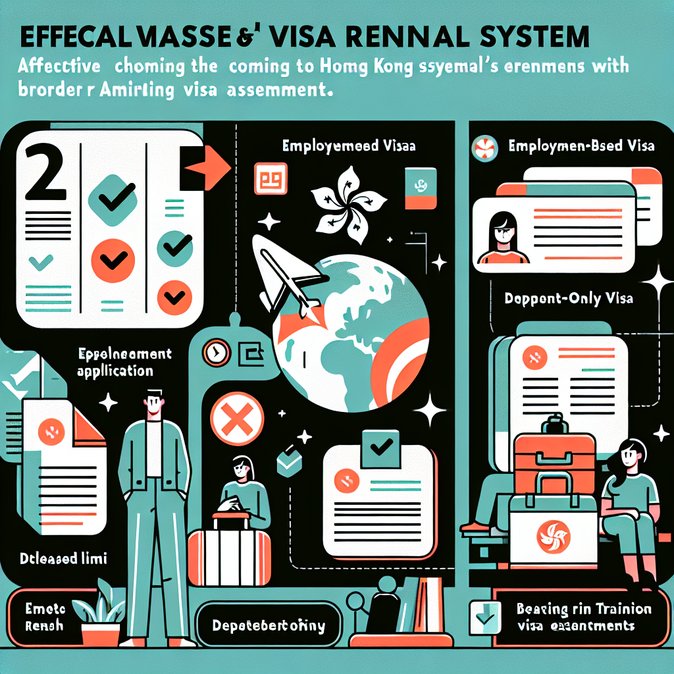
In a move long requested by multinational employers, the Hong Kong Immigration Department will, from 1 March 2026, let holders of the city’s main employment-based visas file their extension-of-stay applications up to **three months** before their current permission expires. The change, announced on **27 February 2026**, aligns the General Employment Policy (GEP), Admission Scheme for Mainland Talents & Professionals (ASMTP), Technology Talent Admission Scheme (TechTAS), Immigration Arrangements for Non-local Graduates (IANG), Quality Migrant Admission Scheme (QMAS) and the Admission Scheme for the Second Generation of Chinese Hong Kong Permanent Residents with the more flexible Top Talent Pass Scheme. For corporate mobility teams, the extra 60 days of preparation time is more than a convenience: it sharply reduces the risk that an assignee’s passport will be held for processing during a critical business trip, lowers the probability of inadvertent over-stay, and gives HR more breathing space to collect dependants’ documents. Legal advisers estimate the earlier window could cut last-minute filing surcharges by 40 % and eliminate many emergency courier costs.
![Hong Kong brings forward work-visa renewal window to 90 days]()
For organisations looking for hands-on support with these earlier renewals, VisaHQ offers end-to-end assistance—from document collection to appointment scheduling—through its dedicated Hong Kong portal. Their specialists can handle extensions under GEP, ASMTP, TechTAS and related schemes while keeping both employees and HR teams updated on every milestone. Discover more at https://www.visahq.com/hong-kong/
Employees and their families also benefit. Travellers who rely on Hong Kong’s multiple-entry visas often line up renewal trips with conferences or home leave; a longer renewal runway means they can complete biometrics and still keep long-booked flights. Dependants whose status is tied to the principal’s visa gain added certainty, easing school admissions and lease negotiations. Companies with large mainland-China linkage welcome the harmonisation. Under the previous one-month rule, project managers frequently had to stagger talent rotations to avoid renewal bottlenecks; now they can align Hong Kong extensions with People’s Republic of China work-permit renewals, reducing project downtime. Santa Fe Relocation, which processed almost 2,000 Hong Kong visa cases in 2025, is already adjusting its client dashboards to flag eligibility 95 days before expiry. Practically, employers should update internal calendars immediately, because the Immigration Department’s booking system is expected to fill quickly for early-March slots. While most extension criteria remain unchanged, standalone dependant and training-visa renewals are **not** covered by the new timeline, so compliance teams must continue to monitor those cases separately.

For organisations looking for hands-on support with these earlier renewals, VisaHQ offers end-to-end assistance—from document collection to appointment scheduling—through its dedicated Hong Kong portal. Their specialists can handle extensions under GEP, ASMTP, TechTAS and related schemes while keeping both employees and HR teams updated on every milestone. Discover more at https://www.visahq.com/hong-kong/
Employees and their families also benefit. Travellers who rely on Hong Kong’s multiple-entry visas often line up renewal trips with conferences or home leave; a longer renewal runway means they can complete biometrics and still keep long-booked flights. Dependants whose status is tied to the principal’s visa gain added certainty, easing school admissions and lease negotiations. Companies with large mainland-China linkage welcome the harmonisation. Under the previous one-month rule, project managers frequently had to stagger talent rotations to avoid renewal bottlenecks; now they can align Hong Kong extensions with People’s Republic of China work-permit renewals, reducing project downtime. Santa Fe Relocation, which processed almost 2,000 Hong Kong visa cases in 2025, is already adjusting its client dashboards to flag eligibility 95 days before expiry. Practically, employers should update internal calendars immediately, because the Immigration Department’s booking system is expected to fill quickly for early-March slots. While most extension criteria remain unchanged, standalone dependant and training-visa renewals are **not** covered by the new timeline, so compliance teams must continue to monitor those cases separately.