Hong Kong formally opened the Asia-Pacific Association for International Education (APAIE) 2026 Conference and Exhibition on 23 February with a high-profile reception at the Hong Kong Palace Museum. In a keynote speech, Secretary for Education Dr Christine Choi welcomed more than 2,500 delegates from 50 economies and unveiled a week-long “Study in Hong Kong Week” designed to reboot the city’s reputation as an international education hub after years of pandemic disruption and political uncertainty. Choi highlighted that one in four university students and almost 70 % of academic staff are now non-local, citing Hong Kong’s unique position under “one country, two systems” as a springboard into mainland China and the wider Asia-Pacific. She flagged new measures to widen primary- and secondary-level enrolment for expatriate children, and urged partner universities to use Hong Kong as a “super-connector” for research collaborations across ASEAN, the Belt-and-Road corridor and North America.
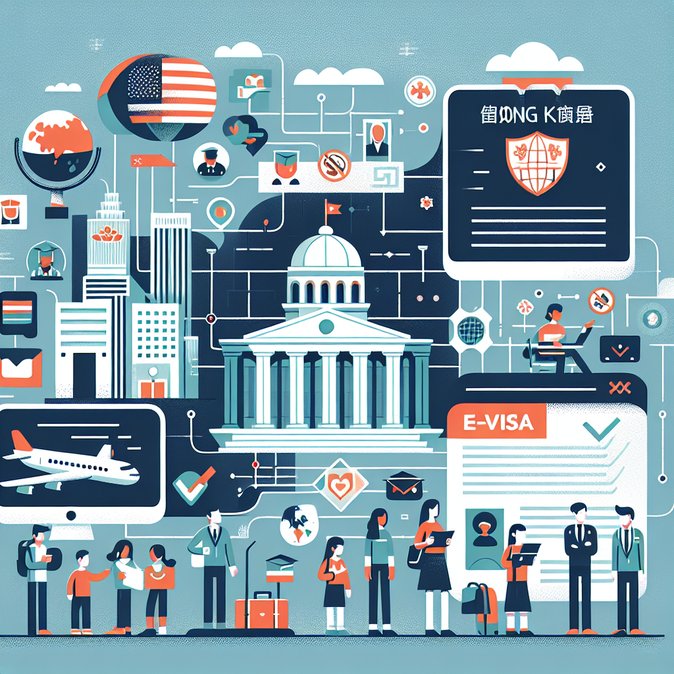
Universities and policy-makers used the opening day to announce scholarship top-ups, streamlined student-visa processing and expanded work-study quotas. The Immigration Department confirmed that e-application processing for all non-local student visas is now under 25 calendar days on average—down from 40 days last year—after the full roll-out of its Smart Immigration System kiosks. Sector insiders said the faster turnaround is critical as regional competitors such as Singapore and Seoul vie for the same talent pool.
![Hong Kong launches “Study in Hong Kong Week” as APAIE 2026 opens]()
For institutions, students and mobility managers who need expert assistance in navigating these updated requirements, VisaHQ offers a one-stop portal (https://www.visahq.com/hong-kong/) that consolidates current visa categories, processing times and document checklists. Their concierge and filing services integrate smoothly with Hong Kong’s Smart Immigration System, helping applicants avoid errors and keep relocation timelines on track.
For businesses, the return of APAIE signals that large-scale academic events – and the corporate travel that accompanies them – are back on Hong Kong’s calendar, boosting demand for hotels, convention services and short-term housing. Multinationals with graduate-rotation schemes were advised to factor in the new visa timelines when scheduling second-quarter 2026 intakes. Practically, mobility managers should note that the Education Bureau will publish a consolidated guide for non-local admissions in March, incorporating fresh rules on dependent visas for accompanying family members. Universities are already fielding enquiries from mainland and Southeast Asian families planning relocation ahead of the August 2026 semester; early lodging of visa requests is recommended to avoid the summer peak.
Universities and policy-makers used the opening day to announce scholarship top-ups, streamlined student-visa processing and expanded work-study quotas. The Immigration Department confirmed that e-application processing for all non-local student visas is now under 25 calendar days on average—down from 40 days last year—after the full roll-out of its Smart Immigration System kiosks. Sector insiders said the faster turnaround is critical as regional competitors such as Singapore and Seoul vie for the same talent pool.

For institutions, students and mobility managers who need expert assistance in navigating these updated requirements, VisaHQ offers a one-stop portal (https://www.visahq.com/hong-kong/) that consolidates current visa categories, processing times and document checklists. Their concierge and filing services integrate smoothly with Hong Kong’s Smart Immigration System, helping applicants avoid errors and keep relocation timelines on track.
For businesses, the return of APAIE signals that large-scale academic events – and the corporate travel that accompanies them – are back on Hong Kong’s calendar, boosting demand for hotels, convention services and short-term housing. Multinationals with graduate-rotation schemes were advised to factor in the new visa timelines when scheduling second-quarter 2026 intakes. Practically, mobility managers should note that the Education Bureau will publish a consolidated guide for non-local admissions in March, incorporating fresh rules on dependent visas for accompanying family members. Universities are already fielding enquiries from mainland and Southeast Asian families planning relocation ahead of the August 2026 semester; early lodging of visa requests is recommended to avoid the summer peak.