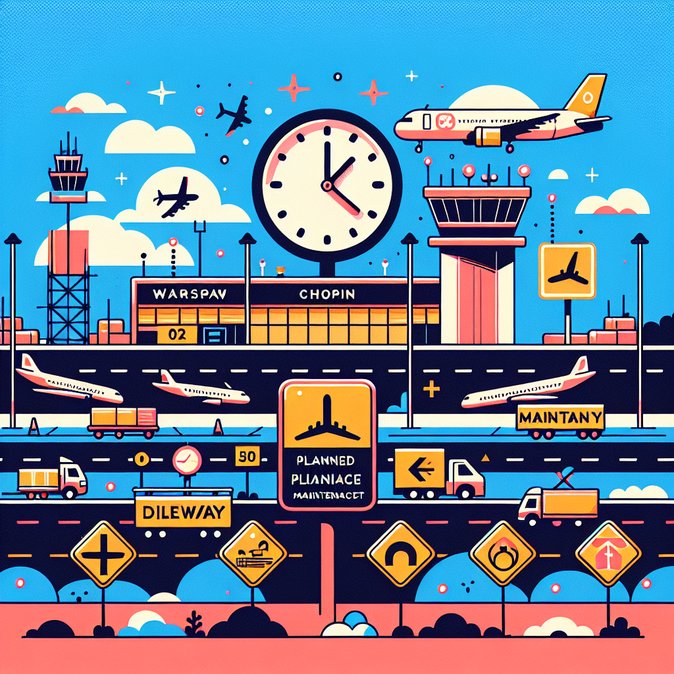
Warsaw Chopin Airport confirmed that its primary runway 11-29 will re-open on Wednesday, 25 February 2026, following an intensive 24-hour maintenance shutdown that began late on 24 February. During the works all arrivals and departures were diverted to the secondary runway 15-33, stretching the airport’s declared capacity and forcing carriers to reshuffle slots. The closure—part of a five-year pavement-rehabilitation programme—was timed outside the summer peak but still affected some 550 flights, including LOT’s key long-haul rotations to Chicago, Seoul and Tokyo.
![Warsaw Chopin Airport Main Runway to Re-open After 24-Hour Closure on 25 February 2026]()
Travelers grappling with these schedule shifts should also double-check visa requirements for any last-minute detours. VisaHQ can streamline that process: its Poland portal (https://www.visahq.com/poland/) lets passengers and corporate travel managers verify entry rules, complete electronic applications and track status updates in real time, reducing bureaucratic friction while the runway constructions tackle the physical kind.
Airlines issued travel waivers allowing free re-booking or refund, while ground handlers operated contingency bussing to more distant stands. No flights were cancelled outright, but average delays of 25–40 minutes rippled across the schedule. Chopin’s management emphasised that preventive works are essential if the airport is to remain compliant with ICAO friction and load-bearing standards ahead of Euro 2027, when Poland expects a surge in capacity demand. The newly laid asphalt incorporates polymer-modified binders designed to cope with heavier wide-body traffic until the Central Polish Airport comes on-line later in the decade. For corporate mobility teams the key lesson is the importance of monitoring NOTAMs and airport master-plans. Warsaw is the hub not only for LOT but also for an expanding portfolio of Asian and Middle-East carriers that feed expatriate assignments across Central Europe. Even a one-day outage can disrupt tight project timelines, so multinational firms are adding alternative routing via Kraków, Berlin or Prague to travel policies. Looking forward, Chopin Airport has scheduled two further overnight closures in May and September to finish grooving and LED-lighting upgrades. Passengers are advised to enable airline app notifications and allow extra buffer time for tight connections throughout 2026.

Travelers grappling with these schedule shifts should also double-check visa requirements for any last-minute detours. VisaHQ can streamline that process: its Poland portal (https://www.visahq.com/poland/) lets passengers and corporate travel managers verify entry rules, complete electronic applications and track status updates in real time, reducing bureaucratic friction while the runway constructions tackle the physical kind.
Airlines issued travel waivers allowing free re-booking or refund, while ground handlers operated contingency bussing to more distant stands. No flights were cancelled outright, but average delays of 25–40 minutes rippled across the schedule. Chopin’s management emphasised that preventive works are essential if the airport is to remain compliant with ICAO friction and load-bearing standards ahead of Euro 2027, when Poland expects a surge in capacity demand. The newly laid asphalt incorporates polymer-modified binders designed to cope with heavier wide-body traffic until the Central Polish Airport comes on-line later in the decade. For corporate mobility teams the key lesson is the importance of monitoring NOTAMs and airport master-plans. Warsaw is the hub not only for LOT but also for an expanding portfolio of Asian and Middle-East carriers that feed expatriate assignments across Central Europe. Even a one-day outage can disrupt tight project timelines, so multinational firms are adding alternative routing via Kraków, Berlin or Prague to travel policies. Looking forward, Chopin Airport has scheduled two further overnight closures in May and September to finish grooving and LED-lighting upgrades. Passengers are advised to enable airline app notifications and allow extra buffer time for tight connections throughout 2026.