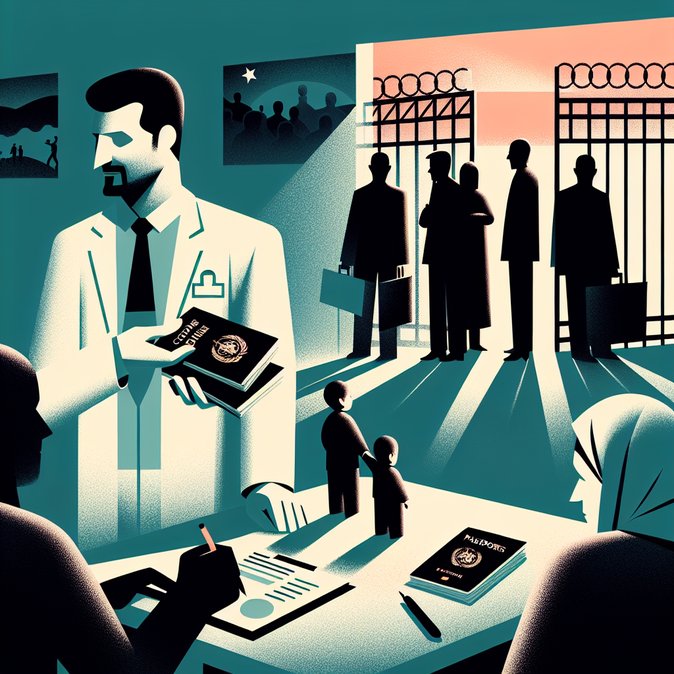
An extraordinary behind-the-scenes effort to bring home 11 women and 23 children linked to Islamic State came to light on 25 February 2026 when community leader Dr Jamal Rifi confirmed he had personally delivered renewed Australian passports to Damascus. The passports cover the cohort of citizens stranded in north-east Syria’s Al-Roj camp after a botched self-evacuation attempt last week. Speaking to ABC Radio Sydney, Dr Rifi said a pro-bono legal team prepared the documents, while he acted as “the delivery boy”, motivated by concern for the children’s welfare. Kurdish authorities have signalled Al-Roj may close “within weeks”, heightening urgency. Australian officials maintain consular assistance is limited to paperwork, but have not offered government-organised repatriation flights since the 2025 group extraction. The revelation reignited a fierce political debate in Canberra. Opposition MPs accused the Albanese government of covertly facilitating returns that could pose security risks, while Home Affairs Minister Tony Burke insisted no assistance beyond statutory obligations had been provided. Security agencies retain the option of Temporary Exclusion Orders (TEOs) and post-arrival control orders; experts note courts have so far upheld such measures when balanced against children’s rights. For global-mobility and relocation teams, the case highlights the complex intersection of citizenship, national-security screening and family unity. Should the women succeed in reaching Australia, employers may face requests for compassionate leave, relocation support and trauma-informed counselling for affected extended families.
![Sydney doctor reveals ‘passport drop’ mission as push grows to repatriate 34 Australians from Syria]()
Companies navigating these obligations don’t have to go it alone. VisaHQ, for example, offers Australian passport and visa processing support, keeping HR and mobility teams compliant with ever-shifting rules; details can be found at https://www.visahq.com/australia/
More broadly, the episode demonstrates that Australian passports – unlike visas – confer an almost absolute right of entry, creating policy dilemmas that cannot be outsourced to carriers or foreign authorities. Advocates argue that managed repatriation on Australian soil allows proper investigation and reintegration, whereas abandonment overseas risks statelessness and radicalisation. The coming weeks will test whether ministerial rhetoric translates into practical pathways home—or prolonged limbo for the 34 citizens still waiting behind razor wire.

Companies navigating these obligations don’t have to go it alone. VisaHQ, for example, offers Australian passport and visa processing support, keeping HR and mobility teams compliant with ever-shifting rules; details can be found at https://www.visahq.com/australia/
More broadly, the episode demonstrates that Australian passports – unlike visas – confer an almost absolute right of entry, creating policy dilemmas that cannot be outsourced to carriers or foreign authorities. Advocates argue that managed repatriation on Australian soil allows proper investigation and reintegration, whereas abandonment overseas risks statelessness and radicalisation. The coming weeks will test whether ministerial rhetoric translates into practical pathways home—or prolonged limbo for the 34 citizens still waiting behind razor wire.
More From Australia
View all
UK fully enforces Electronic Travel Authorisation – Australians now need digital clearance before boarding

Dual UK–Australian citizens must now travel on a British passport – Home Office ends long-standing leniency