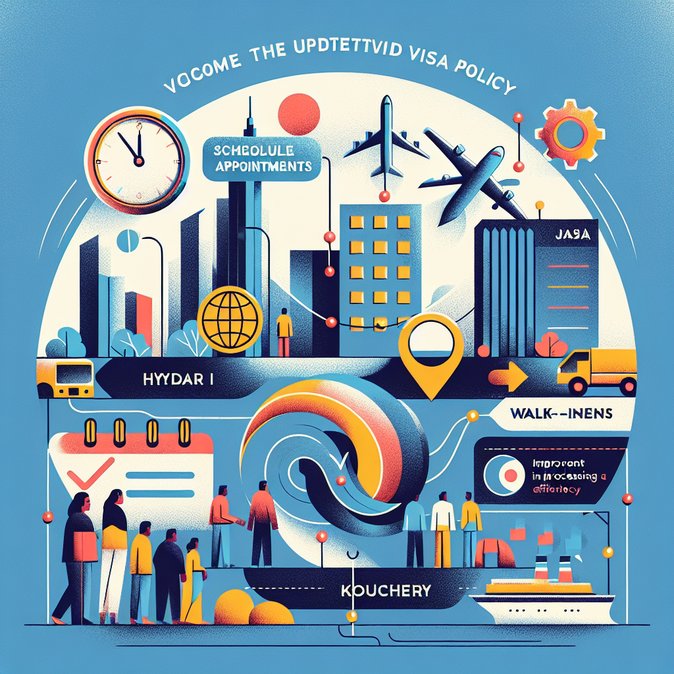
Indian travellers bound for Japan will need to plan further ahead after VFS Global confirmed that, from 2 March 2026, visa applications in Chennai, Hyderabad, Kochi and Puducherry will be accepted strictly by prior appointment. The announcement, reported on 24 February, brings an end to the popular walk-in system that had often seen serpentine queues and last-minute submissions during cherry-blossom season. Under the new regime, every applicant—tourist, student or business visitor—must book a slot on the VFS Japan-India portal, upload basic details and arrive at the centre with a print-out of the confirmation e-mail.
![Japan scraps walk-in visa submissions in four south-Indian cities]()
For travellers who’d rather not wrestle with the new appointment grid, VisaHQ can take over the heavy lifting. The service’s India portal (https://www.visahq.com/india/) lets individuals and corporates upload forms, have documents pre-scrutinised, and secure VFS slots on their behalf, trimming both uncertainty and queue time.
Those who turn up without an appointment will be denied entry. The Japanese Embassy says the change was driven by double-digit growth in Indian arrivals (up 27 % in 2025) and chronic overcrowding at southern visa centres, which occasionally forced security staff to cap daily intakes. For corporates, the tighter process means travel managers must secure appointments at least two weeks before departure, factoring in courier times if passports need to be shipped to Delhi for final stamping. Frequent flyers holding multiple-entry visas are unaffected. Visa fees remain unchanged: ¥3,000 (₹1,750) for single-entry and ¥6,000 (₹3,500) for multiple-entry, payable in INR. VFS Global says the appointment model will cut average counter time per applicant from 12 minutes to eight and allow real-time visibility of available dates. Peak-season ‘premium lounge’ upgrades and prime-time slots are already fully booked through late March, indicating that demand is strong despite the extra planning step. Travel insurers warn that stricter slot control could trigger trip-cancellation claims if appointments cannot be secured in time. Mobility advisers therefore recommend locking in dates before issuing non-refundable air tickets or conference registrations. Companies with frequent south-India-to-Japan traffic—especially IT outsourcing, automotive supply and higher-education exchanges—should consider bulk appointment blocks or shifting staff to VFS centres in Bengaluru and Mumbai, which continue to allow limited walk-ins for now.
For travellers who’d rather not wrestle with the new appointment grid, VisaHQ can take over the heavy lifting. The service’s India portal (https://www.visahq.com/india/) lets individuals and corporates upload forms, have documents pre-scrutinised, and secure VFS slots on their behalf, trimming both uncertainty and queue time.
Those who turn up without an appointment will be denied entry. The Japanese Embassy says the change was driven by double-digit growth in Indian arrivals (up 27 % in 2025) and chronic overcrowding at southern visa centres, which occasionally forced security staff to cap daily intakes. For corporates, the tighter process means travel managers must secure appointments at least two weeks before departure, factoring in courier times if passports need to be shipped to Delhi for final stamping. Frequent flyers holding multiple-entry visas are unaffected. Visa fees remain unchanged: ¥3,000 (₹1,750) for single-entry and ¥6,000 (₹3,500) for multiple-entry, payable in INR. VFS Global says the appointment model will cut average counter time per applicant from 12 minutes to eight and allow real-time visibility of available dates. Peak-season ‘premium lounge’ upgrades and prime-time slots are already fully booked through late March, indicating that demand is strong despite the extra planning step. Travel insurers warn that stricter slot control could trigger trip-cancellation claims if appointments cannot be secured in time. Mobility advisers therefore recommend locking in dates before issuing non-refundable air tickets or conference registrations. Companies with frequent south-India-to-Japan traffic—especially IT outsourcing, automotive supply and higher-education exchanges—should consider bulk appointment blocks or shifting staff to VFS centres in Bengaluru and Mumbai, which continue to allow limited walk-ins for now.