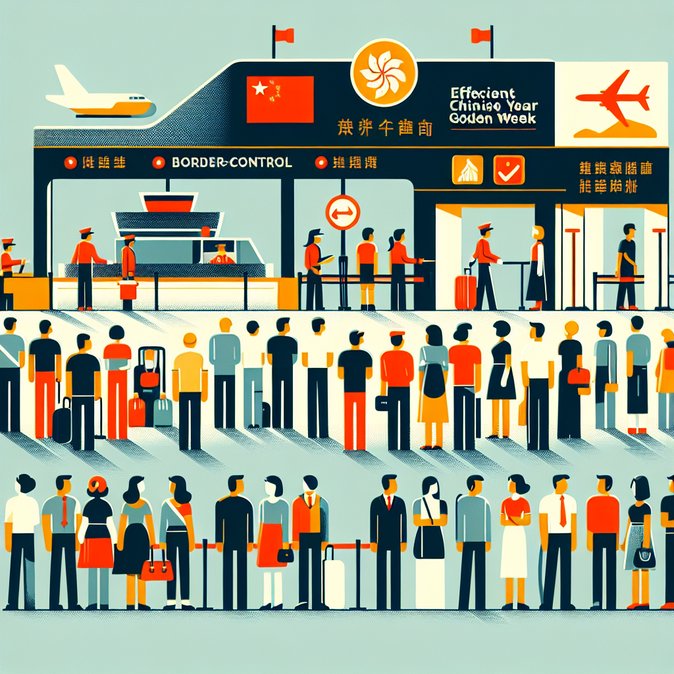
Hong Kong’s tourism and immigration infrastructure passed its first full-scale post-pandemic stress-test as 1.77 million visitors flocked to the city during Mainland China’s nine-day Golden Week between 15 and 23 February. The Immigration Department confirmed the numbers on 24 February 2026, noting that Mainland travellers accounted for roughly 1.5 million entries, with an average of 170,000 arrivals per day and a peak of 210,000 on the second day of the Lunar New Year. Automated e-Channel gates at West Kowloon high-speed rail terminus processed the highest volumes, followed by the Lok Ma Chau Spur Line land checkpoint. The inter-departmental festival task-force credited months of coordination between immigration, customs, transport operators and tourism boards for keeping queues manageable even as hotel occupancy hit 90 percent. About 2,400 organised tour groups—74 percent of them overnight packages—fed traffic to flagship attractions such as Ocean Park, Hong Kong Disneyland and the revamped Peak Tram.
![Chinese New Year Golden Week draws 1.77 million visitors to Hong Kong]()
Travellers planning their own visit can streamline entry even further by using VisaHQ’s dedicated Hong Kong portal (https://www.visahq.com/hong-kong/), which walks users through the latest visa requirements, handles online applications and courier services, and clarifies documentation before they ever reach the city’s e-Channel gates.
Retail analysts estimate Golden Week retail sales grew 16 percent year-on-year, with luxury boutiques in Tsim Sha Tsui reporting near-pre-COVID turnover. For mobility planners, the figures validate the decision to reopen all land checkpoints and reinstate same-day high-speed rail frequencies. They also hint at a sustained rebound in short-haul business trips, as seat factors on Guangzhou and Shenzhen trains reached 98 percent during the holiday. Looking ahead, officials will analyse choke-points at Lok Ma Chau to determine whether temporary e-Channel lanes should be made permanent before the Easter surge in April. Chief Secretary Chan Kwok-ki said the smooth handling of visitor flows “demonstrates Hong Kong’s readiness to host mega events”, including the Rugby Sevens and April’s F&B trade shows, both of which rely heavily on seamless cross-border mobility.

Travellers planning their own visit can streamline entry even further by using VisaHQ’s dedicated Hong Kong portal (https://www.visahq.com/hong-kong/), which walks users through the latest visa requirements, handles online applications and courier services, and clarifies documentation before they ever reach the city’s e-Channel gates.
Retail analysts estimate Golden Week retail sales grew 16 percent year-on-year, with luxury boutiques in Tsim Sha Tsui reporting near-pre-COVID turnover. For mobility planners, the figures validate the decision to reopen all land checkpoints and reinstate same-day high-speed rail frequencies. They also hint at a sustained rebound in short-haul business trips, as seat factors on Guangzhou and Shenzhen trains reached 98 percent during the holiday. Looking ahead, officials will analyse choke-points at Lok Ma Chau to determine whether temporary e-Channel lanes should be made permanent before the Easter surge in April. Chief Secretary Chan Kwok-ki said the smooth handling of visitor flows “demonstrates Hong Kong’s readiness to host mega events”, including the Rugby Sevens and April’s F&B trade shows, both of which rely heavily on seamless cross-border mobility.