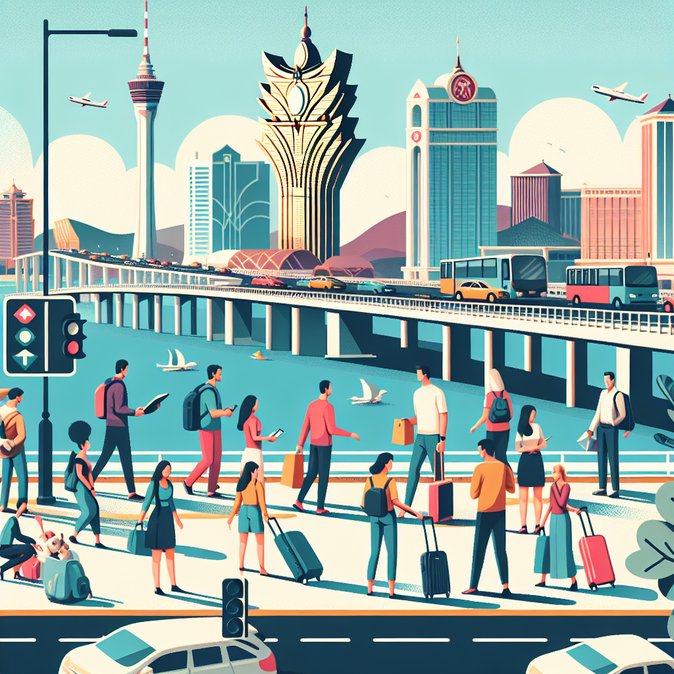
Hong Kong’s Immigration Department has confirmed that 1.77 million visitors entered the city between 15 and 23 February, 1.5 million of them from mainland China. Arrivals peaked at 241,000 on the second day of the Lunar New Year, overwhelming popular sites such as Tsim Sha Tsui harbourfront and West Kowloon Cultural District.
Travel planners navigating documentation for dual-destination trips will find that VisaHQ’s one-stop platform can secure China visas and other travel permits in a matter of days, with real-time tracking and dedicated account support (https://www.visahq.com/china/). This removes an administrative headache at a time when flights and hotel rooms are already at a premium, allowing corporate groups and individual travellers alike to focus on optimising their itineraries.
![Hong Kong welcomes 1.77 million visitors during Mainland Golden Week]()
Express Rail West Kowloon Control Point handled the highest inbound volumes, followed by Lok Ma Chau Spur Line. To cope, frontline immigration officers cancelled leave, while tourism boards deployed crowd-management ambassadors at bottlenecks. Retailers reported brisk sales of jewellery and luxury watches, buoyed by a surge in mainland spending on gold for the Year of the Horse.
Corporate travel managers note that flights and hotel rooms tightened considerably around the peak dates, with average daily room rates 18 percent higher than last year. Companies planning incentive trips or regional meetings in Q1 should book early or consider mid-week slots when border crossings ease.
The influx also highlights Hong Kong’s role as a visa-free springboard for executives combining mainland meetings with international itineraries. However, local residents made 3.95 million outbound trips over the same period, leading to a net population outflow—a reminder that lift capacity on both directions remains under pressure.
Travel planners navigating documentation for dual-destination trips will find that VisaHQ’s one-stop platform can secure China visas and other travel permits in a matter of days, with real-time tracking and dedicated account support (https://www.visahq.com/china/). This removes an administrative headache at a time when flights and hotel rooms are already at a premium, allowing corporate groups and individual travellers alike to focus on optimising their itineraries.

Express Rail West Kowloon Control Point handled the highest inbound volumes, followed by Lok Ma Chau Spur Line. To cope, frontline immigration officers cancelled leave, while tourism boards deployed crowd-management ambassadors at bottlenecks. Retailers reported brisk sales of jewellery and luxury watches, buoyed by a surge in mainland spending on gold for the Year of the Horse.
Corporate travel managers note that flights and hotel rooms tightened considerably around the peak dates, with average daily room rates 18 percent higher than last year. Companies planning incentive trips or regional meetings in Q1 should book early or consider mid-week slots when border crossings ease.
The influx also highlights Hong Kong’s role as a visa-free springboard for executives combining mainland meetings with international itineraries. However, local residents made 3.95 million outbound trips over the same period, leading to a net population outflow—a reminder that lift capacity on both directions remains under pressure.