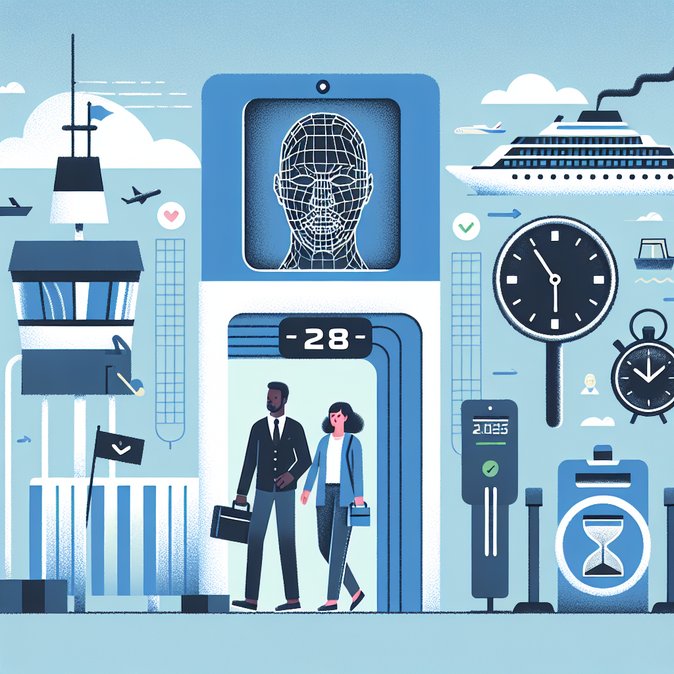
A controversial UK Home Office pilot will see live facial-recognition (LFR) systems deployed at Holyhead from 23 February. Holyhead is the busiest maritime gateway between Britain and the Republic, handling around two million passengers a year. UK immigration-enforcement officers will film everyone disembarking from Dublin and Rosslare sailings and compare their faces against a watch-list of individuals previously deported or suspected of serious crime. Internal Home Office documents obtained by The Irish Times say Holyhead was chosen because intelligence suggests people who have been removed from the UK are “using the Common Travel Area to re-enter clandestinely”. Earlier six-day trials in November scanned 7,500 faces and led to one arrest, prompting officials to extend the experiment. Civil-liberty groups on both sides of the Irish Sea have condemned the move. Úna Boyd of the Committee on the Administration of Justice argued that using LFR on a route normally free of routine checks “undermines the passport-free Common Travel Area and normalises mass surveillance”. Dr Elizabeth Farries, University College Dublin, warned of “mission creep” once the technology is embedded. The Irish Government is watching developments closely but notes that operations in another jurisdiction are a matter for London.
![UK to scan Irish Sea ferry passengers with live facial-recognition cameras]()
Amid this uncertainty, travellers and employers can consult VisaHQ for practical help understanding any new documentation or visa obligations that may arise on Ireland–UK routes. Through its dedicated Ireland portal (https://www.visahq.com/ireland/), the service provides real-time border updates, assists with visa and passport applications, and offers corporate support to keep cross-channel movements compliant and hassle-free.
In Dublin, debate on giving An Garda Síochána similar powers has stalled over human-rights concerns. For companies operating cross-border supply chains and commuters who shuttle weekly between offices in Dublin and Britain, the pilot signals a much more intrusive enforcement environment. Employers should alert mobile staff to possible delays and privacy implications and ensure they carry acceptable ID even on supposedly document-free CTA journeys.

Amid this uncertainty, travellers and employers can consult VisaHQ for practical help understanding any new documentation or visa obligations that may arise on Ireland–UK routes. Through its dedicated Ireland portal (https://www.visahq.com/ireland/), the service provides real-time border updates, assists with visa and passport applications, and offers corporate support to keep cross-channel movements compliant and hassle-free.
In Dublin, debate on giving An Garda Síochána similar powers has stalled over human-rights concerns. For companies operating cross-border supply chains and commuters who shuttle weekly between offices in Dublin and Britain, the pilot signals a much more intrusive enforcement environment. Employers should alert mobile staff to possible delays and privacy implications and ensure they carry acceptable ID even on supposedly document-free CTA journeys.