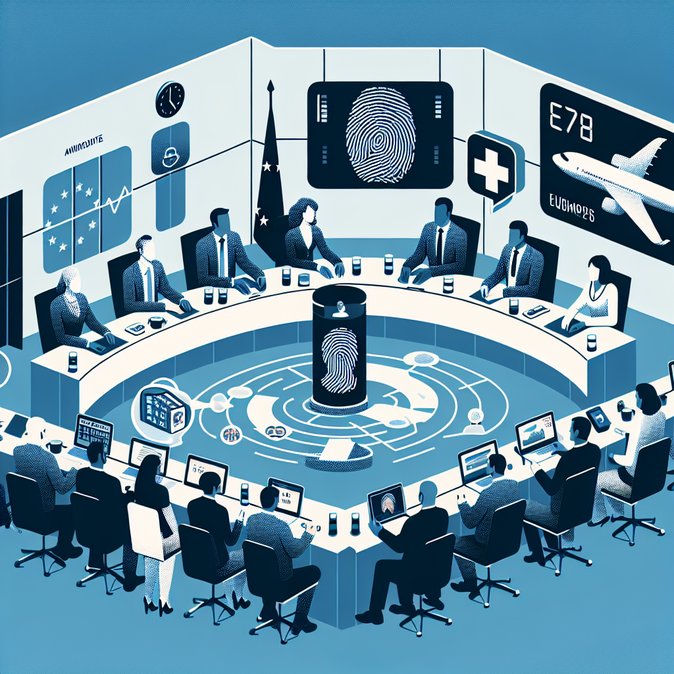
Meeting in Brussels on 23 February 2026, the European Parliament’s Civil Liberties (LIBE) Committee held its first stock-taking debate on the roll-out of the EU Entry/Exit System (EES), the biometric border database that became mandatory at most external crossings in late 2025. Law-makers quizzed Henrik Nielsen (European Commission DG HOME) and eu-LISA chief Tillmann Keber on initial performance data, queuing times and privacy safeguards. Several MEPs highlighted challenges reported by Switzerland, which began phasing in EES at Basel and Geneva airports last October and plans to switch off manual passport stamping nationwide after 9 April 2026.
![MEPs assess first months of Schengen Entry/Exit System; Swiss airports under scrutiny]()
For organisations and individual travellers who need practical help staying compliant with the new Schengen procedures, VisaHQ’s Switzerland portal (https://www.visahq.com/switzerland/) offers real-time guidance, tailored document checklists and expedited processing options, smoothing the transition to both EES and the forthcoming ETIAS regime.
According to Swiss authorities, average processing time for first-time third-country visitors has fallen from nine to six minutes, but peak-hour congestion remains an issue at Zurich where deployment started in November. Nielsen told the committee that Switzerland’s experience is “particularly valuable” because it shows how a non-EU Schengen member can integrate national police databases with the central EES hub in Strasbourg. He added that lessons learned will feed into the parallel launch of ETIAS, the travel authorisation scheme due by the end of the year. Mobility managers should anticipate further fine-tuning: eu-LISA promised a software update in mid-March to cut fingerprint capture time by 30 %. Companies are therefore advised to keep briefing travellers to allow extra time until at least the summer timetable change. The committee will draft a resolution in April; while non-binding, it could influence Commission guidelines that Switzerland must replicate under the Schengen association agreements.

For organisations and individual travellers who need practical help staying compliant with the new Schengen procedures, VisaHQ’s Switzerland portal (https://www.visahq.com/switzerland/) offers real-time guidance, tailored document checklists and expedited processing options, smoothing the transition to both EES and the forthcoming ETIAS regime.
According to Swiss authorities, average processing time for first-time third-country visitors has fallen from nine to six minutes, but peak-hour congestion remains an issue at Zurich where deployment started in November. Nielsen told the committee that Switzerland’s experience is “particularly valuable” because it shows how a non-EU Schengen member can integrate national police databases with the central EES hub in Strasbourg. He added that lessons learned will feed into the parallel launch of ETIAS, the travel authorisation scheme due by the end of the year. Mobility managers should anticipate further fine-tuning: eu-LISA promised a software update in mid-March to cut fingerprint capture time by 30 %. Companies are therefore advised to keep briefing travellers to allow extra time until at least the summer timetable change. The committee will draft a resolution in April; while non-binding, it could influence Commission guidelines that Switzerland must replicate under the Schengen association agreements.