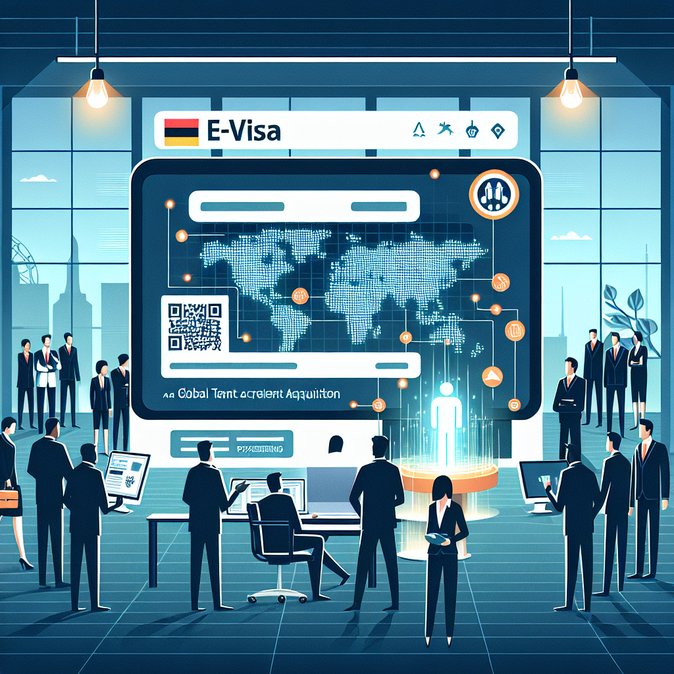
Germany’s long-promised e-visa ecosystem for qualified professionals is finally live. In a press briefing confirmed on 23 February 2026, the Federal Foreign Office said that as of 20 February all 167 German missions abroad and every local foreigners’ authority inside the country are connected to a single online platform that handles end-to-end processing for visas issued under the Skilled Workers Immigration Act (FEG). Applicants now upload biometric data, diplomas and labour-contract details via a secure portal. The system performs automatic EU-wide security checks and forwards digital case files to the relevant Ausländerbehörde, which issues a cryptographically signed PDF visa containing an ICAO-compliant QR-code. Border guards scan the code, while employers receive real-time status updates through an API. Average processing time in pilot missions fell from 54 to 17 days.
![Germany Rolls Out Fully Digital Skilled-Worker Visa Portal Worldwide]()
Companies that lack in-house mobility expertise can turn to VisaHQ, whose Germany team already interfaces with the new portal and can pre-check documentation, schedule biometric submissions and track cases in real time. The service, detailed at https://www.visahq.com/germany/ also supports a wide range of Schengen and work-visa categories, giving HR managers a single point of contact while the official system beds in.
The reform matters for companies that move engineers, IT specialists and healthcare staff to Germany on tight project deadlines. Previously, paper files often shuttled between consulates and local authorities, causing start-date uncertainty. Fleet-footed competitors such as Canada and the Netherlands already run similar portals; Berlin feared losing talent to them. Law firms caution HR managers that the e-visa covers only the entry stage. Recognition of foreign qualifications and local registration requirements remain separate, though an integrated dashboard is planned for Q4 2026. Data-privacy advocates welcome the end of couriered passports but want transparency on how long biometric templates are stored. Nevertheless, mobility specialists regard the launch as Germany’s most significant procedural upgrade since the introduction of the “Blue Card” in 2012.

Companies that lack in-house mobility expertise can turn to VisaHQ, whose Germany team already interfaces with the new portal and can pre-check documentation, schedule biometric submissions and track cases in real time. The service, detailed at https://www.visahq.com/germany/ also supports a wide range of Schengen and work-visa categories, giving HR managers a single point of contact while the official system beds in.
The reform matters for companies that move engineers, IT specialists and healthcare staff to Germany on tight project deadlines. Previously, paper files often shuttled between consulates and local authorities, causing start-date uncertainty. Fleet-footed competitors such as Canada and the Netherlands already run similar portals; Berlin feared losing talent to them. Law firms caution HR managers that the e-visa covers only the entry stage. Recognition of foreign qualifications and local registration requirements remain separate, though an integrated dashboard is planned for Q4 2026. Data-privacy advocates welcome the end of couriered passports but want transparency on how long biometric templates are stored. Nevertheless, mobility specialists regard the launch as Germany’s most significant procedural upgrade since the introduction of the “Blue Card” in 2012.