In the early hours of 21 February 2026, Poland’s withdrawal from the 1997 Ottawa Convention entered into force, ending a 14-year period during which the country renounced antipersonnel mines. Deputy Defence Minister Paweł Zalewski told reporters the step was “regrettable but necessary” to strengthen defences along the 418-kilometre frontier with Russia’s Kaliningrad exclave and the 418-kilometre border with Belarus. While the move is rooted in hard security, it carries unexpected implications for cross-border mobility.
![Poland Formally Quits Ottawa Land-Mine Ban, Citing Border Security]()
For travellers and companies navigating this shifting landscape, VisaHQ offers up-to-the-minute visa and entry-requirement intelligence for Poland and its neighbours, along with expedited document processing and compliance tools that integrate into corporate travel workflows. Its Poland portal (https://www.visahq.com/poland/) aggregates government advisories and can push real-time alerts, ensuring that supply-chain drivers, business delegates and holidaymakers adjust their itineraries before encountering fresh border controls.
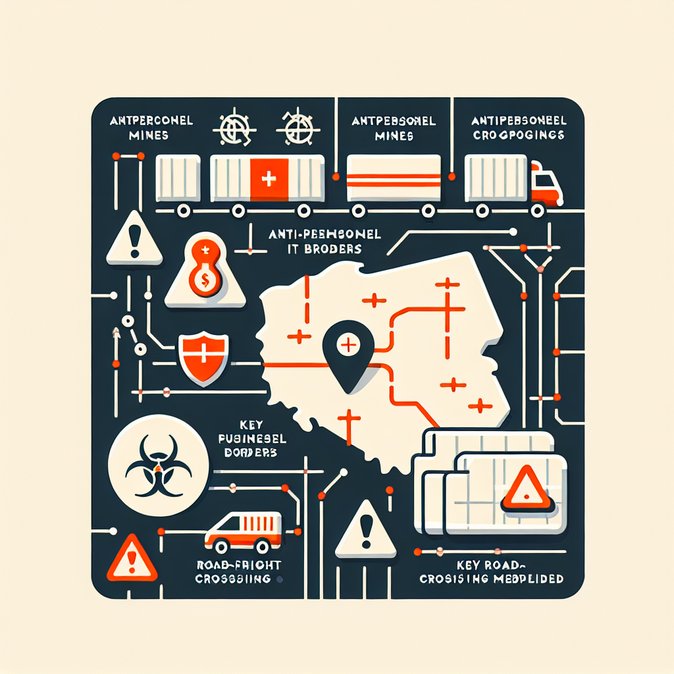
Human-rights groups such as Human Rights Watch warn that new minefields could complicate the planned reopening of three minor road crossings with Belarus, indefinitely delaying truck corridors vital to Polish logistics firms. The Polish Tourist Chamber fears the symbolism could also chill inbound adventure-tourism to the Masurian Lakes region near the Russian border. Business-travel insurers are already updating country-risk advisories. “Any company sending staff to production sites within 15 kilometres of the eastern border will now face higher premium surcharges and may be required to provide satellite-tracking devices,” said Katarzyna Wrona of RiskGuard Poland. Diplomatically, Warsaw insists that mines will be deployed only in defined military zones and mapped to modern NATO standards to facilitate eventual clearance. Nonetheless, Poland will forfeit access to international mine-action funding and must craft its own remediation budget—resources critics argue would be better spent on electronic surveillance and rapid-response units. For global-mobility and duty-of-care teams, the immediate task is to review travel-approval matrices covering eastern voivodeships and to brief expatriate families on new no-go zones that local governors are expected to announce by mid-March.

For travellers and companies navigating this shifting landscape, VisaHQ offers up-to-the-minute visa and entry-requirement intelligence for Poland and its neighbours, along with expedited document processing and compliance tools that integrate into corporate travel workflows. Its Poland portal (https://www.visahq.com/poland/) aggregates government advisories and can push real-time alerts, ensuring that supply-chain drivers, business delegates and holidaymakers adjust their itineraries before encountering fresh border controls.
Human-rights groups such as Human Rights Watch warn that new minefields could complicate the planned reopening of three minor road crossings with Belarus, indefinitely delaying truck corridors vital to Polish logistics firms. The Polish Tourist Chamber fears the symbolism could also chill inbound adventure-tourism to the Masurian Lakes region near the Russian border. Business-travel insurers are already updating country-risk advisories. “Any company sending staff to production sites within 15 kilometres of the eastern border will now face higher premium surcharges and may be required to provide satellite-tracking devices,” said Katarzyna Wrona of RiskGuard Poland. Diplomatically, Warsaw insists that mines will be deployed only in defined military zones and mapped to modern NATO standards to facilitate eventual clearance. Nonetheless, Poland will forfeit access to international mine-action funding and must craft its own remediation budget—resources critics argue would be better spent on electronic surveillance and rapid-response units. For global-mobility and duty-of-care teams, the immediate task is to review travel-approval matrices covering eastern voivodeships and to brief expatriate families on new no-go zones that local governors are expected to announce by mid-March.