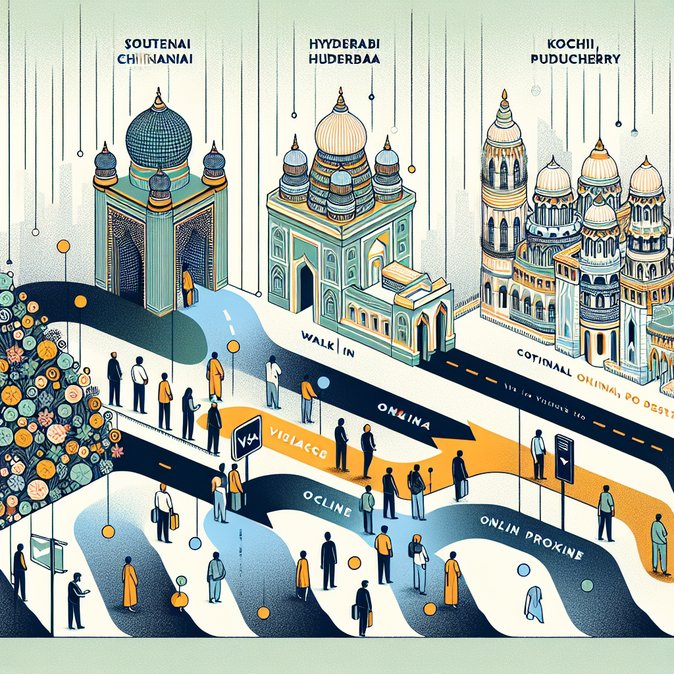
Travellers and corporate travel planners in India’s southern metros must brace for a procedural shift after VFS Global, acting on behalf of the Embassy of Japan, announced on 21 February 2026 that four visa application centres—Chennai, Hyderabad, Kochi and Puducherry—will move to an appointment-only model from 2 March. Walk-in submissions that many tourists and executives relied on will cease, bringing the region in line with centres in New Delhi and Mumbai. The change follows months of overcrowding at South Indian centres where visa demand has surged ahead of Japan’s cherry-blossom season and a spike in business missions tied to the Chennai–Yokohama automobile corridor. Under the new regime, applicants must book slots through VFS Global’s portal, with availability released four weeks in advance. Group-appointment functionality is live for corporate delegations, but double-booking will trigger automatic cancellation.
![Japan ends walk-in visa submissions in South India; online appointments mandatory from 2 March 2026]()
If locking in one of those coveted VFS slots feels like a headache, VisaHQ’s India platform (https://www.visahq.com/india/) can step in as a one-stop concierge. The service secures embassy appointments, pre-screens all documentation to the latest consular standards and arranges courier pick-up and return of passports, saving both individual travellers and corporate mobility teams valuable time during peak season.
For HR mobility teams, the key risk is lead time: processing continues to take five to ten working days after submission, but peak-season appointment slots are already 70 % filled for late March, according to VFS dashboards. Companies with just-in-time travel cultures should instruct employees to secure slots before making flight reservations and consider expedited courier return for passports. Japanese officials argue the appointment system enhances security and evens out daily volumes, reducing fatigue-related errors that delayed over 1,800 Indian passports in 2025. They also hint the model could pave the way for biometric enrolment when Japan introduces its own digital visa portal in 2027. Travellers transiting through other cities can still lodge applications at alternative centres operating walk-in counters, but differential logistics costs may apply. Airlines have begun alerting passengers at check-in to verify visa appointment confirmations during the transition period.
If locking in one of those coveted VFS slots feels like a headache, VisaHQ’s India platform (https://www.visahq.com/india/) can step in as a one-stop concierge. The service secures embassy appointments, pre-screens all documentation to the latest consular standards and arranges courier pick-up and return of passports, saving both individual travellers and corporate mobility teams valuable time during peak season.
For HR mobility teams, the key risk is lead time: processing continues to take five to ten working days after submission, but peak-season appointment slots are already 70 % filled for late March, according to VFS dashboards. Companies with just-in-time travel cultures should instruct employees to secure slots before making flight reservations and consider expedited courier return for passports. Japanese officials argue the appointment system enhances security and evens out daily volumes, reducing fatigue-related errors that delayed over 1,800 Indian passports in 2025. They also hint the model could pave the way for biometric enrolment when Japan introduces its own digital visa portal in 2027. Travellers transiting through other cities can still lodge applications at alternative centres operating walk-in counters, but differential logistics costs may apply. Airlines have begun alerting passengers at check-in to verify visa appointment confirmations during the transition period.