Berlin Ratifies German-Austrian Aviation-Security Treaty, Completing Alpine Air-Surveillance ‘Triangle’
Finland deported a record 169 convicted foreign nationals in 2025, Migri confirms
Australia lifts minimum salary thresholds for Subclass 482 and 186 visas from 1 July 2026
Latest News
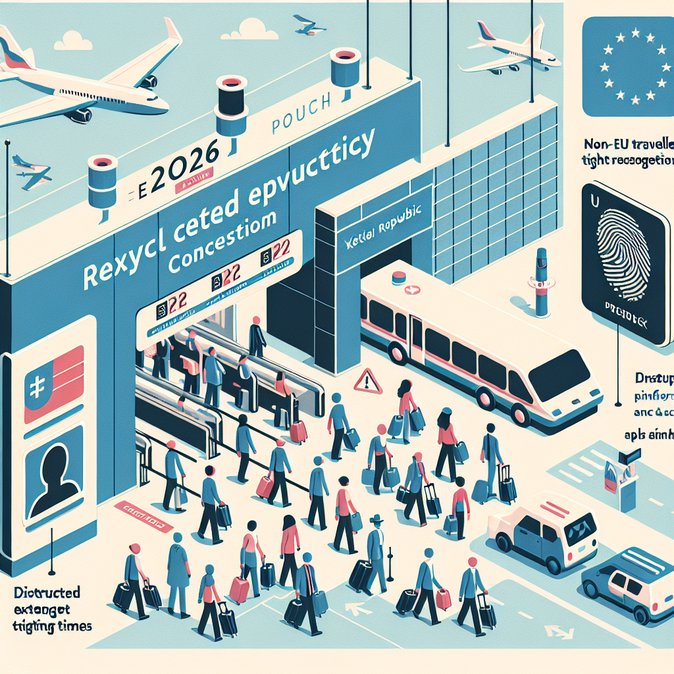
EU Airlines Push to Delay New Biometric Border Checks; Prague Airport Prepares Contingency Plans
Czech airports are bracing for major congestion after airlines and airport associations urged the EU to suspend the mandatory biometric Entry/Exit System during the busy summer of 2026. Unless Brussels grants a pause, Prague Airport will have to process every non-EU traveller through fingerprint and facial-scan kiosks from 10 April, a change that could multiply queue times and disrupt tight connections. The warning means multinationals should review travel policies, adjust schedules, and brief employees on possible delays.

Germany extends internal checks on Swiss land border until at least 15 September 2026
Berlin has prolonged police checks at the Swiss–German land frontier until at least 15 September 2026, citing migration and security pressures. The move means ID inspections on roads and trains will continue, adding 15-30 minutes to typical journeys and raising costs for freight operators. Swiss firms should advise cross-border staff to carry passports and valid permits and build extra transit time into schedules.

Bundestag Passes EU-Aligned Asylum Reform, Allowing Work After 3 Months
Germany’s parliament has approved legislation that embeds the EU’s 2024 asylum reform in national law. Key points include identity checks at EU external borders, faster procedures for low-recognition cases and—crucially for employers—permission for asylum seekers in reception centres to work after three rather than six months. The change could ease staff shortages but will demand tighter right-to-work compliance.

Italy Unveils Fully-Digital Schengen & National Visa Portal, Going Paperless by Q2 2026
Italy confirmed it will roll out a single online portal for all Schengen and national visas by Q2 2026. Applicants will upload documents and pay fees digitally, while consulates continue biometric capture. The move should eventually speed up processing and reduce consulate visits, but uneven implementation will require careful planning by mobility managers.

U.S. permits voluntary departure of non-essential employees at missions in Israel amid rising security risk
The State Department has allowed non-essential U.S. government employees and their families in Israel to depart voluntarily because of rising security concerns. Core consular services remain open, but travellers may face longer wait times and heightened security. Companies with U.S. personnel in Israel should review contingency plans and enrol staff in STEP.

48-Hour Nationwide Public-Transport Strike Brings German Cities to a Standstill
Local-transport workers began a 48-hour nationwide strike at 03:00 CET on 27 February, paralysing buses, trams and subways in Germany’s largest cities. The action, driven by demands for better rostering and higher allowances, is forcing commuters and business travellers onto overcrowded regional trains and taxis, inflating journey times and costs.

France tightens income criteria for naturalisation applicants
A new Interior-Ministry circular makes a long-term French employment contract and French-sourced income essential for citizenship by residency. Prefectures must refuse applications dominated by benefits or foreign income, hitting retirees, cross-border commuters and many remote workers. Corporate HR teams should review contract structures for internationally-hired talent.

Brazil Expands Visa-Free Entry to Eight More Countries to Spur Tourism and Business Travel
Brazil has waived short-term visa requirements for citizens of China, Denmark, France, Hungary, Ireland, Jamaica, Saint Lucia and the Bahamas. The unilateral move (reciprocal for China) allows stays of up to 30 days, extendable to 90 days in a year, and is expected to boost inbound tourism and business travel by an estimated US$350 million in 2026. Work activities remain outside the waiver, so companies must continue to secure the usual temporary residence visas for assignees.

UK rolls out digital eVisas – UAE residents no longer need to hand over their passports
From 25 February 2026 the UK has replaced passport visa stickers with fully digital eVisas. Guidance published on 27 February confirms UAE residents can now keep their passports while their UK application is processed, reducing downtime and allowing simultaneous visa applications for other destinations. Mobility managers should ensure travellers create a UKVI account, verify passport numbers and carry a digital approval email.