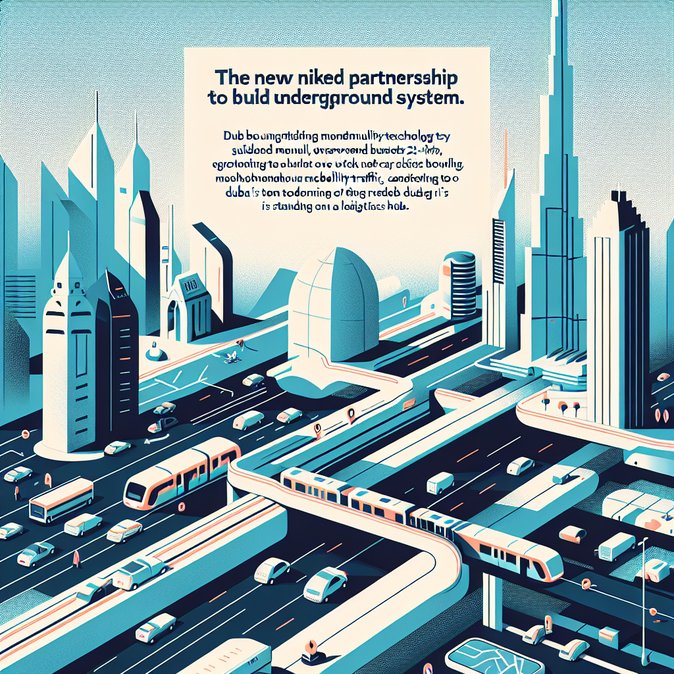
At the World Governments Summit on 3 February 2026, Dubai’s Roads and Transport Authority pulled the curtain back on Glydways—a Californian autonomous-pod system that promises rail-like capacity in the footprint of a cycle lane. The RTA confirmed that four pilot corridors will connect Dubai Internet City, Mall of the Emirates, Business Bay and the Expo 2020 site to adjacent Metro stations, creating uninterrupted, point-to-point journeys in under eight minutes.
Unlike conventional people-movers, Glydways pods carry four to six passengers in privately enclosed cabins that travel on slim, dedicated guideways either elevated or at street level. Artificial-intelligence fleet management allows on-demand deployment, eliminating intermediate stops and making the ride ‘non-stop, non-share’ at a projected fare comparable to a bus ticket. Each electric pod has a 250-km range; the first tranche of 500 vehicles is slated to enter service by Q4-2027 after a two-year infrastructure build.
For employers clustered along Sheikh Zayed Road, the network could shorten the “first/last-mile” gap that often deters staff from using the Metro. RTA modelling suggests a potential 15 % shift from private cars to shared pods during peak hours, cutting commute times and supporting Dubai’s target of 25 % autonomous journeys by 2030. Facilities managers of large campuses—free-zone offices, universities and medical districts—are already in talks about branch-line spurs that would be funded through public-private partnerships.
![Dubai Unveils First Four Routes for ‘Glydways’ Driverless Pod Network]()
International project teams planning site visits will also need to navigate UAE entry formalities smoothly. VisaHQ’s online platform (https://www.visahq.com/united-arab-emirates/) streamlines tourist and business visa applications, offers real-time status tracking, and provides concierge support—ideal for multinationals juggling tight deployment timelines. By outsourcing paperwork to VisaHQ, mobility managers can focus on travel logistics while ensuring every team member arrives with the correct documentation.
The announcement is significant for global-mobility teams managing regional assignees. Reliable, affordable door-to-door public transport lowers relocation packages’ cost‐of-living components (such as car allowances) and boosts sustainability scorecards. Tech vendors will shortly be invited to integrate corporate ID badges with the RTA’s Masaar fare system so employees can expense rides automatically.
Key regulatory hurdles have been cleared: the UAE Cabinet last month approved the nation’s first ‘Micropod Safety Framework’, covering cybersecurity, remote-operations oversight and insurance liability. Glydways CEO Mark Seeger told delegates that Dubai’s agile permitting environment is “years ahead of any other global city” and could make the emirate the company’s regional manufacturing base.
Unlike conventional people-movers, Glydways pods carry four to six passengers in privately enclosed cabins that travel on slim, dedicated guideways either elevated or at street level. Artificial-intelligence fleet management allows on-demand deployment, eliminating intermediate stops and making the ride ‘non-stop, non-share’ at a projected fare comparable to a bus ticket. Each electric pod has a 250-km range; the first tranche of 500 vehicles is slated to enter service by Q4-2027 after a two-year infrastructure build.
For employers clustered along Sheikh Zayed Road, the network could shorten the “first/last-mile” gap that often deters staff from using the Metro. RTA modelling suggests a potential 15 % shift from private cars to shared pods during peak hours, cutting commute times and supporting Dubai’s target of 25 % autonomous journeys by 2030. Facilities managers of large campuses—free-zone offices, universities and medical districts—are already in talks about branch-line spurs that would be funded through public-private partnerships.

International project teams planning site visits will also need to navigate UAE entry formalities smoothly. VisaHQ’s online platform (https://www.visahq.com/united-arab-emirates/) streamlines tourist and business visa applications, offers real-time status tracking, and provides concierge support—ideal for multinationals juggling tight deployment timelines. By outsourcing paperwork to VisaHQ, mobility managers can focus on travel logistics while ensuring every team member arrives with the correct documentation.
The announcement is significant for global-mobility teams managing regional assignees. Reliable, affordable door-to-door public transport lowers relocation packages’ cost‐of-living components (such as car allowances) and boosts sustainability scorecards. Tech vendors will shortly be invited to integrate corporate ID badges with the RTA’s Masaar fare system so employees can expense rides automatically.
Key regulatory hurdles have been cleared: the UAE Cabinet last month approved the nation’s first ‘Micropod Safety Framework’, covering cybersecurity, remote-operations oversight and insurance liability. Glydways CEO Mark Seeger told delegates that Dubai’s agile permitting environment is “years ahead of any other global city” and could make the emirate the company’s regional manufacturing base.