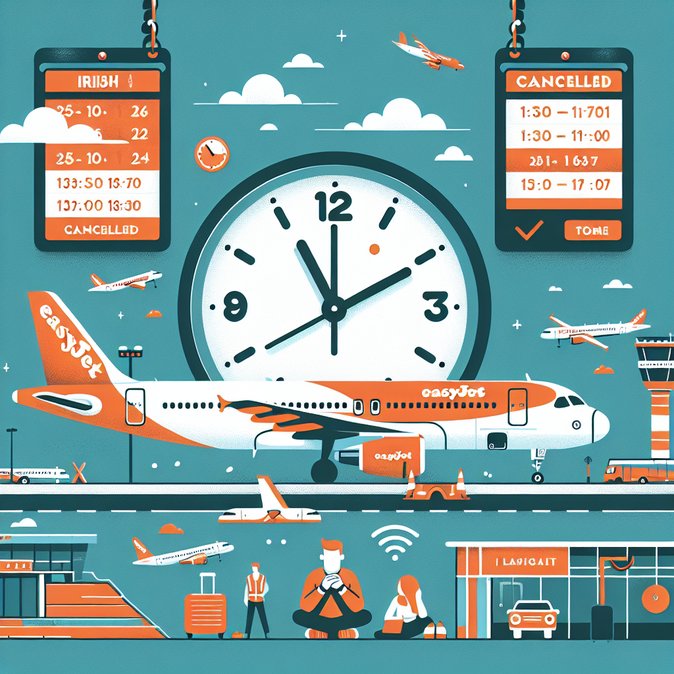
Irish leisure and business passengers with weekend itineraries routed through Italy have been urged to brace for disruption after unions representing easyJet pilots (ANPAC) and cabin crew (USB Lavoro Aereo) called a nationwide strike from 13:00 to 17:00 local time on Saturday, 31 January. The walk-out falls outside Italy’s ‘guaranteed flight windows’, meaning a significant share of departures could be grounded.
Although easyJet does not fly directly between Dublin and Italian cities, thousands of Irish travellers rely on same-day connections at Milan-Malpensa, Rome-Fiumicino, Naples and Venice, especially for onward travel to southern Europe, North Africa and the Middle East. Naples Airport operator GESAC has already issued delay advisories, and ground-handling sources warn of potential knock-on effects for carriers sharing staff and gates with easyJet.
If last-minute re-routing forces you to transit or stay longer in a country that requires additional paperwork, VisaHQ can arrange fast-track Schengen or other visas entirely online through its Irish portal (https://www.visahq.com/ireland/). The service handles form completion, document upload, courier collection and status tracking, helping travellers secure the right entry clearance without extra trips to embassies—especially handy when strikes upend carefully timed connections.
![Four-hour easyJet strike in Italy on 31 January threatens connections for Irish travellers]()
Under EU Regulation 261, industrial action by airline staff is generally considered within the carrier’s control, so passengers delayed more than three hours may be entitled to compensation of up to €600, in addition to meals, accommodation and re-routing. Air-rights specialists advise travellers to retain boarding passes and obtain written confirmation of any delay or cancellation to support future claims.
Corporate travel managers are recommending contingency plans such as rebooking on Aer Lingus or Ryanair services that bypass Italy, or switching to rail for intra-Italian legs. Given that the strike window overlaps with Saturday afternoon peak, late-evening flights could also suffer residual delays as aircraft and crews reposition.
Passengers should monitor easyJet notifications, check airport websites and allow extra time for security re-screening where connections involve transfers between terminals.
Although easyJet does not fly directly between Dublin and Italian cities, thousands of Irish travellers rely on same-day connections at Milan-Malpensa, Rome-Fiumicino, Naples and Venice, especially for onward travel to southern Europe, North Africa and the Middle East. Naples Airport operator GESAC has already issued delay advisories, and ground-handling sources warn of potential knock-on effects for carriers sharing staff and gates with easyJet.
If last-minute re-routing forces you to transit or stay longer in a country that requires additional paperwork, VisaHQ can arrange fast-track Schengen or other visas entirely online through its Irish portal (https://www.visahq.com/ireland/). The service handles form completion, document upload, courier collection and status tracking, helping travellers secure the right entry clearance without extra trips to embassies—especially handy when strikes upend carefully timed connections.

Under EU Regulation 261, industrial action by airline staff is generally considered within the carrier’s control, so passengers delayed more than three hours may be entitled to compensation of up to €600, in addition to meals, accommodation and re-routing. Air-rights specialists advise travellers to retain boarding passes and obtain written confirmation of any delay or cancellation to support future claims.
Corporate travel managers are recommending contingency plans such as rebooking on Aer Lingus or Ryanair services that bypass Italy, or switching to rail for intra-Italian legs. Given that the strike window overlaps with Saturday afternoon peak, late-evening flights could also suffer residual delays as aircraft and crews reposition.
Passengers should monitor easyJet notifications, check airport websites and allow extra time for security re-screening where connections involve transfers between terminals.