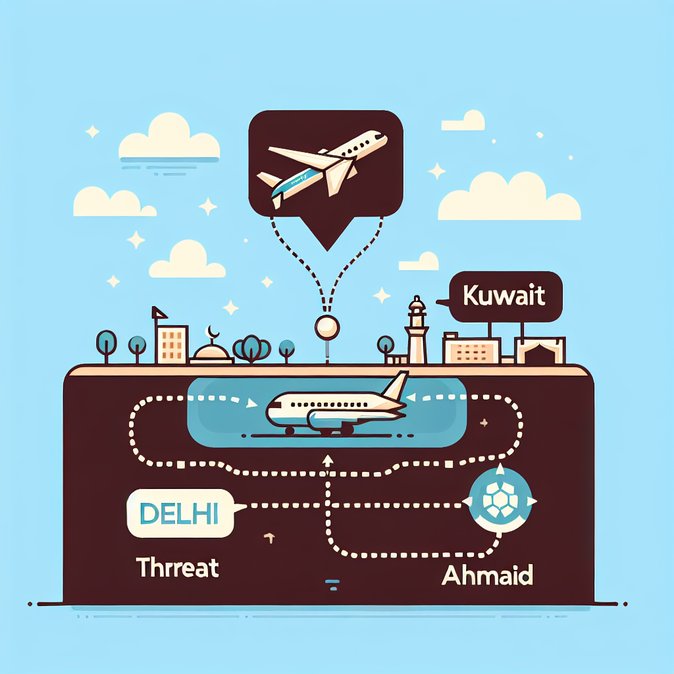
An IndiGo Airbus A320 operating flight 6E-1804 from Kuwait City to New Delhi made an unscheduled landing in Ahmedabad at 06:40 IST on 30 January after the crew discovered a handwritten bomb threat in the cabin. All 180 passengers and crew disembarked safely while Central Industrial Security Force (CISF) and Bomb Detection & Disposal Squad teams swept the aircraft; no explosive device was found.
Although a hoax, the incident triggered full-scale emergency protocols, including closure of one runway and a 90-minute halt to arriving traffic, causing knock-on delays for morning business flights. Passengers were accommodated in the terminal before the aircraft was cleared to continue to Delhi.
![Bomb Threat Diverts Kuwait–Delhi IndiGo Flight to Ahmedabad, Highlighting Ongoing Aviation Security Risks]()
For travelers shuttling between Kuwait, India and other regional hubs, obtaining the correct entry documents quickly can make the difference between a routine flight and a ruined schedule. Online platform VisaHQ streamlines e-visa and passport services for India and many other destinations, guiding users through requirements, fees and processing times in real time (see https://www.visahq.com/india/). Its on-call advisers can also coordinate courier pickup and status alerts, providing an extra layer of assurance when sudden diversions or rebooking force last-minute paperwork checks.
For mobility planners the diversion is a reminder that geopolitical tensions in the Gulf can spill over into day-to-day travel. Companies with expatriate staff on the Kuwait–India corridor—particularly in oil & gas and construction—should review travel-risk insurance and ensure employees understand emergency communication procedures. Airlines have reported a spike in threat calls since the October 2025 West Asia escalation, forcing carriers to absorb fuel and handling costs that may eventually feed through to ticket prices.
India’s Bureau of Civil Aviation Security is expected to issue an advisory urging carriers to tighten cabin surveillance and re-check cleaning protocols at out-stations. Frequent flyers should build extra buffer time into itineraries as security-related diversions or secondary screening become more common.
Although a hoax, the incident triggered full-scale emergency protocols, including closure of one runway and a 90-minute halt to arriving traffic, causing knock-on delays for morning business flights. Passengers were accommodated in the terminal before the aircraft was cleared to continue to Delhi.

For travelers shuttling between Kuwait, India and other regional hubs, obtaining the correct entry documents quickly can make the difference between a routine flight and a ruined schedule. Online platform VisaHQ streamlines e-visa and passport services for India and many other destinations, guiding users through requirements, fees and processing times in real time (see https://www.visahq.com/india/). Its on-call advisers can also coordinate courier pickup and status alerts, providing an extra layer of assurance when sudden diversions or rebooking force last-minute paperwork checks.
For mobility planners the diversion is a reminder that geopolitical tensions in the Gulf can spill over into day-to-day travel. Companies with expatriate staff on the Kuwait–India corridor—particularly in oil & gas and construction—should review travel-risk insurance and ensure employees understand emergency communication procedures. Airlines have reported a spike in threat calls since the October 2025 West Asia escalation, forcing carriers to absorb fuel and handling costs that may eventually feed through to ticket prices.
India’s Bureau of Civil Aviation Security is expected to issue an advisory urging carriers to tighten cabin surveillance and re-check cleaning protocols at out-stations. Frequent flyers should build extra buffer time into itineraries as security-related diversions or secondary screening become more common.