Switzerland will lead the Euro-African Dialogue on Migration and Development – better known as the Rabat Process – throughout 2026, succeeding Nigeria. The Federal Department of Justice and Police confirmed the hand-over on 29 January 2026. The forum, created in 2006, now gathers 57 European and African states plus the EU and ECOWAS to coordinate policy on asylum, legal migration, return and development cooperation.
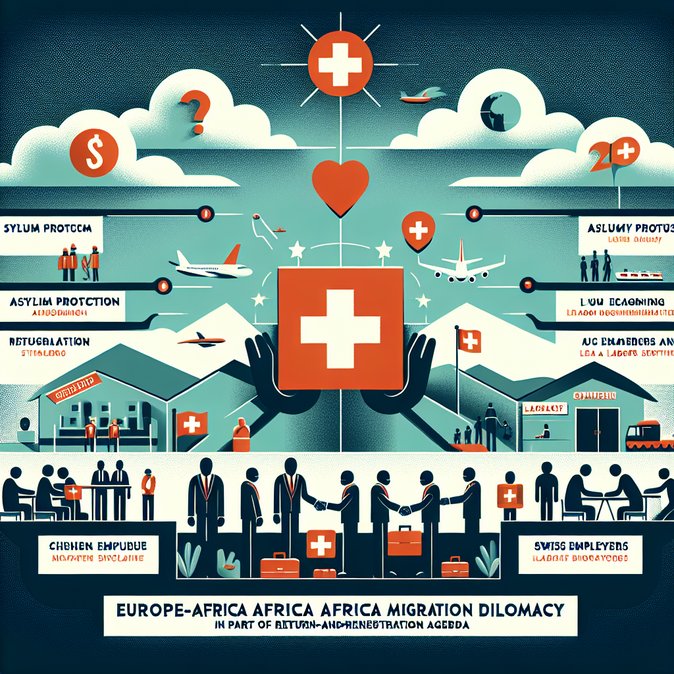
Berne wants to use its chairmanship to spotlight two dossiers that are also high on the domestic agenda: protection for people in need of asylum and the efficiency of return, readmission and reintegration procedures. The State Secretariat for Migration (SEM) says it will organise a series of thematic meetings in Switzerland and partner countries, culminating in a senior-officials’ conference in early 2027. A special anniversary programme will also mark the Rabat Process’s 20th year.
For Swiss employers and global-mobility managers the chairmanship is more than diplomatic symbolism. The Rabat Process feeds directly into EU visa, readmission and legal-migration talks; as an associated Schengen state, Switzerland can use the platform to shape talent-mobility pilot schemes or youth-exchange quotas with African partners. SEM officials have already hinted at interest in sector-specific training corridors for health-care and IT professionals – areas where Swiss skills shortages are acute.
![Switzerland assumes 2026 chair of Euro-African Rabat Process on Migration]()
The chair also allows Berne to burnish its reputation as an “honest broker” between north and south at a time when EU migration negotiations remain politically fraught. Analysts expect Switzerland to push for pragmatic solutions such as digital identity tools for returnees and pooled funding for reintegration projects that dovetail with private-sector recruitment channels. Companies sending staff to or from West Africa should monitor forthcoming thematic meetings for concrete pilot projects that could facilitate assignments or streamline visa processes.
For organisations and travellers who need to stay ahead of swiftly changing entry requirements across the 57 Rabat-Process countries, VisaHQ provides an online platform that simplifies visa checks and applications, offers door-to-door passport handling and sends real-time updates as policies shift. Swiss businesses can explore tailored services at https://www.visahq.com/switzerland/ to keep their assignments compliant while new training corridors and mobility schemes take shape.
Practically, the 2026 programme will require intensified travel by Swiss delegates to partner capitals and may generate short-notice demand for event logistics, interpretation and security support. Mobility teams should brief travellers on varying entry rules across Rabat Process member states and anticipate tighter media attention to Swiss migration policy decisions during the chairmanship year.
Berne wants to use its chairmanship to spotlight two dossiers that are also high on the domestic agenda: protection for people in need of asylum and the efficiency of return, readmission and reintegration procedures. The State Secretariat for Migration (SEM) says it will organise a series of thematic meetings in Switzerland and partner countries, culminating in a senior-officials’ conference in early 2027. A special anniversary programme will also mark the Rabat Process’s 20th year.
For Swiss employers and global-mobility managers the chairmanship is more than diplomatic symbolism. The Rabat Process feeds directly into EU visa, readmission and legal-migration talks; as an associated Schengen state, Switzerland can use the platform to shape talent-mobility pilot schemes or youth-exchange quotas with African partners. SEM officials have already hinted at interest in sector-specific training corridors for health-care and IT professionals – areas where Swiss skills shortages are acute.

The chair also allows Berne to burnish its reputation as an “honest broker” between north and south at a time when EU migration negotiations remain politically fraught. Analysts expect Switzerland to push for pragmatic solutions such as digital identity tools for returnees and pooled funding for reintegration projects that dovetail with private-sector recruitment channels. Companies sending staff to or from West Africa should monitor forthcoming thematic meetings for concrete pilot projects that could facilitate assignments or streamline visa processes.
For organisations and travellers who need to stay ahead of swiftly changing entry requirements across the 57 Rabat-Process countries, VisaHQ provides an online platform that simplifies visa checks and applications, offers door-to-door passport handling and sends real-time updates as policies shift. Swiss businesses can explore tailored services at https://www.visahq.com/switzerland/ to keep their assignments compliant while new training corridors and mobility schemes take shape.
Practically, the 2026 programme will require intensified travel by Swiss delegates to partner capitals and may generate short-notice demand for event logistics, interpretation and security support. Mobility teams should brief travellers on varying entry rules across Rabat Process member states and anticipate tighter media attention to Swiss migration policy decisions during the chairmanship year.