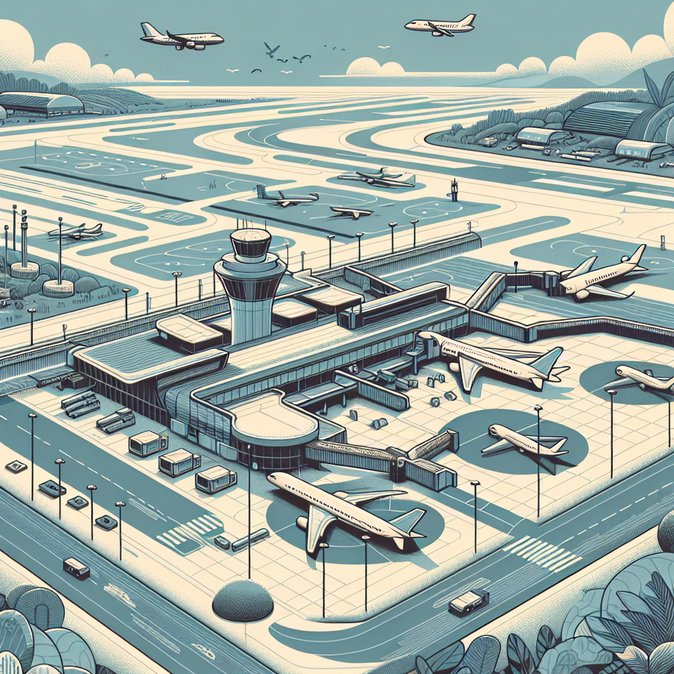
Business travel through Brazil’s third-busiest inland hub ground to a halt on 29 January when intense thunderstorms flooded runways at Belo Horizonte’s Confins Airport. According to TV Globo’s MG1 newscast, the airport suspended all movements for roughly two hours, causing a ripple of delays and cancellations on key domestic shuttle routes to São Paulo, Rio de Janeiro and Brasília.
Although the shutdown ended before midday, airline operations took the rest of the afternoon to stabilise. Azul cancelled nine flights and re-accommodated passengers via Pampulha and Uberlândia, while LATAM reported connection mis-shows that stranded travellers heading for onward international itineraries. Airport operator BH Airport deployed additional staff at immigration and customs to fast-track re-booked travellers, but queues at the taxi ranks stretched over 200 metres once services resumed.
Business travellers caught up in such disruptions can minimise stress by sorting their documentation well beforehand: VisaHQ (https://www.visahq.com/brazil/) offers a one-stop portal for securing Brazilian visas, passport renewals and invitation letters, letting mobility managers update itineraries quickly when weather or operational issues force last-minute changes.
![Heavy rain forces two-hour closure of Belo Horizonte/Confins International Airport]()
For mobility managers the incident is a reminder of seasonal weather volatility in Minas Gerais, which sits on key talent pipelines for the mining and automotive sectors. Companies with time-critical assignees are advised to keep contingency hotel blocks near the airport and to include extra buffer days on assignment letters during the January-March rainy season.
ANAC regulations require carriers to offer accommodation if delays exceed four hours; however, in practice vouchers ran out quickly, prompting social-media complaints. Passengers can file reimbursement claims via the Consumidor.gov.br platform within seven days.
BH Airport said it will bring forward drainage-system upgrades originally slated for April after inspections revealed clogged surface drains on taxiways. The concessionaire claims the fix should raise the airfield’s heavy-rain operating limit by 15 %.
Although the shutdown ended before midday, airline operations took the rest of the afternoon to stabilise. Azul cancelled nine flights and re-accommodated passengers via Pampulha and Uberlândia, while LATAM reported connection mis-shows that stranded travellers heading for onward international itineraries. Airport operator BH Airport deployed additional staff at immigration and customs to fast-track re-booked travellers, but queues at the taxi ranks stretched over 200 metres once services resumed.
Business travellers caught up in such disruptions can minimise stress by sorting their documentation well beforehand: VisaHQ (https://www.visahq.com/brazil/) offers a one-stop portal for securing Brazilian visas, passport renewals and invitation letters, letting mobility managers update itineraries quickly when weather or operational issues force last-minute changes.

For mobility managers the incident is a reminder of seasonal weather volatility in Minas Gerais, which sits on key talent pipelines for the mining and automotive sectors. Companies with time-critical assignees are advised to keep contingency hotel blocks near the airport and to include extra buffer days on assignment letters during the January-March rainy season.
ANAC regulations require carriers to offer accommodation if delays exceed four hours; however, in practice vouchers ran out quickly, prompting social-media complaints. Passengers can file reimbursement claims via the Consumidor.gov.br platform within seven days.
BH Airport said it will bring forward drainage-system upgrades originally slated for April after inspections revealed clogged surface drains on taxiways. The concessionaire claims the fix should raise the airfield’s heavy-rain operating limit by 15 %.