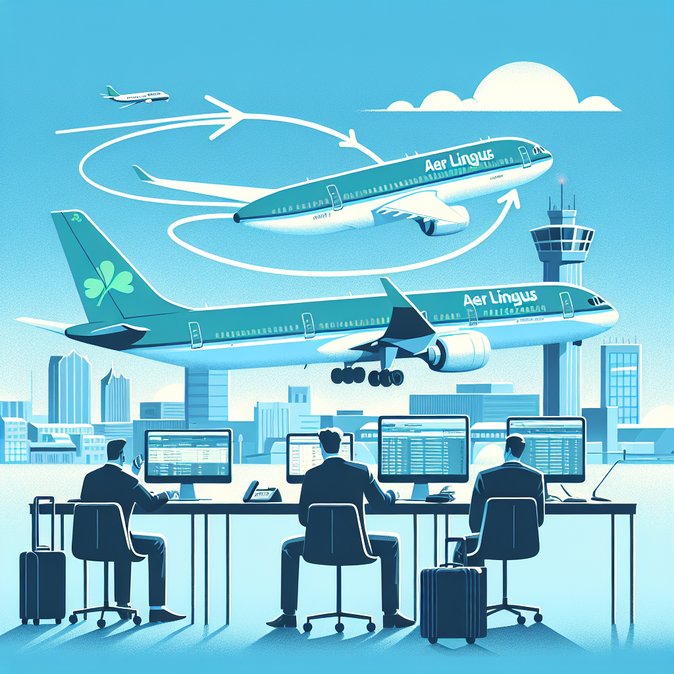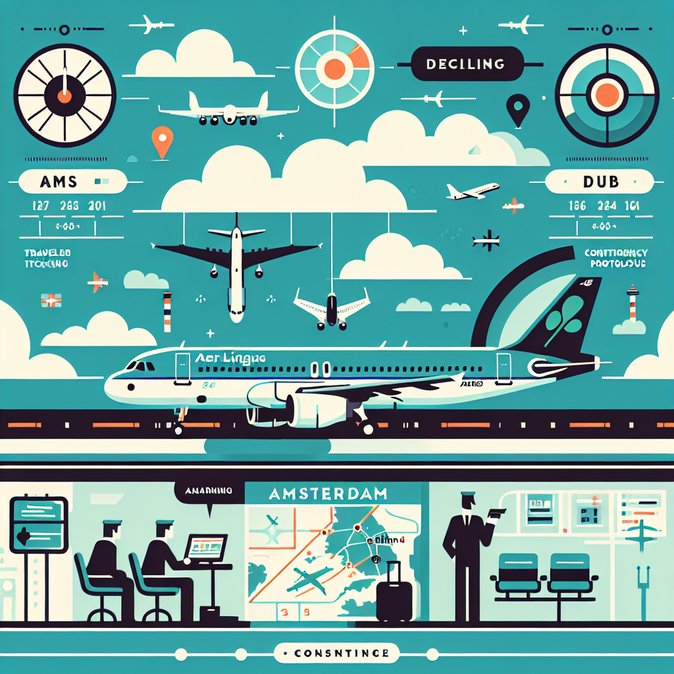
Aer Lingus flight EI 605 from Amsterdam declared a ‘MAYDAY’ on 28 January after suffering a contained engine failure on approach to Dublin. The Airbus A320 shut down its left engine and landed safely on runway 10, escorted by airport fire crews. None of the 152 passengers or six crew were injured, but arrival was delayed by more than two hours while the aircraft was towed for inspection.
Although single-engine landings are a standard Airbus procedure, the incident is a stark reminder that Irish corporate travel policies should include robust contingency plans—particularly for short-haul ‘out-and-back’ itineraries where same-day meetings leave little slack. Employers are advised to update duty-of-care checklists, ensuring traveller tracking tools can confirm safe arrival when diversions or technical events occur.
![Engine failure prompts ‘MAYDAY’ call on Amsterdam-Dublin flight; contingency planning in spotlight]()
For corporate travelers fine-tuning those contingency plans, VisaHQ’s Ireland portal (https://www.visahq.com/ireland/) can quickly secure or modify travel documentation when sudden re-routing, extended layovers, or additional Schengen crossings become necessary. By handling visas and entry formalities on short notice, VisaHQ helps companies keep itineraries intact and employees compliant—minimizing disruption when flight schedules go awry.
The episode comes as Aer Lingus overhauls its fleet-maintenance schedules in response to Pratt & Whitney’s global recall of geared-turbofan engines. Industry analysts warn that parts shortages may extend turnaround times, increasing the likelihood of ad-hoc equipment swaps or cancellations during the first half of 2026.
Separately, the airline has told customers it will cease all long-haul flights from its Manchester base in late February, redeploying wide-body aircraft to Dublin for the summer peak. Passengers ticketed on the affected routes have been offered refunds or re-routing via the Irish capital—a move that could funnel additional connecting traffic through Dublin just as the airport hits record volumes.
Although single-engine landings are a standard Airbus procedure, the incident is a stark reminder that Irish corporate travel policies should include robust contingency plans—particularly for short-haul ‘out-and-back’ itineraries where same-day meetings leave little slack. Employers are advised to update duty-of-care checklists, ensuring traveller tracking tools can confirm safe arrival when diversions or technical events occur.

For corporate travelers fine-tuning those contingency plans, VisaHQ’s Ireland portal (https://www.visahq.com/ireland/) can quickly secure or modify travel documentation when sudden re-routing, extended layovers, or additional Schengen crossings become necessary. By handling visas and entry formalities on short notice, VisaHQ helps companies keep itineraries intact and employees compliant—minimizing disruption when flight schedules go awry.
The episode comes as Aer Lingus overhauls its fleet-maintenance schedules in response to Pratt & Whitney’s global recall of geared-turbofan engines. Industry analysts warn that parts shortages may extend turnaround times, increasing the likelihood of ad-hoc equipment swaps or cancellations during the first half of 2026.
Separately, the airline has told customers it will cease all long-haul flights from its Manchester base in late February, redeploying wide-body aircraft to Dublin for the summer peak. Passengers ticketed on the affected routes have been offered refunds or re-routing via the Irish capital—a move that could funnel additional connecting traffic through Dublin just as the airport hits record volumes.