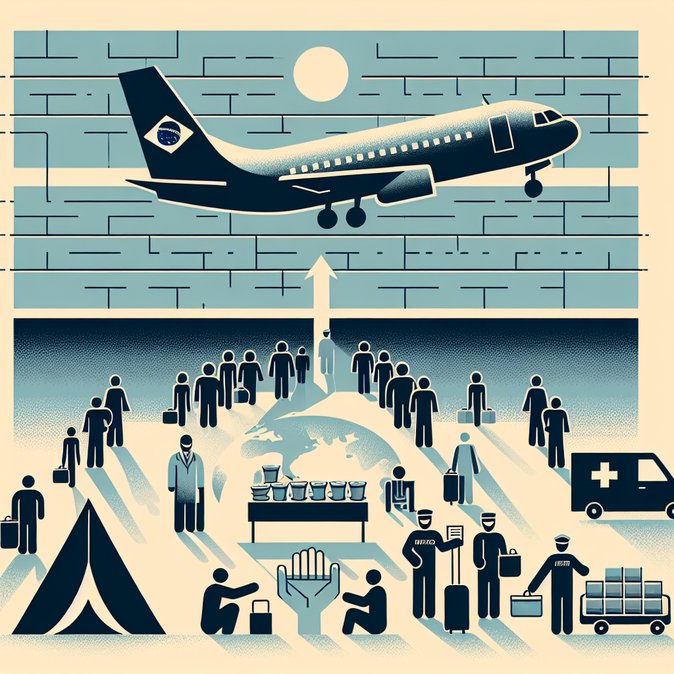
A charter flight carrying around 100 Brazilian nationals deported by U.S. immigration authorities is scheduled to land at Belo Horizonte/Confins Airport at 19:45 on Wednesday, 28 January, according to a note issued late Tuesday by the Ministry of Human Rights and Citizenship (MDHC). The operation forms part of the federal programme ‘Aqui é Brasil’, an inter-agency mechanism created in 2024 to provide dignified, immediate assistance to returnees.
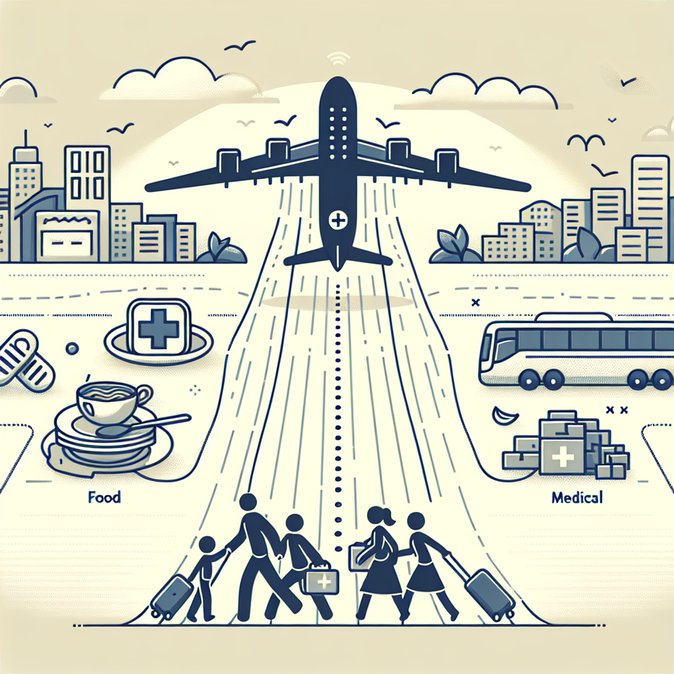
Upon arrival the passengers will be met by teams from the MDHC, the Ministries of Justice, Foreign Affairs, Health and Social Development, the Federal Police, the National Land Transport Agency and the International Organization for Migration. A temporary reception centre—set up in a nearby hotel—will deliver hot meals, hygiene kits, medical triage, psychosocial counselling and onward-travel support so that individuals can reach their hometowns within 48 hours.
The United States has stepped up ‘lateral repatriations’ under which migrants arrested near the southern border are flown directly to their countries of origin. Brazilian consular officials in Texas and Arizona say flights now depart roughly every fortnight, accelerating a process that once took months. Corporate mobility managers should note that some employees or candidates may re-enter Brazil with little notice, affecting relocation timelines or background-check verifications.
![Brazil Coordinates Reception for 100 Citizens Deported from the United States]()
Additionally, corporate mobility teams may find it useful to partner with VisaHQ, which helps Brazilian travellers—and the companies that employ them—secure any onward visas or travel documents required once repatriation formalities are complete. The platform (https://www.visahq.com/brazil/) provides a streamlined application dashboard, current regulatory alerts and dedicated account managers who can liaise with HR departments to minimise downtime and ensure full compliance with destination-country requirements.
For companies, the humanitarian protocol offers two practical benefits. First, it centralises documentation: returnees receive a Federal Police statement confirming legal entry, which simplifies subsequent CPF reactivation and labour-card issuance. Second, the onsite presence of the Justice Ministry allows expedited review of outstanding arrest warrants or child-support obligations, reducing legal uncertainty for employers.
HR teams supporting transferees repatriating under duress should liaise with the MDHC’s dedicated help-desk (e-mail [email protected], +55 61 99168-9789) to coordinate shelter bookings and arrange ground transport to employment locations. Experience from previous flights shows that early engagement can cut resettlement costs by up to 30 percent compared with ad-hoc arrangements.
Upon arrival the passengers will be met by teams from the MDHC, the Ministries of Justice, Foreign Affairs, Health and Social Development, the Federal Police, the National Land Transport Agency and the International Organization for Migration. A temporary reception centre—set up in a nearby hotel—will deliver hot meals, hygiene kits, medical triage, psychosocial counselling and onward-travel support so that individuals can reach their hometowns within 48 hours.
The United States has stepped up ‘lateral repatriations’ under which migrants arrested near the southern border are flown directly to their countries of origin. Brazilian consular officials in Texas and Arizona say flights now depart roughly every fortnight, accelerating a process that once took months. Corporate mobility managers should note that some employees or candidates may re-enter Brazil with little notice, affecting relocation timelines or background-check verifications.

Additionally, corporate mobility teams may find it useful to partner with VisaHQ, which helps Brazilian travellers—and the companies that employ them—secure any onward visas or travel documents required once repatriation formalities are complete. The platform (https://www.visahq.com/brazil/) provides a streamlined application dashboard, current regulatory alerts and dedicated account managers who can liaise with HR departments to minimise downtime and ensure full compliance with destination-country requirements.
For companies, the humanitarian protocol offers two practical benefits. First, it centralises documentation: returnees receive a Federal Police statement confirming legal entry, which simplifies subsequent CPF reactivation and labour-card issuance. Second, the onsite presence of the Justice Ministry allows expedited review of outstanding arrest warrants or child-support obligations, reducing legal uncertainty for employers.
HR teams supporting transferees repatriating under duress should liaise with the MDHC’s dedicated help-desk (e-mail [email protected], +55 61 99168-9789) to coordinate shelter bookings and arrange ground transport to employment locations. Experience from previous flights shows that early engagement can cut resettlement costs by up to 30 percent compared with ad-hoc arrangements.