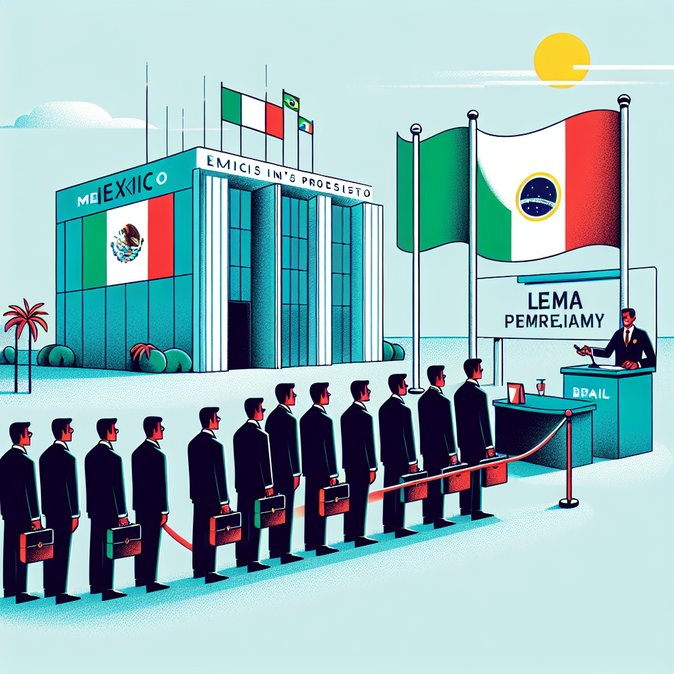
Brazil’s foreign ministry confirmed on 25 January 2026 that it has assumed responsibility for Mexico’s embassy and consular interests in Peru, acting as a ‘protecting power’ after Lima severed diplomatic relations with Mexico in November 2025. The rupture followed Mexico’s decision to grant asylum to former Peruvian prime minister Betssy Chávez, sentenced to more than 11 years in prison on rebellion charges.
Under the Vienna Convention on Diplomatic Relations, a third-country protecting power steps in to safeguard premises, archives and citizens’ interests when two nations cut ties. Brazilian diplomats have now taken charge of the Mexican chancery building, the head-of-mission residence and consular files in Lima; the Mexican flag has been replaced by Brazil’s. Although Mexico had already withdrawn its diplomats, basic consular services for Mexican nationals—such as passport renewals and emergency travel documents—are expected to resume under Brazilian stewardship within two weeks.
![Brazil Becomes Protecting Power for Mexico in Peru After Diplomatic Fallout]()
For companies and individual travelers who suddenly face shifting paperwork channels, VisaHQ can act as a one-stop interface with the new Brazilian custodians. The firm’s Brazil portal (https://www.visahq.com/brazil/) tracks real-time consular changes and can arrange expedited legalisations, apostilles and passport services, helping mobility teams keep projects on schedule despite the diplomatic reshuffle.
For mobility managers the arrangement is critical: more than 2,000 Mexican expats work in mining and infrastructure projects across Peru and rely on embassy support for document authentication, legalisation and crisis assistance. Brazilian officials said existing consular staff in their Lima mission will handle the extra workload, and a dedicated hotline in Spanish is being set up.
The episode also illustrates Brazil’s growing diplomatic weight in Latin America. Acting as a neutral intermediary helps maintain consular stability and protects regional supply-chains, given that Peruvian customs often require embassy legalisations for work permits and cargo manifests. Companies should update their emergency-contact protocols to reflect the new protecting-power arrangements and brief travelling employees accordingly.
Under the Vienna Convention on Diplomatic Relations, a third-country protecting power steps in to safeguard premises, archives and citizens’ interests when two nations cut ties. Brazilian diplomats have now taken charge of the Mexican chancery building, the head-of-mission residence and consular files in Lima; the Mexican flag has been replaced by Brazil’s. Although Mexico had already withdrawn its diplomats, basic consular services for Mexican nationals—such as passport renewals and emergency travel documents—are expected to resume under Brazilian stewardship within two weeks.

For companies and individual travelers who suddenly face shifting paperwork channels, VisaHQ can act as a one-stop interface with the new Brazilian custodians. The firm’s Brazil portal (https://www.visahq.com/brazil/) tracks real-time consular changes and can arrange expedited legalisations, apostilles and passport services, helping mobility teams keep projects on schedule despite the diplomatic reshuffle.
For mobility managers the arrangement is critical: more than 2,000 Mexican expats work in mining and infrastructure projects across Peru and rely on embassy support for document authentication, legalisation and crisis assistance. Brazilian officials said existing consular staff in their Lima mission will handle the extra workload, and a dedicated hotline in Spanish is being set up.
The episode also illustrates Brazil’s growing diplomatic weight in Latin America. Acting as a neutral intermediary helps maintain consular stability and protects regional supply-chains, given that Peruvian customs often require embassy legalisations for work permits and cargo manifests. Companies should update their emergency-contact protocols to reflect the new protecting-power arrangements and brief travelling employees accordingly.