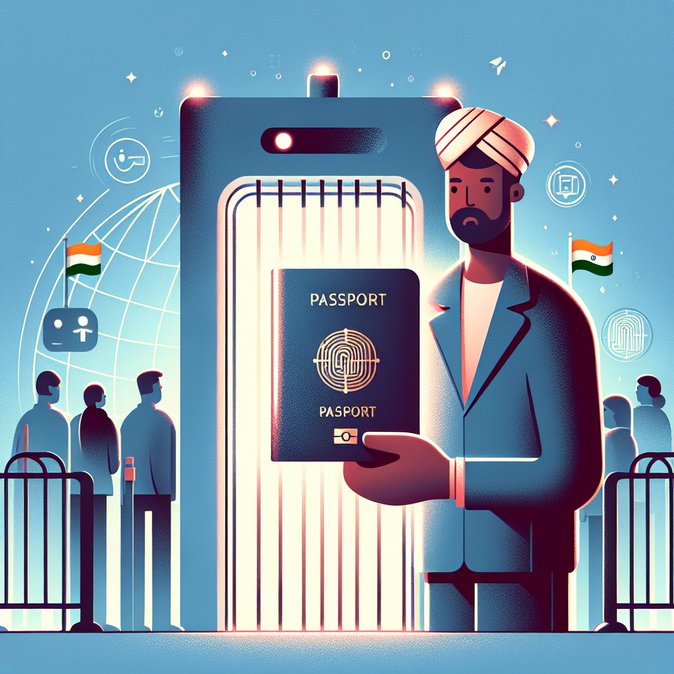
The Ministry of External Affairs’ phased rollout of ICAO-compliant e-passports has entered a new high-volume stage, with applicant data showing a sharp uptick in requests for the biometric booklet since January. A Times of India explainer published on 24 January details three key drivers: enhanced anti-fraud security, faster e-gate immigration processing, and universal compatibility with the automated border systems more countries are installing ahead of the 2026 travel-tech wave.
Launched nationally in April 2024 under Passport Seva 2.0, India’s e-passport contains an encrypted micro-chip storing the holder’s facial image and fingerprints. Officials say 37 regional passport offices are now issuing only e-passports for new or renewed applications, and legacy booklets remain valid until expiry but cannot be ‘upgraded’.
![e-Passport Adoption Surges: Why Indian Travellers Are Opting for Chip-Enabled Passports]()
For travellers who want to complete their renewals or obtain destination visas without multiple platform logins, VisaHQ’s India portal (https://www.visahq.com/india/) provides an integrated solution that bundles online forms, document checks and secure courier pick-ups. HR teams can monitor application status for entire employee groups in one dashboard, smoothing the shift to e-passports while also handling any visa requirements for upcoming trips.
For frequent-flyer employees on regional rotations the benefit is most visible at Delhi, Mumbai and Bengaluru airports, where automated e-gates slash average arrival-queue times from 25 minutes to under five. Abroad, countries such as Singapore, the UAE and Australia already accept Indian e-passports at their SmartGate lines, offering further time savings.
Mobility teams should advise travellers whose passports expire within the next 18 months to renew early and request an e-passport so they are future-ready for upcoming digital-visa schemes like the UK ETA and EU ETIAS. Companies should also update HRIS systems to capture the new 64-character Machine-Readable Zone format and the 10-year validity start date to avoid check-in glitches.
Launched nationally in April 2024 under Passport Seva 2.0, India’s e-passport contains an encrypted micro-chip storing the holder’s facial image and fingerprints. Officials say 37 regional passport offices are now issuing only e-passports for new or renewed applications, and legacy booklets remain valid until expiry but cannot be ‘upgraded’.

For travellers who want to complete their renewals or obtain destination visas without multiple platform logins, VisaHQ’s India portal (https://www.visahq.com/india/) provides an integrated solution that bundles online forms, document checks and secure courier pick-ups. HR teams can monitor application status for entire employee groups in one dashboard, smoothing the shift to e-passports while also handling any visa requirements for upcoming trips.
For frequent-flyer employees on regional rotations the benefit is most visible at Delhi, Mumbai and Bengaluru airports, where automated e-gates slash average arrival-queue times from 25 minutes to under five. Abroad, countries such as Singapore, the UAE and Australia already accept Indian e-passports at their SmartGate lines, offering further time savings.
Mobility teams should advise travellers whose passports expire within the next 18 months to renew early and request an e-passport so they are future-ready for upcoming digital-visa schemes like the UK ETA and EU ETIAS. Companies should also update HRIS systems to capture the new 64-character Machine-Readable Zone format and the 10-year validity start date to avoid check-in glitches.
More From India
View all
MP High Court Rules Afghan Student’s Post-Study Overstay Illegal, Signals Tougher Visa Enforcement

U.S. Pause on Immigrant Visas for 75 Countries Could Add 50,000 Employment Green Cards—Big Win for Indian Professionals