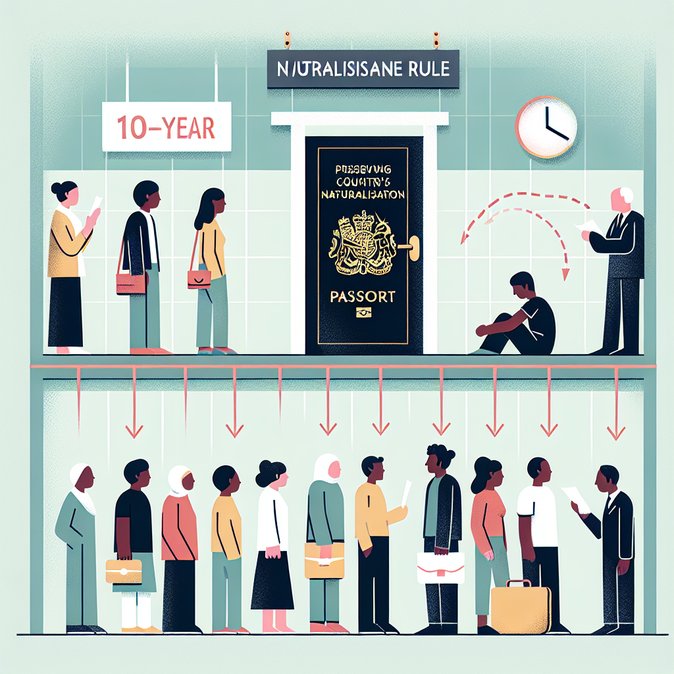
The effort to radically simplify the path to the Swiss passport has suffered a major setback. On 24 January 2026 the House of Representatives’ Political Institutions Committee voted 17-8 to reject the popular “Democracy Initiative”, which would have transferred naturalisation rules from the cantons to the Confederation and allowed eligible foreign residents to apply for citizenship after only five years in the country instead of the current ten (swissinfo.ch).
Committee members argued that such a sharp reduction would undermine integration checks that are today carried out locally. They were particularly critical of scrapping minimum-stay periods in a canton or commune, insisting that a close familiarity with local living conditions is essential before new citizens receive full political rights. A minority on the committee countered that uniform federal rules would make the system fairer and more transparent for Switzerland’s 2.2 million foreign residents (swissinfo.ch).
Individuals and employers who need assistance securing the right Swiss entry visas or residence permits can turn to VisaHQ for streamlined online processing and real-time status tracking. The dedicated Switzerland portal (https://www.visahq.com/switzerland/) lets users check up-to-date requirements, upload documents securely and receive expert guidance—helping them lay the groundwork for long-term residence and, eventually, naturalisation under whichever rules parliament finally adopts.
![Swiss parliamentary committee blocks plan to halve residency period for citizenship]()
To address growing cross-canton mobility, the committee proposed a counter-motion that would cap cantonal and communal residence requirements at two to three years but leave the overall ten-year national residency rule intact. The Council of States’ sister committee will examine this compromise in the coming weeks, and the full House will then decide whether to endorse, amend or overturn the committee’s recommendation.
If parliament ultimately rejects the initiative, its promoters can still force a nationwide vote provided they gather the required 100,000 signatures. Business groups that rely on foreign talent are watching the debate closely: shorter waiting times could help companies integrate long-term employees more fully, while opponents fear the reputational cost of granting citizenship “too easily”.
For international HR and global-mobility managers the takeaway is clear: the Swiss naturalisation timetable will not change in the near term. Companies should continue to plan assignments on the assumption that non-EU/EFTA staff will need a decade of residence—and a permanent C-permit—before they can naturalise, while monitoring parliament for possible incremental tweaks to cantonal waiting periods.
Committee members argued that such a sharp reduction would undermine integration checks that are today carried out locally. They were particularly critical of scrapping minimum-stay periods in a canton or commune, insisting that a close familiarity with local living conditions is essential before new citizens receive full political rights. A minority on the committee countered that uniform federal rules would make the system fairer and more transparent for Switzerland’s 2.2 million foreign residents (swissinfo.ch).
Individuals and employers who need assistance securing the right Swiss entry visas or residence permits can turn to VisaHQ for streamlined online processing and real-time status tracking. The dedicated Switzerland portal (https://www.visahq.com/switzerland/) lets users check up-to-date requirements, upload documents securely and receive expert guidance—helping them lay the groundwork for long-term residence and, eventually, naturalisation under whichever rules parliament finally adopts.

To address growing cross-canton mobility, the committee proposed a counter-motion that would cap cantonal and communal residence requirements at two to three years but leave the overall ten-year national residency rule intact. The Council of States’ sister committee will examine this compromise in the coming weeks, and the full House will then decide whether to endorse, amend or overturn the committee’s recommendation.
If parliament ultimately rejects the initiative, its promoters can still force a nationwide vote provided they gather the required 100,000 signatures. Business groups that rely on foreign talent are watching the debate closely: shorter waiting times could help companies integrate long-term employees more fully, while opponents fear the reputational cost of granting citizenship “too easily”.
For international HR and global-mobility managers the takeaway is clear: the Swiss naturalisation timetable will not change in the near term. Companies should continue to plan assignments on the assumption that non-EU/EFTA staff will need a decade of residence—and a permanent C-permit—before they can naturalise, while monitoring parliament for possible incremental tweaks to cantonal waiting periods.