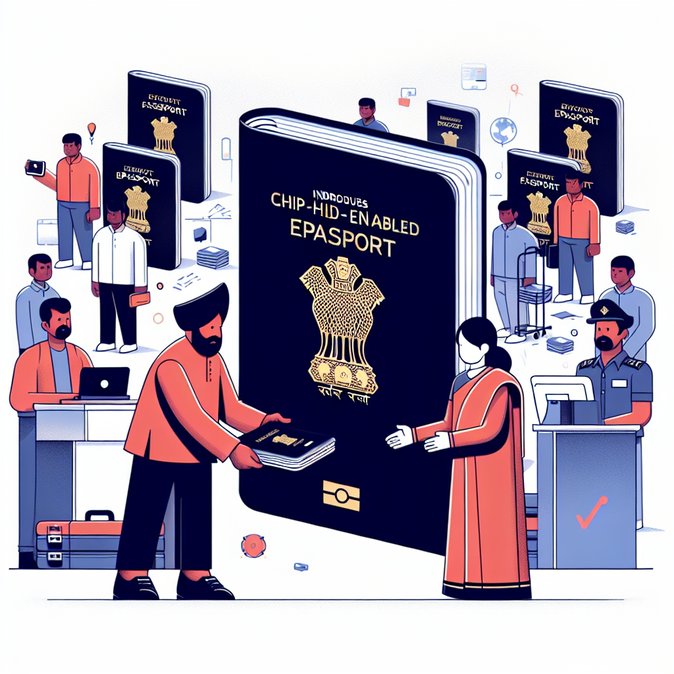
The Indian government’s silent transition to biometric ePassports appears to be winning converts. Travel industry data compiled on 23 January show that a growing share of new passport applicants—and many renewals—now opt for the microchip-embedded booklet. The three biggest selling points: stronger fraud protection, faster e-gates at major airports, and universal compliance with ICAO standards.
For applicants who prefer a guided application experience, visa and passport consultancy firm VisaHQ offers end-to-end support for India’s biometric passport upgrades, including document checks, form filling, appointment booking, and real-time tracking. Their dedicated India portal (https://www.visahq.com/india/) also lists the latest entry-visa requirements for more than 200 destinations, making it a one-stop resource for frequent travellers moving to chip-enabled travel documents.
![ePassports Gain Traction Among Indian Travellers for Security and Speed]()
Unlike legacy documents, the ePassport stores an encrypted facial image and demographic data. Immigration officers can scan the chip in seconds, eliminating manual keying errors and slashing queue times. Delhi and Bengaluru airports report that automated gates clear ePassport holders 35 percent faster than traditional counters.
Security is another draw. The chip’s digital signature makes tampering almost impossible, a boon for business travellers whose passports are frequent targets of cloning rings that specialise in high-value visas. European Schengen states already require chip-based passports for self-service entry; India’s rollout thus future-proofs its citizens against looming international mandates.
Officials say more than 8 million ePassports have been issued since mid-2025, and production capacity will double by April 2026 when the Nashik press brings a second RFID line online. Companies organising group travel may wish to encourage employees up for renewal to choose the ePassport to avoid manual-entry bottlenecks abroad.
For applicants who prefer a guided application experience, visa and passport consultancy firm VisaHQ offers end-to-end support for India’s biometric passport upgrades, including document checks, form filling, appointment booking, and real-time tracking. Their dedicated India portal (https://www.visahq.com/india/) also lists the latest entry-visa requirements for more than 200 destinations, making it a one-stop resource for frequent travellers moving to chip-enabled travel documents.

Unlike legacy documents, the ePassport stores an encrypted facial image and demographic data. Immigration officers can scan the chip in seconds, eliminating manual keying errors and slashing queue times. Delhi and Bengaluru airports report that automated gates clear ePassport holders 35 percent faster than traditional counters.
Security is another draw. The chip’s digital signature makes tampering almost impossible, a boon for business travellers whose passports are frequent targets of cloning rings that specialise in high-value visas. European Schengen states already require chip-based passports for self-service entry; India’s rollout thus future-proofs its citizens against looming international mandates.
Officials say more than 8 million ePassports have been issued since mid-2025, and production capacity will double by April 2026 when the Nashik press brings a second RFID line online. Companies organising group travel may wish to encourage employees up for renewal to choose the ePassport to avoid manual-entry bottlenecks abroad.