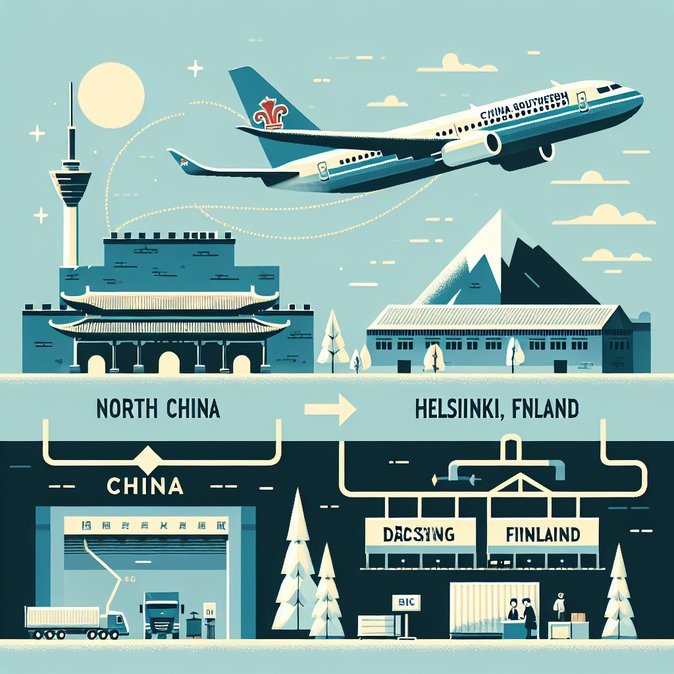
In a sign of gradually normalising long-haul capacity, China Southern Airlines confirmed it will restart nonstop flights between Beijing Daxing and Helsinki Vantaa at the end of March 2026. The route, paused since early 2021, will launch with three weekly Boeing 787-9 services and ramp up to daily by the northern-summer timetable. (aviation.direct)
For Finland’s airport operator Finavia the announcement restores its only direct gateway to North China, crucial for export shippers of machinery, timber, and temperature-sensitive pharmaceuticals that previously relied on the six-hour flight. Business travellers also welcomed the return: Finnish mobile-tech firms, paper producers and design houses all maintain operations in Beijing and Tianjin, while Chinese investors eyeing Arctic logistics projects prefer Helsinki for Schengen entry.
The decision follows Finavia’s targeted incentives—waiving parking fees and offering marketing support—combined with the Finnish government’s push to diversify beyond over-reliance on transfer traffic through Russian airspace, which remains closed. China Southern will overfly Central Asia and the Baltics, adding roughly one hour to block time but avoiding the longer detour that previously made the route uneconomical.
![China Southern to Reopen Beijing–Helsinki Link, Reviving North-Europe Connectivity]()
Travellers who do need visas—whether it’s a Schengen permit for Chinese citizens or a business visa for Finns heading to Beijing—can streamline the paperwork through VisaHQ. The platform’s step-by-step digital wizard, detailed guidance and courier options (https://www.visahq.com/china/) help applicants avoid embassy queues and last-minute surprises, making it easier to lock in flights as soon as seats open up.
Mobility managers see strategic value: Helsinki’s compact terminal enables 35-minute EU connections, allowing Chinese passengers to reach over 50 European cities on a single ticket. Likewise, European corporates can leverage China Southern’s Daxing hub for rapid transfers to secondary mainland cities, bypassing the congested Beijing Capital airport. Cargo capacity—up to 20 tonnes per flight—will help Finnish Lapland’s seafood exporters and China’s e-commerce giants moving fashion goods westward.
Visa logistics remain straightforward: Finland is on Beijing’s unilateral 30-day visa-free list for short stays, and China resumed full Schengen visa processing in Helsinki last autumn. Travel advisers, however, caution that seat demand could outstrip supply if geopolitical conditions worsen on other Asia-Europe corridors. Advance block-booking and dynamic pricing tools are recommended to secure inventory during the ramp-up phase.
For Finland’s airport operator Finavia the announcement restores its only direct gateway to North China, crucial for export shippers of machinery, timber, and temperature-sensitive pharmaceuticals that previously relied on the six-hour flight. Business travellers also welcomed the return: Finnish mobile-tech firms, paper producers and design houses all maintain operations in Beijing and Tianjin, while Chinese investors eyeing Arctic logistics projects prefer Helsinki for Schengen entry.
The decision follows Finavia’s targeted incentives—waiving parking fees and offering marketing support—combined with the Finnish government’s push to diversify beyond over-reliance on transfer traffic through Russian airspace, which remains closed. China Southern will overfly Central Asia and the Baltics, adding roughly one hour to block time but avoiding the longer detour that previously made the route uneconomical.

Travellers who do need visas—whether it’s a Schengen permit for Chinese citizens or a business visa for Finns heading to Beijing—can streamline the paperwork through VisaHQ. The platform’s step-by-step digital wizard, detailed guidance and courier options (https://www.visahq.com/china/) help applicants avoid embassy queues and last-minute surprises, making it easier to lock in flights as soon as seats open up.
Mobility managers see strategic value: Helsinki’s compact terminal enables 35-minute EU connections, allowing Chinese passengers to reach over 50 European cities on a single ticket. Likewise, European corporates can leverage China Southern’s Daxing hub for rapid transfers to secondary mainland cities, bypassing the congested Beijing Capital airport. Cargo capacity—up to 20 tonnes per flight—will help Finnish Lapland’s seafood exporters and China’s e-commerce giants moving fashion goods westward.
Visa logistics remain straightforward: Finland is on Beijing’s unilateral 30-day visa-free list for short stays, and China resumed full Schengen visa processing in Helsinki last autumn. Travel advisers, however, caution that seat demand could outstrip supply if geopolitical conditions worsen on other Asia-Europe corridors. Advance block-booking and dynamic pricing tools are recommended to secure inventory during the ramp-up phase.