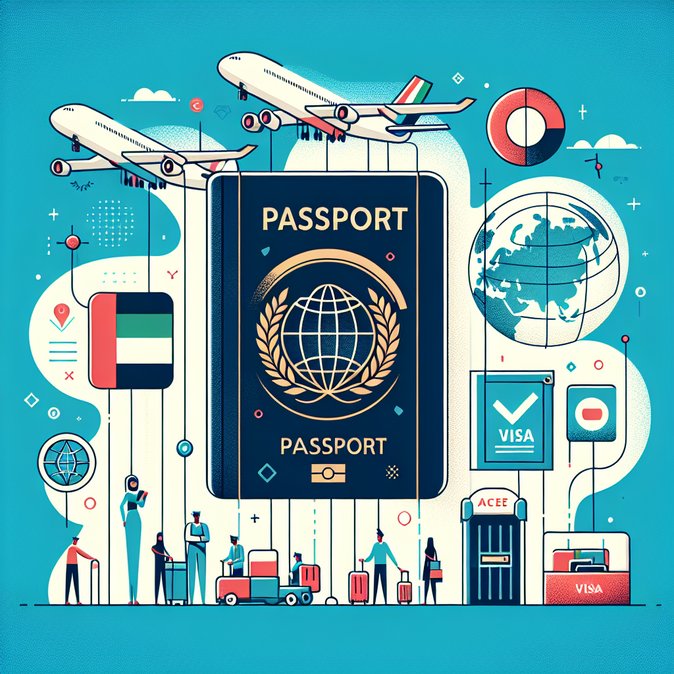
The latest Henley Passport Index, released on 23 January, keeps the United Arab Emirates in the world’s fifth-most powerful slot, with visa-free or visa-on-arrival access to 184 destinations. Only Singapore, Japan, South Korea and a cluster of EU states score higher. The result caps a remarkable 20-year climb in which the Emirati passport has jumped 57 places – the biggest leap recorded by any country since the index began in 2006. (indianexpress.com)
For UAE citizens and their employers, the ranking translates into shorter lead times for business travel, fewer consulate visits and lower documentation costs. Mobility specialists note that visa-free access now covers 90 percent of the UAE’s top trade partners, simplifying last-minute trips for deal-making and after-sales support.
For trips that still require documentation, or for non-Emirati team members tagging along, VisaHQ’s UAE portal (https://www.visahq.com/united-arab-emirates/) consolidates up-to-date entry rules, e-visa forms and courier options, letting travelers and HR departments sidestep consulate queues and focus on the agenda.
![UAE passport retains top-five global ranking as Henley Index 2026 highlights gulf in mobility rights]()
Behind the ascent lies an aggressive diplomacy drive. Since 2015 the UAE has signed mutual visa-waiver agreements with the EU, Russia, China, Israel and, most recently, Mexico and South Africa. Officials say negotiations are under way with several Latin American states and with Australia for electronic travel authority (ETA) parity.
The index also underscores widening inequality: the gap between the top and bottom passports now stands at 168 destinations, up from 118 in 2006. Companies relocating talent from lower-ranking countries must therefore budget extra time for Schengen, UK and US visas even as Emirati staff enjoy near-global mobility.
Practical tip: when structuring multi-national project teams, consider leveraging UAE nationals for markets that remain visa-restricted for other employees, thereby reducing administrative friction and travel delays.
For UAE citizens and their employers, the ranking translates into shorter lead times for business travel, fewer consulate visits and lower documentation costs. Mobility specialists note that visa-free access now covers 90 percent of the UAE’s top trade partners, simplifying last-minute trips for deal-making and after-sales support.
For trips that still require documentation, or for non-Emirati team members tagging along, VisaHQ’s UAE portal (https://www.visahq.com/united-arab-emirates/) consolidates up-to-date entry rules, e-visa forms and courier options, letting travelers and HR departments sidestep consulate queues and focus on the agenda.

Behind the ascent lies an aggressive diplomacy drive. Since 2015 the UAE has signed mutual visa-waiver agreements with the EU, Russia, China, Israel and, most recently, Mexico and South Africa. Officials say negotiations are under way with several Latin American states and with Australia for electronic travel authority (ETA) parity.
The index also underscores widening inequality: the gap between the top and bottom passports now stands at 168 destinations, up from 118 in 2006. Companies relocating talent from lower-ranking countries must therefore budget extra time for Schengen, UK and US visas even as Emirati staff enjoy near-global mobility.
Practical tip: when structuring multi-national project teams, consider leveraging UAE nationals for markets that remain visa-restricted for other employees, thereby reducing administrative friction and travel delays.