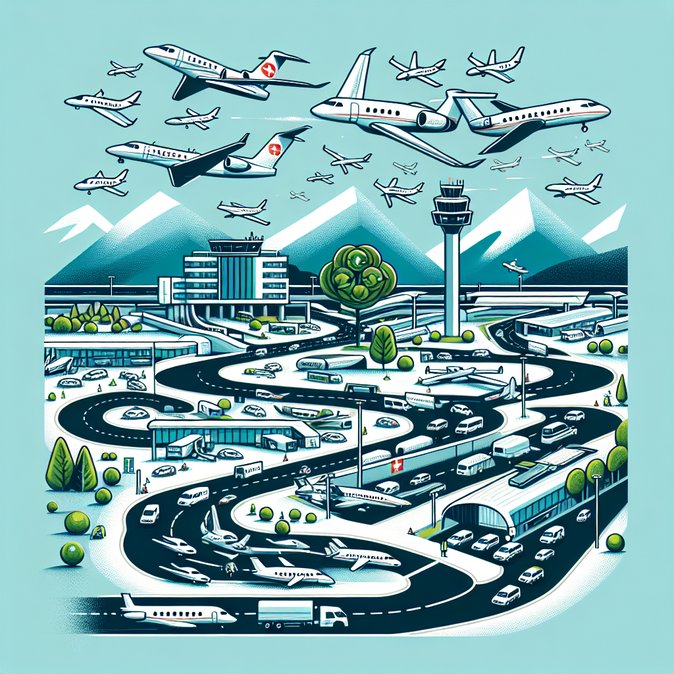
Switzerland’s main aviation gateway recorded an unprecedented 850 business-jet movements between 19 and 21 January 2026 as leaders, CEOs and celebrities flocked to the World Economic Forum in Davos. Open-source flight-tracking analysed by India Today’s OSINT team counted 216 separate aircraft on the ramp at Zurich alone, with London, Amsterdam and Frankfurt topping the origin list. Aircraft ranged from Gulfstream G650s to ultra-long-range Bombardier Global 7500s, many arriving with delegation support staff who transferred to helicopter shuttles for the final hop to the Alps.
Airport slot coordinators were forced to activate contingency plans normally reserved for the summer peak, reallocating overnight parking to Dübendorf military airfield and imposing 30-minute ground-time caps for many operators. Swiss air-navigation provider Skyguide layered the ad-hoc traffic onto an already restricted airspace, LS-R 13, which the Swiss Air Force has controlled since 16 January. Ground handlers report that demand for premium immigration fast-track services tripled compared with WEF 2025, underscoring how short-notice VIP arrivals can strain border-control resources even in a Schengen environment.
![WEF private-jet surge drives busiest weekend in Zurich Airport history]()
Meanwhile, travelers heading to Davos who still needed to sort out Schengen paperwork found an ally in VisaHQ, whose digital platform streamlines Swiss visa applications for delegates, support staff and media alike. The service offers real-time tracking, document review and courier options, and its dedicated Switzerland page (https://www.visahq.com/switzerland/) proved especially useful for last-minute itinerary changes prompted by slot reallocations.
For corporate travel managers, the spike translates into higher costs and longer lead times for securing landing permits during major events in Switzerland. Charter operators warn that similar constraints are likely during future high-profile summits and advise clients to request Swiss landing slots at least two weeks in advance—even for non-commercial flights that usually receive diplomatic clearance.
The environmental optics were also impossible to ignore: climate-focused panels inside the Congress Centre coincided with record jet fuel burn just 120 kilometres away. Bern has defended the operational footprint by citing strict CO₂ offset requirements and the economic value that the WEF brings to the Graubünden region. Still, local NGOs are pressing the Federal Office of Civil Aviation (FOCA) to publish a post-event emissions report and explore a special landing-fee surcharge for future forums.
Airport slot coordinators were forced to activate contingency plans normally reserved for the summer peak, reallocating overnight parking to Dübendorf military airfield and imposing 30-minute ground-time caps for many operators. Swiss air-navigation provider Skyguide layered the ad-hoc traffic onto an already restricted airspace, LS-R 13, which the Swiss Air Force has controlled since 16 January. Ground handlers report that demand for premium immigration fast-track services tripled compared with WEF 2025, underscoring how short-notice VIP arrivals can strain border-control resources even in a Schengen environment.

Meanwhile, travelers heading to Davos who still needed to sort out Schengen paperwork found an ally in VisaHQ, whose digital platform streamlines Swiss visa applications for delegates, support staff and media alike. The service offers real-time tracking, document review and courier options, and its dedicated Switzerland page (https://www.visahq.com/switzerland/) proved especially useful for last-minute itinerary changes prompted by slot reallocations.
For corporate travel managers, the spike translates into higher costs and longer lead times for securing landing permits during major events in Switzerland. Charter operators warn that similar constraints are likely during future high-profile summits and advise clients to request Swiss landing slots at least two weeks in advance—even for non-commercial flights that usually receive diplomatic clearance.
The environmental optics were also impossible to ignore: climate-focused panels inside the Congress Centre coincided with record jet fuel burn just 120 kilometres away. Bern has defended the operational footprint by citing strict CO₂ offset requirements and the economic value that the WEF brings to the Graubünden region. Still, local NGOs are pressing the Federal Office of Civil Aviation (FOCA) to publish a post-event emissions report and explore a special landing-fee surcharge for future forums.