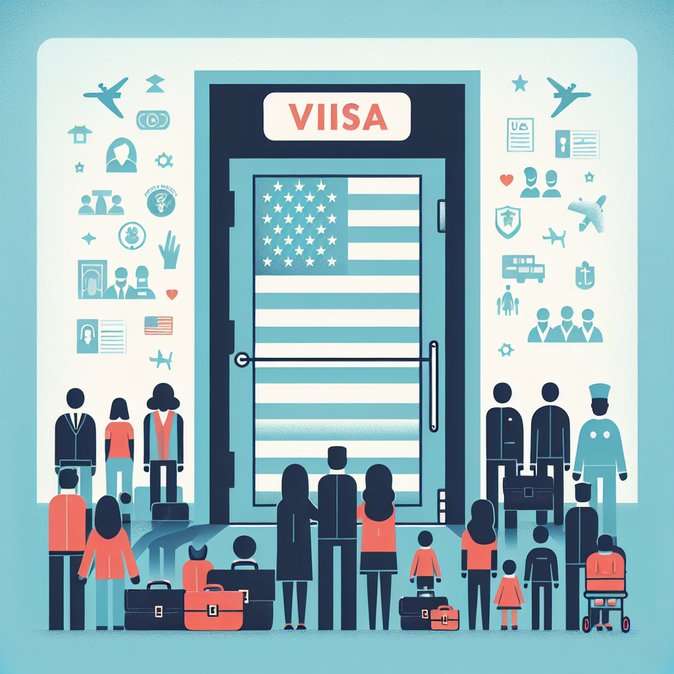
In an overnight cable sent to U.S. consulates worldwide on 22 January 2026, the U.S. Department of State ordered an immediate pause in the issuance of immigrant visas to citizens of 75 countries—including Brazil—while it completes a “top-to-bottom review” of applicants’ potential use of U.S. public benefits. The suspension took effect at 00:01 ET on 21 January and will remain in force “until further notice.”(apnews.com)
The restriction does not apply to temporary (B-1/B-2) visitors, students or crew members, but it stops processing for family-, employment- and investment-based green-card categories that thousands of Brazilians rely on each year. According to U.S. government data, Brazil ranked 10th among sources of new U.S. permanent residents in 2023, with 28,050 approvals; consular officers in São Paulo, Rio and Brasília now find themselves forced to interview applicants without being able to print visas. Immigration lawyers say medical exams will expire if the pause lasts more than six months, adding at least US$500 per case.(apnews.com)
![U.S. suspends immigrant visas for Brazilians under new ‘public-charge’ review]()
Whether you are pivoting to short-term travel or evaluating alternative destinations, VisaHQ can help Brazilians stay mobile by handling the paperwork for visas that remain unaffected by the U.S. freeze. Through its Brazil-specific portal (https://www.visahq.com/brazil/), the service offers clear requirements, digital forms and real-time tracking for dozens of countries, making it easier to keep projects and personal plans on track while Washington’s review plays out.
Brazil’s Ministry of Foreign Affairs called the measure “regrettable” and said it is pressing Washington for a clear timeline, while advising affected nationals to maintain their documentation up to date so they can “reactivate cases swiftly.” Multinationals with global-mobility programmes are already rerouting talent assignments from the United States to Canada or the EU, and some have asked Brazilian headquarters to accelerate intra-company transfers that do not depend on U.S. visas.
Practical tips for mobility managers: 1) audit current U.S. immigration pipelines and flag green-card candidates likely to hit medical-exam expiry; 2) explore remote-work or third-country assignments to keep projects on track; 3) communicate clearly with dependants, whose cases are also frozen. Experts warn that once processing restarts, the backlog could exceed 100,000 applications, pushing interview slots well into 2027.
The restriction does not apply to temporary (B-1/B-2) visitors, students or crew members, but it stops processing for family-, employment- and investment-based green-card categories that thousands of Brazilians rely on each year. According to U.S. government data, Brazil ranked 10th among sources of new U.S. permanent residents in 2023, with 28,050 approvals; consular officers in São Paulo, Rio and Brasília now find themselves forced to interview applicants without being able to print visas. Immigration lawyers say medical exams will expire if the pause lasts more than six months, adding at least US$500 per case.(apnews.com)

Whether you are pivoting to short-term travel or evaluating alternative destinations, VisaHQ can help Brazilians stay mobile by handling the paperwork for visas that remain unaffected by the U.S. freeze. Through its Brazil-specific portal (https://www.visahq.com/brazil/), the service offers clear requirements, digital forms and real-time tracking for dozens of countries, making it easier to keep projects and personal plans on track while Washington’s review plays out.
Brazil’s Ministry of Foreign Affairs called the measure “regrettable” and said it is pressing Washington for a clear timeline, while advising affected nationals to maintain their documentation up to date so they can “reactivate cases swiftly.” Multinationals with global-mobility programmes are already rerouting talent assignments from the United States to Canada or the EU, and some have asked Brazilian headquarters to accelerate intra-company transfers that do not depend on U.S. visas.
Practical tips for mobility managers: 1) audit current U.S. immigration pipelines and flag green-card candidates likely to hit medical-exam expiry; 2) explore remote-work or third-country assignments to keep projects on track; 3) communicate clearly with dependants, whose cases are also frozen. Experts warn that once processing restarts, the backlog could exceed 100,000 applications, pushing interview slots well into 2027.