
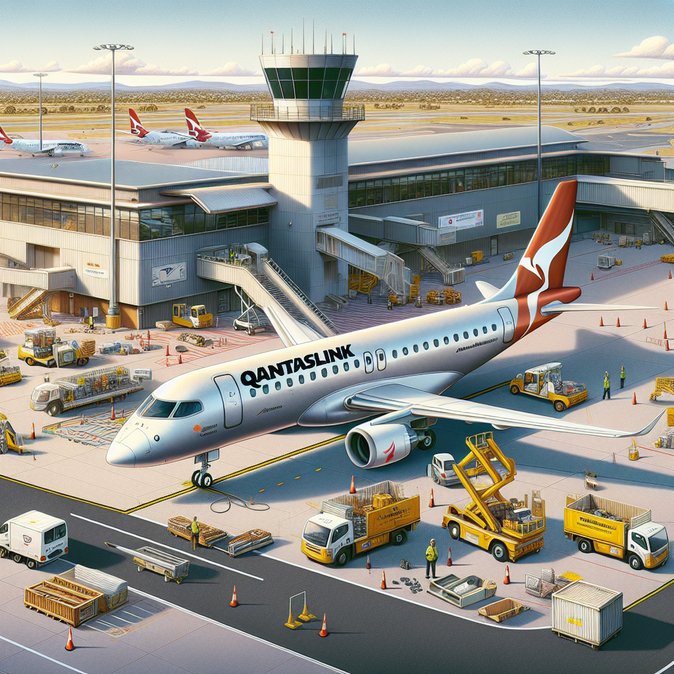
QantasLink has announced a multi-million-dollar fleet-renewal program for its Western Australian subsidiary, Network Aviation, aimed at boosting reliability on charter and regional routes that service the state’s resource sector. Detailed on 21 January, the plan will see three mid-life Embraer E190 jets arrive by year-end, gradually retiring the 30-year-old Fokker 100 fleet.
Simultaneously, the carrier will refurbish 28 Airbus A320/A319 aircraft with free in-flight Wi-Fi, new seats featuring USB-C charging and device holders, and refreshed interiors. The first upgraded jet is due to enter service later in 2026, with the program completing in early 2027.
![QantasLink to Upgrade Cabins and Replace Ageing Fokkers with Embraer E190s in WA]()
Companies coordinating FIFO rotations should also remember that VisaHQ can streamline visa and travel-document processing for contractors moving through Perth or connecting internationally; its online platform (https://www.visahq.com/australia/) offers real-time status tracking and bulk application tools that integrate neatly with corporate travel policies.
For mining and energy companies that rely on fly-in-fly-out (FIFO) operations, newer aircraft promise fewer mechanical delays and better onboard connectivity, enabling remote staff to remain productive en route to isolated sites. Improved fuel efficiency on the E190s should also translate into lower charter costs and reduced carbon footprints—both growing priorities in supplier-selection tenders.
The investment aligns with the Qantas Group’s broader order for 200-plus new aircraft and underscores intense competition with Virgin Australia Regional Airlines and Rex for corporate charters. Travel-programme managers should expect schedule adjustments as the rollout proceeds and verify that contracted baggage allowances remain consistent across mixed fleets.
Simultaneously, the carrier will refurbish 28 Airbus A320/A319 aircraft with free in-flight Wi-Fi, new seats featuring USB-C charging and device holders, and refreshed interiors. The first upgraded jet is due to enter service later in 2026, with the program completing in early 2027.
Companies coordinating FIFO rotations should also remember that VisaHQ can streamline visa and travel-document processing for contractors moving through Perth or connecting internationally; its online platform (https://www.visahq.com/australia/) offers real-time status tracking and bulk application tools that integrate neatly with corporate travel policies.
For mining and energy companies that rely on fly-in-fly-out (FIFO) operations, newer aircraft promise fewer mechanical delays and better onboard connectivity, enabling remote staff to remain productive en route to isolated sites. Improved fuel efficiency on the E190s should also translate into lower charter costs and reduced carbon footprints—both growing priorities in supplier-selection tenders.
The investment aligns with the Qantas Group’s broader order for 200-plus new aircraft and underscores intense competition with Virgin Australia Regional Airlines and Rex for corporate charters. Travel-programme managers should expect schedule adjustments as the rollout proceeds and verify that contracted baggage allowances remain consistent across mixed fleets.