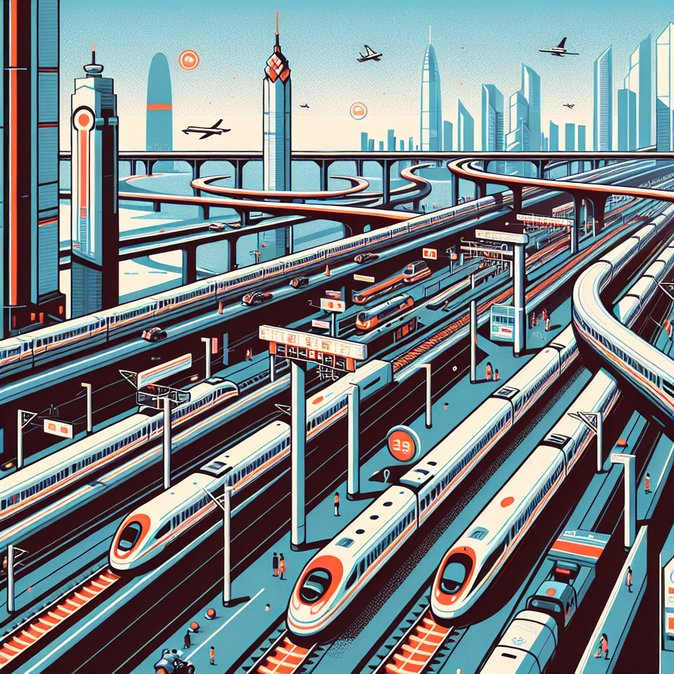
China State Railway Group has released a new timetable for the Guangzhou-Shenzhen-Hong Kong Express Rail Link that will take effect on 26 January 2026. The upgrade adds 52 additional services and lifts the total to 415 trains a day, with peak-hour departures every two minutes—comparable with a metropolitan subway. The line will be able to handle up to 30 trains per hour in each direction, cementing its status as the busiest high-speed rail corridor in the country.
The revised schedule is designed to capture surging demand for cross-border travel in the Greater Bay Area as business ties rebound and leisure traffic swells in the run-up to the Spring Festival. Cross-border passenger flows at West Kowloon Station have already returned to—or in some cases exceeded—pre-pandemic levels, according to Hong Kong’s Transport and Logistics Bureau. Rail executives say trains averaged 90 percent load factors during the Christmas peak; the new timetable is expected to relieve bottlenecks and reduce the need for travellers to queue hours for peak-time tickets.
Travellers who still need to sort out mainland entry documents can streamline the process through VisaHQ, which offers fast, fully online China visa applications, courier passport handling and real-time status updates—helping passengers get their paperwork sorted as efficiently as the new two-minute train headways. Full details are available at https://www.visahq.com/china/
![Guangzhou-Shenzhen-Hong Kong high-speed rail adds 52 trains a day, becomes China’s busiest cross-border corridor]()
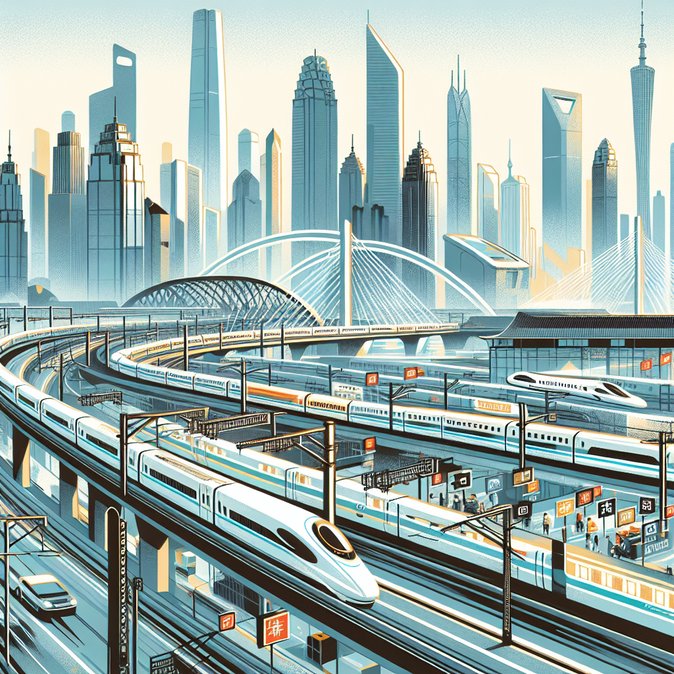
Business travellers stand to benefit most. The update introduces the first nonstop G-train services from Hong Kong to Nanjing, Wuxi and Hefei, shaving up to three hours off current fastest routings and giving companies in the Yangtze River Delta a same-day, visa-free rail link to the SAR. In total, 110 mainland stations will now have direct trains to Hong Kong, widening door-to-door options for corporate road-warriors who prefer rail over congested air routes. Travel managers say the change will also simplify expense policies because rail fares are capped and tickets can be booked on the 12306 platform in English.
From a mobility-policy perspective, the timetable dovetails with China Railway’s 14th Five-Year Plan targets to shift short-haul business traffic from air to rail, cutting carbon emissions by an estimated 120,000 tonnes a year. It also strengthens regional integration pledges in the Outline Development Plan for the Guangdong-Hong Kong-Macao Greater Bay Area, which calls for a "one-hour living circle" among core cities by 2035. Operators are already testing biometric e-gates that will let eligible foreign passport holders clear immigration in under 45 seconds, mirroring the e-channel experience for mainland and Hong Kong ID holders.
Practical advice: companies with frequent Shenzhen-Hong Kong commuters should re-run cost–benefit analyses of monthly passes versus ad-hoc tickets; new “flexi-commuter” products are slated to roll out in February. Travel managers should also update city-pair approval workflows to include the direct Hong Kong-Nanjing and Hong Kong-Hefei options, which may replace connecting flights via Shanghai or Beijing.
The revised schedule is designed to capture surging demand for cross-border travel in the Greater Bay Area as business ties rebound and leisure traffic swells in the run-up to the Spring Festival. Cross-border passenger flows at West Kowloon Station have already returned to—or in some cases exceeded—pre-pandemic levels, according to Hong Kong’s Transport and Logistics Bureau. Rail executives say trains averaged 90 percent load factors during the Christmas peak; the new timetable is expected to relieve bottlenecks and reduce the need for travellers to queue hours for peak-time tickets.
Travellers who still need to sort out mainland entry documents can streamline the process through VisaHQ, which offers fast, fully online China visa applications, courier passport handling and real-time status updates—helping passengers get their paperwork sorted as efficiently as the new two-minute train headways. Full details are available at https://www.visahq.com/china/
Business travellers stand to benefit most. The update introduces the first nonstop G-train services from Hong Kong to Nanjing, Wuxi and Hefei, shaving up to three hours off current fastest routings and giving companies in the Yangtze River Delta a same-day, visa-free rail link to the SAR. In total, 110 mainland stations will now have direct trains to Hong Kong, widening door-to-door options for corporate road-warriors who prefer rail over congested air routes. Travel managers say the change will also simplify expense policies because rail fares are capped and tickets can be booked on the 12306 platform in English.
From a mobility-policy perspective, the timetable dovetails with China Railway’s 14th Five-Year Plan targets to shift short-haul business traffic from air to rail, cutting carbon emissions by an estimated 120,000 tonnes a year. It also strengthens regional integration pledges in the Outline Development Plan for the Guangdong-Hong Kong-Macao Greater Bay Area, which calls for a "one-hour living circle" among core cities by 2035. Operators are already testing biometric e-gates that will let eligible foreign passport holders clear immigration in under 45 seconds, mirroring the e-channel experience for mainland and Hong Kong ID holders.
Practical advice: companies with frequent Shenzhen-Hong Kong commuters should re-run cost–benefit analyses of monthly passes versus ad-hoc tickets; new “flexi-commuter” products are slated to roll out in February. Travel managers should also update city-pair approval workflows to include the direct Hong Kong-Nanjing and Hong Kong-Hefei options, which may replace connecting flights via Shanghai or Beijing.