Travel consultants in Dubai say the 2026 holiday race has begun unusually early. According to agents interviewed by Khaleej Times, enquiries for July and August departures to Europe and the United Kingdom surged 40 per cent in the third week of January—months earlier than normal—because residents fear a repeat of last year’s visa-appointment crunch.
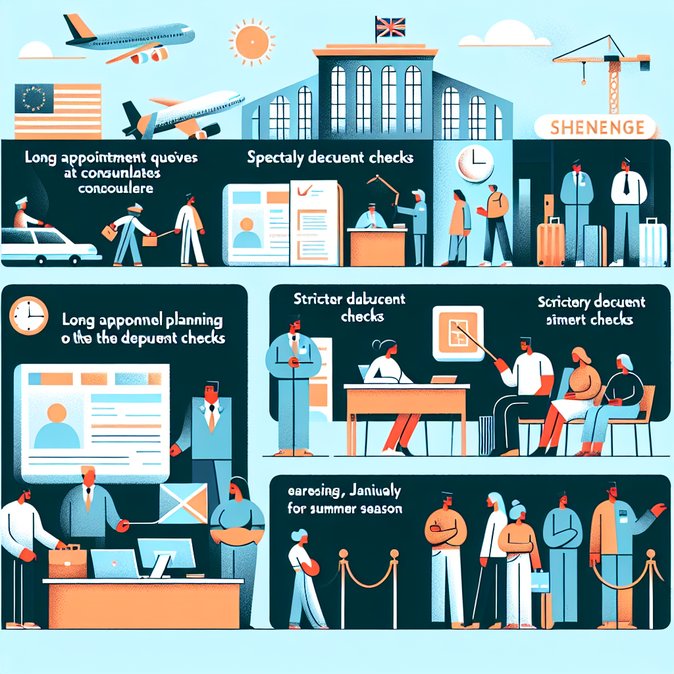
At several European consulates, appointment lead-times have stretched to 45–60 days, double the average wait in early 2025. Tighter documentation checks—particularly proof of accommodation and comprehensive medical insurance—mean incomplete files are bounced to the back of the queue, sometimes adding three extra weeks. Corporate travellers report similar hurdles for short-notice Schengen business visas, with some multinationals now block-booking slots for rotational staff.
The ripple effect is already visible in airfares. Average economy-class prices from Dubai to London, Paris and Zurich for July departures are 18 per cent higher than in January 2025, airlines told brokers. Families that miss early-bird fares risk paying a premium or settling for indirect routings via secondary hubs such as Belgrade or Muscat.
![Schengen and UK visa bottlenecks force UAE families to book summer trips six months ahead]()
In this climate, platforms such as VisaHQ can be invaluable allies for UAE residents. Through its dedicated portal (https://www.visahq.com/united-arab-emirates/), VisaHQ guides applicants through each Schengen or UK visa requirement, pre-checks documentation, and secures consulate appointments, often shaving days off the lead-time and reducing the risk of costly rejections.
For mobility managers, the message is clear: start the visa paperwork now. Firms moving project teams to Europe in late Q2 and Q3 should secure invitation letters and insurance certificates well in advance, and consider contingency ports such as Milan-Malpensa or Frankfurt-Hahn. HR departments are also warning staff that the EU’s digital Entry/Exit System (EES) will add biometric capture at the border from October 2025, lengthening arrival queues for first-time users.
Travel insurers, meanwhile, are seeing a spike in top-up medical cover requests as Schengen posts scrutinise policy wording more closely. Agents advise applicants to carry printed proof of accommodation, onward tickets and salary certificates to avoid costly rescheduling.
At several European consulates, appointment lead-times have stretched to 45–60 days, double the average wait in early 2025. Tighter documentation checks—particularly proof of accommodation and comprehensive medical insurance—mean incomplete files are bounced to the back of the queue, sometimes adding three extra weeks. Corporate travellers report similar hurdles for short-notice Schengen business visas, with some multinationals now block-booking slots for rotational staff.
The ripple effect is already visible in airfares. Average economy-class prices from Dubai to London, Paris and Zurich for July departures are 18 per cent higher than in January 2025, airlines told brokers. Families that miss early-bird fares risk paying a premium or settling for indirect routings via secondary hubs such as Belgrade or Muscat.

In this climate, platforms such as VisaHQ can be invaluable allies for UAE residents. Through its dedicated portal (https://www.visahq.com/united-arab-emirates/), VisaHQ guides applicants through each Schengen or UK visa requirement, pre-checks documentation, and secures consulate appointments, often shaving days off the lead-time and reducing the risk of costly rejections.
For mobility managers, the message is clear: start the visa paperwork now. Firms moving project teams to Europe in late Q2 and Q3 should secure invitation letters and insurance certificates well in advance, and consider contingency ports such as Milan-Malpensa or Frankfurt-Hahn. HR departments are also warning staff that the EU’s digital Entry/Exit System (EES) will add biometric capture at the border from October 2025, lengthening arrival queues for first-time users.
Travel insurers, meanwhile, are seeing a spike in top-up medical cover requests as Schengen posts scrutinise policy wording more closely. Agents advise applicants to carry printed proof of accommodation, onward tickets and salary certificates to avoid costly rescheduling.