Switzerland’s Federal Office of Police (fedpol) confirmed on 19 January that it has activated an extraordinary security operation for the World Economic Forum (WEF) Annual Meeting, running 19-23 January in Davos.
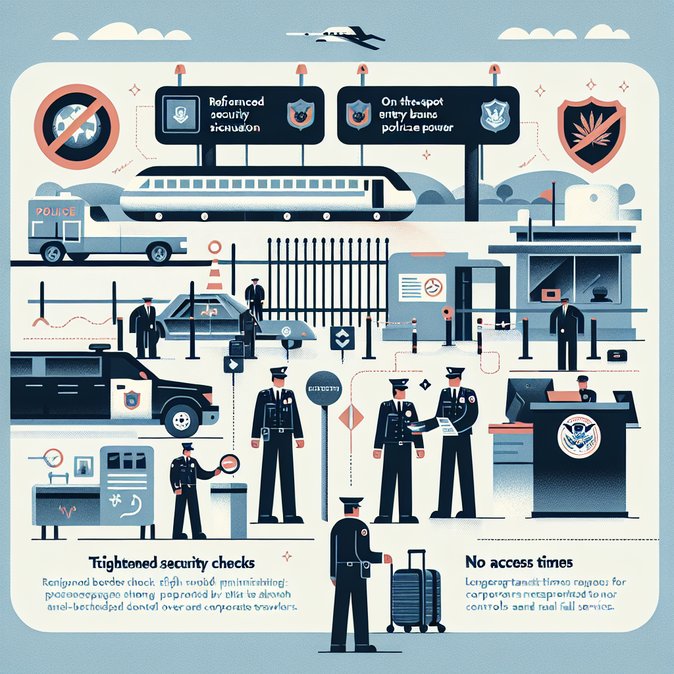
Under the plan – drawn up jointly with cantonal forces and the Swiss Armed Forces – fedpol can impose on-the-spot entry bans, turn travellers away at the border and require advance passenger lists for charter and business-aviation flights. The measures apply nationwide but concentrate on the 25-nautical-mile restricted air-space zone (LS-R 13) and the two main international gateways used by WEF delegates: Zurich (LSZH) and Geneva (LSGG).
Every head-of-state and minister is assigned a bespoke protection package based on an individual threat assessment. In practice this means layered screening at customs, additional passport checks on inbound special trains to Landquart and Davos Dorf, and mobile police units on transit roads such as the A28. Fedpol says it receives realtime intelligence from partner agencies abroad; anyone flagged as violent or extremist can be refused boarding before departure or refused entry on arrival.
![Swiss police deploy special border-control powers as WEF 2026 opens in Davos]()
In that context, travellers who still need to verify their paperwork can turn to VisaHQ: the company offers expedited Swiss Schengen-visa processing, real-time entry updates and courier passport collection, helping WEF delegates and other visitors avoid last-minute complications. Full information is available at https://www.visahq.com/switzerland/
Corporate travel managers should expect longer queues at Schengen desks, selective baggage inspections and occasional traffic holds on the A13/A28 approaches if high-risk convoys are routed. Delegates arriving by private jet must observe strict slot times and carry written confirmation of parking rights – aircraft that miss their slot face diversion to Altenrhein or Milan-Malpensa.
Although the profile is unprecedented – 65 heads of government are expected – the Swiss authorities emphasise that regular commercial passengers will still be processed “as smoothly as possible”. Nevertheless, mobility teams are advised to brief travellers on potential delays, carry multiple forms of ID, and allow extra connection time when routing through Swiss hubs during the summit week.
Under the plan – drawn up jointly with cantonal forces and the Swiss Armed Forces – fedpol can impose on-the-spot entry bans, turn travellers away at the border and require advance passenger lists for charter and business-aviation flights. The measures apply nationwide but concentrate on the 25-nautical-mile restricted air-space zone (LS-R 13) and the two main international gateways used by WEF delegates: Zurich (LSZH) and Geneva (LSGG).
Every head-of-state and minister is assigned a bespoke protection package based on an individual threat assessment. In practice this means layered screening at customs, additional passport checks on inbound special trains to Landquart and Davos Dorf, and mobile police units on transit roads such as the A28. Fedpol says it receives realtime intelligence from partner agencies abroad; anyone flagged as violent or extremist can be refused boarding before departure or refused entry on arrival.
In that context, travellers who still need to verify their paperwork can turn to VisaHQ: the company offers expedited Swiss Schengen-visa processing, real-time entry updates and courier passport collection, helping WEF delegates and other visitors avoid last-minute complications. Full information is available at https://www.visahq.com/switzerland/
Corporate travel managers should expect longer queues at Schengen desks, selective baggage inspections and occasional traffic holds on the A13/A28 approaches if high-risk convoys are routed. Delegates arriving by private jet must observe strict slot times and carry written confirmation of parking rights – aircraft that miss their slot face diversion to Altenrhein or Milan-Malpensa.
Although the profile is unprecedented – 65 heads of government are expected – the Swiss authorities emphasise that regular commercial passengers will still be processed “as smoothly as possible”. Nevertheless, mobility teams are advised to brief travellers on potential delays, carry multiple forms of ID, and allow extra connection time when routing through Swiss hubs during the summit week.