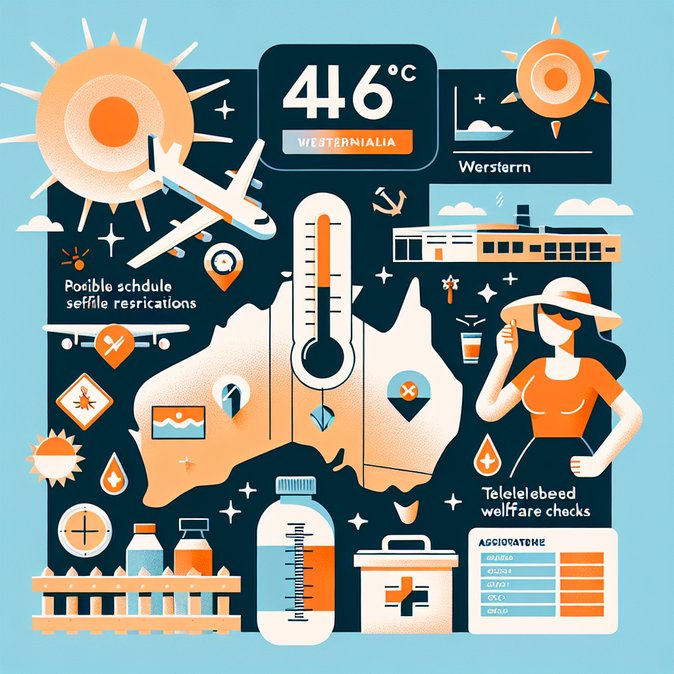
Western Australia’s protracted heatwave is edging toward Perth, with temperatures expected to hit 39–40 °C on 20–21 January and some regional centres forecast to exceed 46 °C. The Bureau of Meteorology has severe-to-extreme heatwave warnings in place across the Gascoyne, Pilbara and South Interior districts.
From a mobility perspective, sustained runway temperatures above aircraft performance limits may trigger payload restrictions or schedule changes at Perth and Geraldton airports. Fly-in/fly-out personnel headed to mining sites could face roster disruptions, and insurers are reminding companies that heat-related claims—food spoilage, equipment failure, health incidents—are climbing.
![Extreme Heatwave Marches South, Testing Perth Travel and Duty-of-Care Plans]()
The WA Government has activated TeleRedi, a phone-based welfare-check service delivered by the Australian Red Cross, aimed at seniors and remote workers. Employers can register travelling or relocated staff who may be at risk during extreme heat.
Organisations shuffling fly-in/fly-out crews or bringing in specialist technicians at short notice may also need rapid visa or ETA approvals for non-Australian personnel. VisaHQ’s online platform (https://www.visahq.com/australia/) can expedite those clearances, monitor status updates, and flag any government advisories, allowing mobility teams to focus on heat-related safety rather than paperwork.
Risk managers should also revisit work-rest cycles for outdoor assignments and confirm contingency accommodation with reliable air-conditioning. Power-network strain in previous heatwaves has led to rolling outages; portable cooling units and backup generators are advisable in regional deployments. (insurancebusinessmag.com)
From a mobility perspective, sustained runway temperatures above aircraft performance limits may trigger payload restrictions or schedule changes at Perth and Geraldton airports. Fly-in/fly-out personnel headed to mining sites could face roster disruptions, and insurers are reminding companies that heat-related claims—food spoilage, equipment failure, health incidents—are climbing.

The WA Government has activated TeleRedi, a phone-based welfare-check service delivered by the Australian Red Cross, aimed at seniors and remote workers. Employers can register travelling or relocated staff who may be at risk during extreme heat.
Organisations shuffling fly-in/fly-out crews or bringing in specialist technicians at short notice may also need rapid visa or ETA approvals for non-Australian personnel. VisaHQ’s online platform (https://www.visahq.com/australia/) can expedite those clearances, monitor status updates, and flag any government advisories, allowing mobility teams to focus on heat-related safety rather than paperwork.
Risk managers should also revisit work-rest cycles for outdoor assignments and confirm contingency accommodation with reliable air-conditioning. Power-network strain in previous heatwaves has led to rolling outages; portable cooling units and backup generators are advisable in regional deployments. (insurancebusinessmag.com)