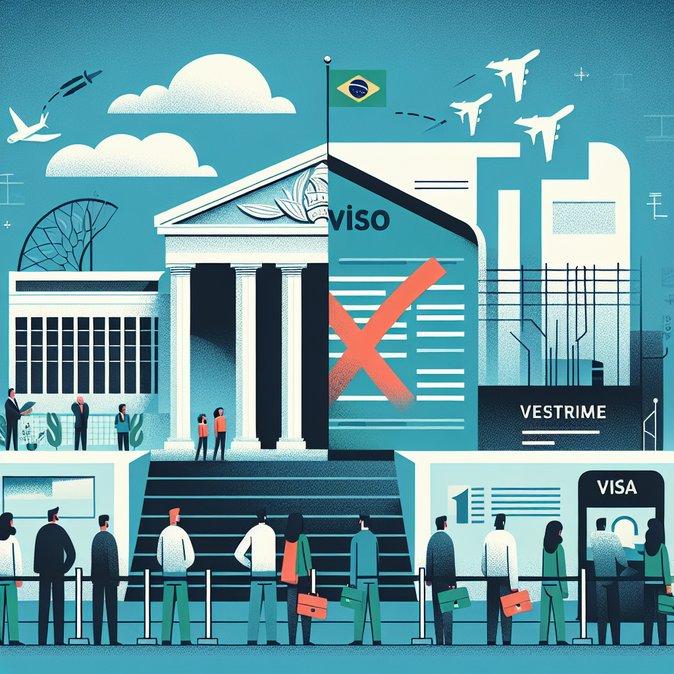
The U.S. State Department’s decision to suspend immigrant-visa issuance for applicants from 75 countries—Brazil included—starting 21 January has sent shock waves through corporate mobility teams. Consular officers will continue to collect documents at scheduled interviews but will not print visas, parking hundreds of Brazilian EB-2/EB-3 and family cases indefinitely. Non-immigrant categories (H-1B, L-1, B-1/B-2) remain unaffected for now.
Multinationals were already grappling with extended green-card backlogs; the freeze now forces a pivot to temporary solutions. HR managers are accelerating L-1 blanket petitions, exploring Canada’s Global Talent Stream and considering near-shore hubs in Mexico. Companies with transferees inside the U.S. are urging them to file advance-parole extensions to avoid travel interruptions.
In this rapidly shifting landscape, VisaHQ can be a strategic ally. Through its Brazil-focused portal (https://www.visahq.com/brazil/), the service tracks real-time policy changes, advises on alternative visa routes, and assists with documentation for destinations such as Canada or Mexico—helping corporations and individual travelers adjust mobility plans while the U.S. freeze plays out.
![U.S. immigrant-visa freeze forces Brazilian companies to rethink talent pipelines]()
Brazil’s Foreign Ministry lodged a diplomatic protest but stopped short of retaliation. Lawyers nevertheless warn that, if the freeze drags on, Brasília may revive stalled discussions on reciprocal visa fees.
For affected employees, contingency planning is critical: validate I-94 expiry dates, renew work authorisations early and keep dependants’ documents aligned. Employers should also reassess long-term assignment costs—extra H-1B or L-1 extensions could add US $6,000-8,000 per employee over two years.
The episode highlights the vulnerability of South-American talent pipelines to sudden U.S. policy swings and underscores the strategic value of building redundancy—through remote work, regional hubs and alternative residence pathways. (visahq.com)
Multinationals were already grappling with extended green-card backlogs; the freeze now forces a pivot to temporary solutions. HR managers are accelerating L-1 blanket petitions, exploring Canada’s Global Talent Stream and considering near-shore hubs in Mexico. Companies with transferees inside the U.S. are urging them to file advance-parole extensions to avoid travel interruptions.
In this rapidly shifting landscape, VisaHQ can be a strategic ally. Through its Brazil-focused portal (https://www.visahq.com/brazil/), the service tracks real-time policy changes, advises on alternative visa routes, and assists with documentation for destinations such as Canada or Mexico—helping corporations and individual travelers adjust mobility plans while the U.S. freeze plays out.

Brazil’s Foreign Ministry lodged a diplomatic protest but stopped short of retaliation. Lawyers nevertheless warn that, if the freeze drags on, Brasília may revive stalled discussions on reciprocal visa fees.
For affected employees, contingency planning is critical: validate I-94 expiry dates, renew work authorisations early and keep dependants’ documents aligned. Employers should also reassess long-term assignment costs—extra H-1B or L-1 extensions could add US $6,000-8,000 per employee over two years.
The episode highlights the vulnerability of South-American talent pipelines to sudden U.S. policy swings and underscores the strategic value of building redundancy—through remote work, regional hubs and alternative residence pathways. (visahq.com)