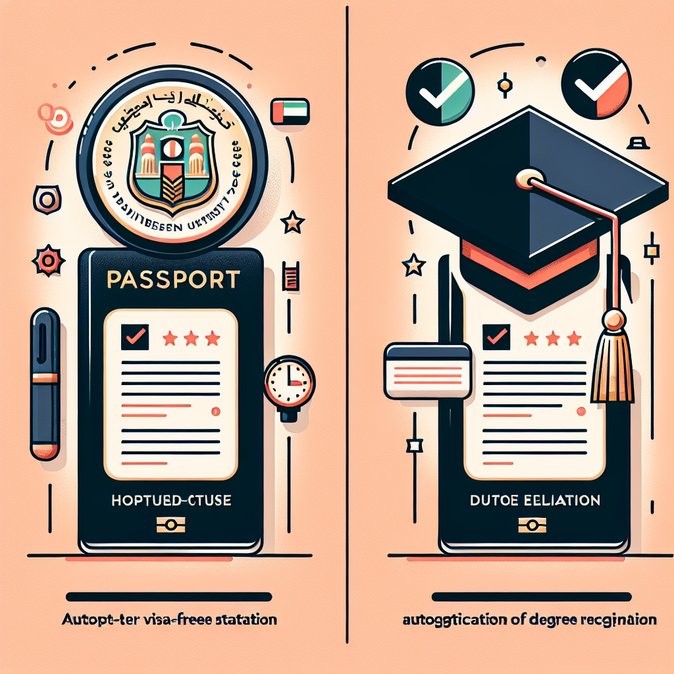
Gulf News’ weekend digest on 18 January 2026 highlighted two developments with direct mobility impact. First, the Henley Passport Index update shows the UAE passport retaining its top-10 status for visa-free access, while India and Pakistan saw notable climbs to 80th and 98th place respectively—important for dual-citizen employees. Second, the Ministry of Higher Education and Scientific Research (MoHESR) has switched on automatic recognition for degrees from 34 UAE universities, removing the need for graduates to submit paper attestations when applying for employment visas or postgraduate study. (gulfnews.com)
Under the new digital system, graduates receive a QR-coded e-certificate that MoHESR shares directly with MoHRE and immigration platforms, shaving up to six weeks off typical onboarding timelines. More than 25,000 graduates have already benefited since the soft launch on 14 January.
For organisations that still need help navigating the new e-certificate landscape or checking destination visa rules, VisaHQ can bridge the gap. Through its UAE portal (https://www.visahq.com/united-arab-emirates/), the service consolidates degree validation, visa options and courier logistics in a single, HR-friendly workflow—keeping mobility programmes compliant as government processes go fully digital.
![Passport-power shuffle and instant UAE degree recognition headline mobility weekend]()
Employers sponsoring fresh graduates can now skip the costly stamping process at embassies and typing centres, but should update their HR checklists to capture the e-certificate reference number. The change dovetails with the Federal Authority for Identity, Citizenship, Customs and Port Security’s “Zero Bureaucracy” drive and signals broader movement toward paperless visa files.
For global companies, the passport-index reshuffle may influence regional travel policies: UAE nationals already enjoy visa-free or visa-on-arrival entry to 183 destinations, easing short-notice business trips, while rising South-Asian scores could lower lead-times for intra-GCC travel. Mobility managers should refresh travel grids and dashboards to reflect the 2026 index.
Expect phase 2 of degree auto-recognition later this year to cover Emirati scholarship students graduating abroad—further streamlining return-home hire processes and potentially reducing demand for temporary assignment visas.
Under the new digital system, graduates receive a QR-coded e-certificate that MoHESR shares directly with MoHRE and immigration platforms, shaving up to six weeks off typical onboarding timelines. More than 25,000 graduates have already benefited since the soft launch on 14 January.
For organisations that still need help navigating the new e-certificate landscape or checking destination visa rules, VisaHQ can bridge the gap. Through its UAE portal (https://www.visahq.com/united-arab-emirates/), the service consolidates degree validation, visa options and courier logistics in a single, HR-friendly workflow—keeping mobility programmes compliant as government processes go fully digital.

Employers sponsoring fresh graduates can now skip the costly stamping process at embassies and typing centres, but should update their HR checklists to capture the e-certificate reference number. The change dovetails with the Federal Authority for Identity, Citizenship, Customs and Port Security’s “Zero Bureaucracy” drive and signals broader movement toward paperless visa files.
For global companies, the passport-index reshuffle may influence regional travel policies: UAE nationals already enjoy visa-free or visa-on-arrival entry to 183 destinations, easing short-notice business trips, while rising South-Asian scores could lower lead-times for intra-GCC travel. Mobility managers should refresh travel grids and dashboards to reflect the 2026 index.
Expect phase 2 of degree auto-recognition later this year to cover Emirati scholarship students graduating abroad—further streamlining return-home hire processes and potentially reducing demand for temporary assignment visas.