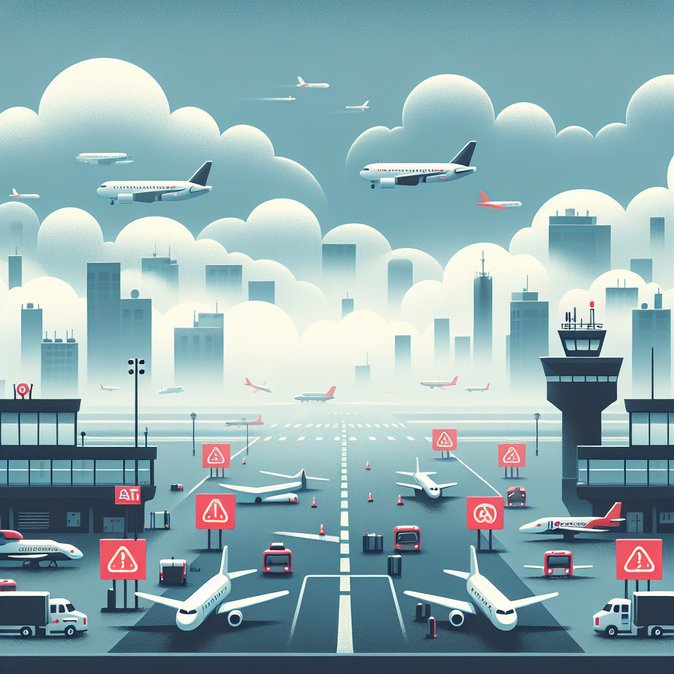
Travellers using India’s busiest aviation hub are grappling with a one-two punch of hazardous air quality and near-zero visibility. At 06:00 IST on 18 January 2026, Delhi’s Indira Gandhi International Airport (DEL) activated Low Visibility Procedures after the city’s Air Quality Index spiked to a ‘severe’ 440—the worst January reading in two years—and ground-level fog reduced runway visual range below 125 metres.
IndiGo and Air India quickly pushed out social-media and website bulletins urging passengers to track flight status and arrive early. Airlines warned that knock-on delays could ripple across the national network because crew and aircraft rotations start or end in Delhi. Delhi Airport followed with its own passenger advisory, asking travellers to budget extra transit time and offering a real-time winter-operations tracker.
If sudden delays force itinerary changes or emergency stopovers, VisaHQ’s India page (https://www.visahq.com/india/) can simplify the paperwork by expediting e-visas, passport renewals and other travel documents online—helping passengers, assignees and mobility teams adjust plans quickly while the airport works through weather backlogs.
![Dense fog and toxic air snarl mobility in Delhi; airlines, airport issue red-alert advisories]()
The India Meteorological Department expects fog to linger through the early hours of 19 January as a prolonged dry spell, calm winds and vehicular emissions trap pollutants over the National Capital Region. Think tanks at the Council on Energy, Environment and Water estimate that transport alone contributes 12.5 % of Delhi’s particulate load—a stark reminder that mobility both suffers from and fuels the pollution crisis.
For business-mobility managers, the operational impact is immediate: more than 500 flights were delayed on 18 January and rail services reported up to eight-hour lags. Companies with assignee moves or critical cargo transiting Delhi should build contingency buffers, consider rerouting via Mumbai, Bengaluru or Hyderabad, and remind travellers that fog can trigger last-minute runway closures until midday.
Looking ahead, the episode underscores the need for integrated air-quality and transport planning. Stakeholders are urging the DGCA to finalise a long-pending ‘Category III-C’ instrument-landing framework that would allow landings in visibility as low as 50 metres—technology already common at major European hubs. Until then, North India’s annual fog season will remain a perennial disruptor of global mobility flows.
IndiGo and Air India quickly pushed out social-media and website bulletins urging passengers to track flight status and arrive early. Airlines warned that knock-on delays could ripple across the national network because crew and aircraft rotations start or end in Delhi. Delhi Airport followed with its own passenger advisory, asking travellers to budget extra transit time and offering a real-time winter-operations tracker.
If sudden delays force itinerary changes or emergency stopovers, VisaHQ’s India page (https://www.visahq.com/india/) can simplify the paperwork by expediting e-visas, passport renewals and other travel documents online—helping passengers, assignees and mobility teams adjust plans quickly while the airport works through weather backlogs.

The India Meteorological Department expects fog to linger through the early hours of 19 January as a prolonged dry spell, calm winds and vehicular emissions trap pollutants over the National Capital Region. Think tanks at the Council on Energy, Environment and Water estimate that transport alone contributes 12.5 % of Delhi’s particulate load—a stark reminder that mobility both suffers from and fuels the pollution crisis.
For business-mobility managers, the operational impact is immediate: more than 500 flights were delayed on 18 January and rail services reported up to eight-hour lags. Companies with assignee moves or critical cargo transiting Delhi should build contingency buffers, consider rerouting via Mumbai, Bengaluru or Hyderabad, and remind travellers that fog can trigger last-minute runway closures until midday.
Looking ahead, the episode underscores the need for integrated air-quality and transport planning. Stakeholders are urging the DGCA to finalise a long-pending ‘Category III-C’ instrument-landing framework that would allow landings in visibility as low as 50 metres—technology already common at major European hubs. Until then, North India’s annual fog season will remain a perennial disruptor of global mobility flows.