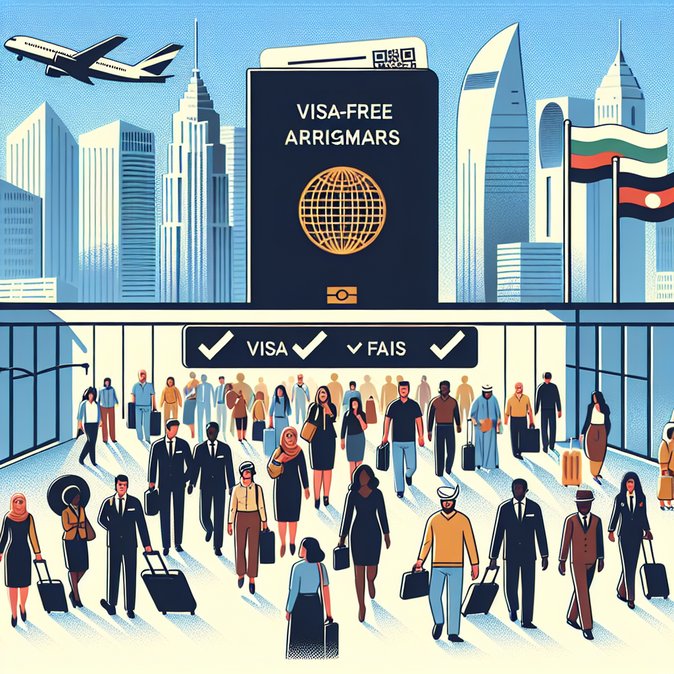
Exactly 30 days after the Hainan Free-Trade-Port (FTP) implemented full customs closure on 18 December 2025, the island province has reported striking gains in foreign arrivals. The Haikou Border Inspection Corps told reporters on 18 January that it processed 186,000 foreign nationals in the past month, up 46 % year-on-year. Of these, 87,000 entered under Hainan’s 30-day visa-free regime—an increase of 64 % and accounting for 93 % of all foreign visitors.
The top source markets were Russia, Malaysia, Indonesia, South Korea and Kazakhstan, mirroring the international route network that now spans 92 direct services—including China’s first seventh-freedom passenger route launched in Sanya late last year. Border officers say average clearance time at Haikou Meilan airport is under two minutes, helped by online arrival-card filing, group-tour e-visa options and expanded e-gate deployment.
Independent travellers and corporate travel planners who want to make the most of Hainan’s 30-day visa-free policy can turn to VisaHQ’s China portal (https://www.visahq.com/china/) for quick, step-by-step guidance. The platform clarifies eligibility, lists required documents like confirmed hotel bookings and onward tickets, and can expedite full Chinese visa applications for those intending to continue their journey beyond the island province.
![One month after customs ‘closure’, Hainan logs 64 % leap in visa-free foreign visitors]()
For tourism investors the numbers validate Hainan’s strategy of pairing duty-free shopping allowances with sun-sand-sea packages. Retail analysts note double-digit sales growth in luxury boutiques clustered around Haikou’s redeveloped port district. Business-migration advisers also report a spike in enquiries about the FTP’s fast-track work-permit and individual income-tax caps aimed at luring foreign talent into the island’s aviation, life-sciences and yacht-manufacturing clusters.
Corporate travel teams should remember that the Hainan visa waiver is geographically restricted: travellers must remain within the province unless they convert to a national visa at the local Public Security Bureau. Airlines require proof of a hotel booking and a return or onward ticket dated within 30 days.
The dramatic uptake suggests that Hainan’s ‘closed-port, open-door’ formula could become a template for other Chinese free-trade zones seeking to balance tight customs supervision with liberal entry rules.
The top source markets were Russia, Malaysia, Indonesia, South Korea and Kazakhstan, mirroring the international route network that now spans 92 direct services—including China’s first seventh-freedom passenger route launched in Sanya late last year. Border officers say average clearance time at Haikou Meilan airport is under two minutes, helped by online arrival-card filing, group-tour e-visa options and expanded e-gate deployment.
Independent travellers and corporate travel planners who want to make the most of Hainan’s 30-day visa-free policy can turn to VisaHQ’s China portal (https://www.visahq.com/china/) for quick, step-by-step guidance. The platform clarifies eligibility, lists required documents like confirmed hotel bookings and onward tickets, and can expedite full Chinese visa applications for those intending to continue their journey beyond the island province.

For tourism investors the numbers validate Hainan’s strategy of pairing duty-free shopping allowances with sun-sand-sea packages. Retail analysts note double-digit sales growth in luxury boutiques clustered around Haikou’s redeveloped port district. Business-migration advisers also report a spike in enquiries about the FTP’s fast-track work-permit and individual income-tax caps aimed at luring foreign talent into the island’s aviation, life-sciences and yacht-manufacturing clusters.
Corporate travel teams should remember that the Hainan visa waiver is geographically restricted: travellers must remain within the province unless they convert to a national visa at the local Public Security Bureau. Airlines require proof of a hotel booking and a return or onward ticket dated within 30 days.
The dramatic uptake suggests that Hainan’s ‘closed-port, open-door’ formula could become a template for other Chinese free-trade zones seeking to balance tight customs supervision with liberal entry rules.