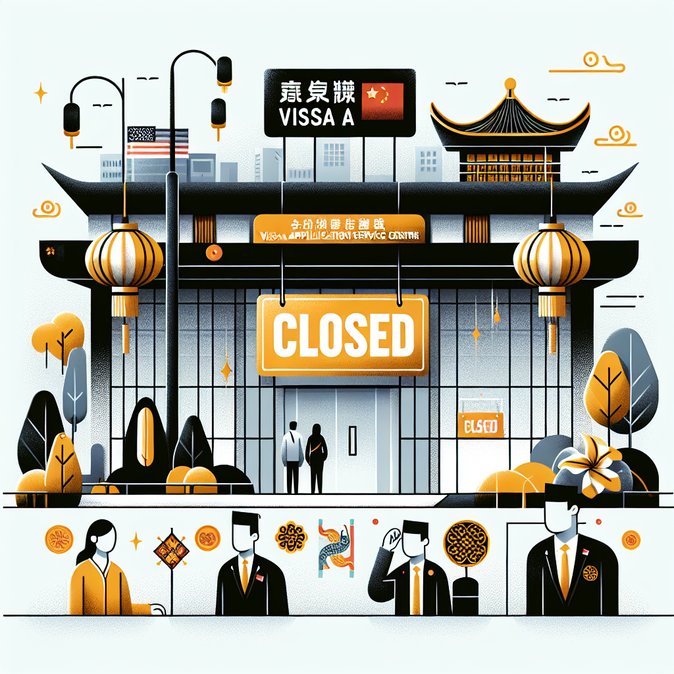
Companies with operations in Sumatra received an unwelcome reminder this week of how local public holidays can disrupt Chinese visa logistics. The Chinese Visa Application Service Centre (CVASC) in Medan closed on 16 January for the Islamic holiday Isra Mi’raj, resuming only on Monday 19 January. Express applications lodged on 13 January were issued on 15 January, but all standard files will be delivered at least two working days late—pushing some collections perilously close to the Lunar-New-Year travel rush in early February.
Medan’s CVASC, opened in 2024, covers six provinces and has recently mandated online pre-submission followed by walk-in biometrics. That hybrid model has created pre-holiday bottlenecks as applicants queue to beat cut-off times. Visa-outsourcing firm VisaHQ warns that agents should redirect urgent cases to Jakarta or Surabaya, both of which remained open, or charter couriers to move passports between cities.
VisaHQ can also proactively help companies anticipate and navigate such closures. By monitoring consular calendars worldwide and offering alternative submission routes, the firm’s China-focused portal (https://www.visahq.com/china/) provides real-time processing updates, appointment slots and courier options—allowing mobility teams to reroute passports or adjust travel dates before delays snowball.
![Medan Chinese visa centre’s holiday closure delays Lunar-New-Year travel paperwork]()
The incident illustrates a broader compliance point: Chinese consular posts worldwide follow host-country holiday calendars, not the mainland schedule. Mobility managers should therefore map local religious observances months in advance and adjust assignment start dates or flight bookings accordingly.
For Indonesian executives heading to China, the delay may necessitate last-minute changes to inspection trips or supplier audits. Families of Chinese expatriates working in resource projects across Sumatra have also been caught off guard, as they hoped to finalise Q- or S-category visas before flying home for the Spring Festival.
CVASC Medan reiterated that fingerprint collection remains compulsory for first-time applicants and those whose last prints were taken more than five years ago, so travellers cannot rely on postal submissions to compensate for lost processing days.
Medan’s CVASC, opened in 2024, covers six provinces and has recently mandated online pre-submission followed by walk-in biometrics. That hybrid model has created pre-holiday bottlenecks as applicants queue to beat cut-off times. Visa-outsourcing firm VisaHQ warns that agents should redirect urgent cases to Jakarta or Surabaya, both of which remained open, or charter couriers to move passports between cities.
VisaHQ can also proactively help companies anticipate and navigate such closures. By monitoring consular calendars worldwide and offering alternative submission routes, the firm’s China-focused portal (https://www.visahq.com/china/) provides real-time processing updates, appointment slots and courier options—allowing mobility teams to reroute passports or adjust travel dates before delays snowball.

The incident illustrates a broader compliance point: Chinese consular posts worldwide follow host-country holiday calendars, not the mainland schedule. Mobility managers should therefore map local religious observances months in advance and adjust assignment start dates or flight bookings accordingly.
For Indonesian executives heading to China, the delay may necessitate last-minute changes to inspection trips or supplier audits. Families of Chinese expatriates working in resource projects across Sumatra have also been caught off guard, as they hoped to finalise Q- or S-category visas before flying home for the Spring Festival.
CVASC Medan reiterated that fingerprint collection remains compulsory for first-time applicants and those whose last prints were taken more than five years ago, so travellers cannot rely on postal submissions to compensate for lost processing days.