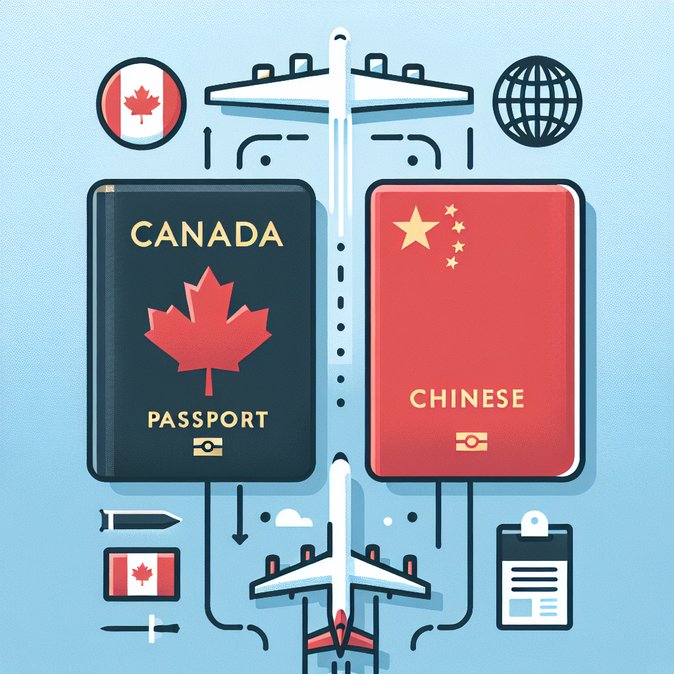
China and Canada appear to be edging toward a thaw in people-to-people exchanges. After talks in Beijing on 16 January between President Xi Jinping and Canadian Prime Minister Mark Carney, both sides briefed the press that a 30-day unilateral visa-waiver for ordinary Canadian passport-holders is “under active consideration.” On 17 January China’s foreign-ministry spokespeople reiterated the intention, but the National Immigration Administration (NIA) has not yet released an implementing circular—the legal step that turns diplomatic intent into border-control reality.
Until that notice is gazetted, Canadian travellers must still secure a visa, except when using 24/72/144-hour transit-without-visa schemes or the long-standing Hainan island visa-free entry. Airlines have warned check-in agents to deny boarding to Canadians who arrive at the airport without a visa in hand; mobility managers should therefore continue to schedule consular appointments and allow for at least 4-5 working days of processing.
Should the waiver timeline slip, VisaHQ’s China desk (https://www.visahq.com/china/) can streamline the interim process—booking consular slots, pre-checking documentation, and couriering passports—so Canadian travellers avoid costly rejections and meet tight departure windows.
![Beijing hints at 30-day visa-free stays for Canadians, but implementation pending]()
For corporates, the potential waiver could eliminate hundreds of dollars in multi-entry visa fees per executive per year and sharply reduce the administrative burden of short-notice trips. Canada is China’s third-largest source of agri-food imports and a major supplier of critical minerals; site visits and partner audits are frequent. HR departments should nonetheless prepare updated policy matrices that spell out the length-of-stay limit, barred activities (employment, study, journalism) and the proof-of-funds threshold once the rule is live.
Diplomatically, Beijing’s olive branch follows years of bilateral tensions triggered by the 2018 detention of Huawei CFO Meng Wanzhou and Ottawa’s subsequent security restrictions on Chinese telecoms equipment. If confirmed, Canada would join the more than 45 countries that China has already granted 15- to 30-day visa-free entry as part of its post-pandemic reopening strategy. Observers in Ottawa note, however, that Canada is unlikely to offer reciprocal treatment in the near term, given its universal electronic travel authorization (eTA) regime.
The takeaway for global-mobility teams: watch for an official NIA bulletin, keep booking visa-application slots until then, and plan for a surge in last-minute executive travel once the waiver officially starts.
Until that notice is gazetted, Canadian travellers must still secure a visa, except when using 24/72/144-hour transit-without-visa schemes or the long-standing Hainan island visa-free entry. Airlines have warned check-in agents to deny boarding to Canadians who arrive at the airport without a visa in hand; mobility managers should therefore continue to schedule consular appointments and allow for at least 4-5 working days of processing.
Should the waiver timeline slip, VisaHQ’s China desk (https://www.visahq.com/china/) can streamline the interim process—booking consular slots, pre-checking documentation, and couriering passports—so Canadian travellers avoid costly rejections and meet tight departure windows.

For corporates, the potential waiver could eliminate hundreds of dollars in multi-entry visa fees per executive per year and sharply reduce the administrative burden of short-notice trips. Canada is China’s third-largest source of agri-food imports and a major supplier of critical minerals; site visits and partner audits are frequent. HR departments should nonetheless prepare updated policy matrices that spell out the length-of-stay limit, barred activities (employment, study, journalism) and the proof-of-funds threshold once the rule is live.
Diplomatically, Beijing’s olive branch follows years of bilateral tensions triggered by the 2018 detention of Huawei CFO Meng Wanzhou and Ottawa’s subsequent security restrictions on Chinese telecoms equipment. If confirmed, Canada would join the more than 45 countries that China has already granted 15- to 30-day visa-free entry as part of its post-pandemic reopening strategy. Observers in Ottawa note, however, that Canada is unlikely to offer reciprocal treatment in the near term, given its universal electronic travel authorization (eTA) regime.
The takeaway for global-mobility teams: watch for an official NIA bulletin, keep booking visa-application slots until then, and plan for a surge in last-minute executive travel once the waiver officially starts.