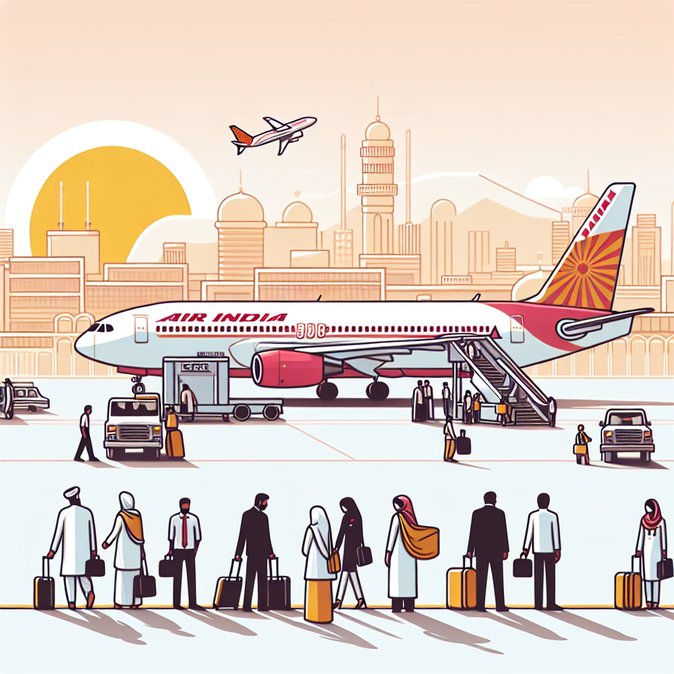
An unexpected overnight shutdown of Iranian airspace on 15 January upended India–US connectivity just as the busy business-travel season was gathering pace. Air India scrapped three ultra-long-haul departures—Delhi–New York (AI 101), Delhi–Newark (AI 105) and Mumbai–New York (AI 119)—along with their inbound legs, while IndiGo diverted a west-bound A321LR back to its tech stop in Baku. SpiceJet and several foreign carriers quickly issued network-wide advisories, warning travellers of rolling delays and potential cancellations until alternate routings could be filed with air-traffic authorities.
Iranian airspace is a vital corridor on the so-called “Polar-2” tracks that shave over an hour off trans-Eurasian flying times. Closing it pushes India-origin flights south over the Arabian Sea or north across Central Asia and Turkey, adding 45-120 minutes of block time and burning up to four extra tonnes of fuel per sector. The financial hit is immediate: airlines must re-calculate crew duty limits, incur larger fuel uplifts at high-priced Gulf hubs, and accommodate missed onward connections in the United States.
![Iranian Airspace Closure Forces Air India & IndiGo to Reroute or Cancel US-Bound Flights]()
Amid such rerouting, travellers may suddenly require additional transit or short-stay visas—especially for unscheduled stops in Europe or the Gulf. VisaHQ’s India portal (https://www.visahq.com/india/) streamlines applications for Schengen, UK and Middle-Eastern permits, offering doorstep document pickup, real-time status updates and express processing that can keep itineraries intact even as airspace rules shift without warning.
For corporates, the disruption highlights concentration risk in global mobility planning. Indian multinationals with tight deal timetables in New York or Chicago have been advised to activate “Plan B” routings via Europe—Frankfurt, Paris or London—and to budget longer door-to-door transit times. Travel managers should also revisit insurance policies: most standard corporate plans do not automatically cover costs arising from sovereign airspace closures.
The Directorate General of Civil Aviation (DGCA) is monitoring the situation but has yet to issue formal instructions. Should the closure extend beyond 72 hours, carriers may seek temporary fifth-freedom stops in Europe to refuel and swap crews, a practice last used during the 2020 Gulf blockade. Organisations with critical mobility needs are therefore urged to keep travellers on flexible tickets, factor in additional layovers, and maintain continuous tracking of high-value personnel.
Iranian airspace is a vital corridor on the so-called “Polar-2” tracks that shave over an hour off trans-Eurasian flying times. Closing it pushes India-origin flights south over the Arabian Sea or north across Central Asia and Turkey, adding 45-120 minutes of block time and burning up to four extra tonnes of fuel per sector. The financial hit is immediate: airlines must re-calculate crew duty limits, incur larger fuel uplifts at high-priced Gulf hubs, and accommodate missed onward connections in the United States.

Amid such rerouting, travellers may suddenly require additional transit or short-stay visas—especially for unscheduled stops in Europe or the Gulf. VisaHQ’s India portal (https://www.visahq.com/india/) streamlines applications for Schengen, UK and Middle-Eastern permits, offering doorstep document pickup, real-time status updates and express processing that can keep itineraries intact even as airspace rules shift without warning.
For corporates, the disruption highlights concentration risk in global mobility planning. Indian multinationals with tight deal timetables in New York or Chicago have been advised to activate “Plan B” routings via Europe—Frankfurt, Paris or London—and to budget longer door-to-door transit times. Travel managers should also revisit insurance policies: most standard corporate plans do not automatically cover costs arising from sovereign airspace closures.
The Directorate General of Civil Aviation (DGCA) is monitoring the situation but has yet to issue formal instructions. Should the closure extend beyond 72 hours, carriers may seek temporary fifth-freedom stops in Europe to refuel and swap crews, a practice last used during the 2020 Gulf blockade. Organisations with critical mobility needs are therefore urged to keep travellers on flexible tickets, factor in additional layovers, and maintain continuous tracking of high-value personnel.