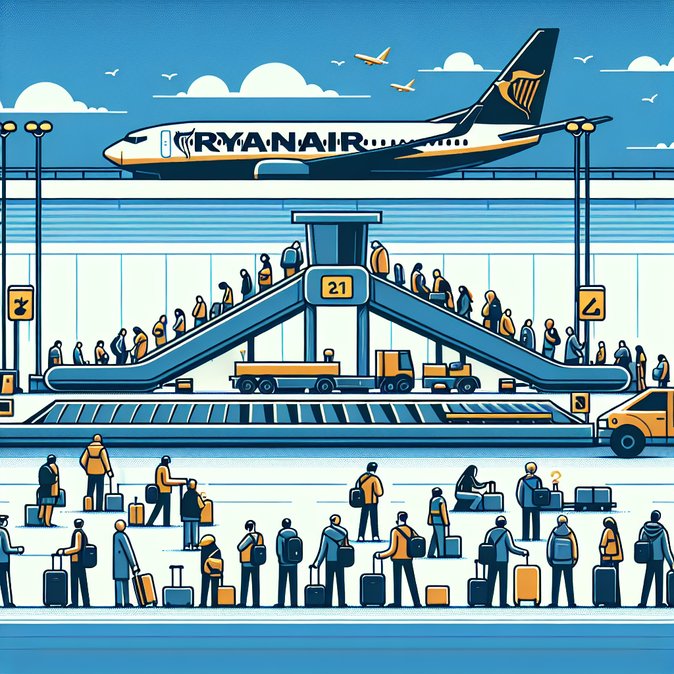
Azul Handling employees who service Ryanair aircraft continued their rolling strike on 26 December, paralysing parts of Tenerife Sur and causing knock-on queues at 11 other Ryanair bases, including Alicante, Barcelona-El Prat, Madrid-Barajas and Palma de Mallorca. The action, running every Wednesday, Friday, Saturday and Sunday until 31 December, is split into three time-blocks: 05:00–09:00, 12:00–15:00 and 21:00–00:00.
Workers are demanding pay parity with other handling agents, guaranteed minimum hours and bonuses for weekend shifts. Ryanair says it aims to operate its full schedule but concedes that baggage loading and turnaround delays are likely, especially on high-density holiday routes to the UK, Germany and mainland Spain.
Canary Islands tourism chiefs fear reputational damage as the archipelago approaches its busiest week of the year. More than 12,000 flights are scheduled across the islands between 24 December and 2 January, according to local broadcaster RTVC. Hoteliers report rising guest anxieties and have extended flexible check-in windows to cushion late arrivals.
![Nationwide Ryanair Ground-Staff Strike Hits Tenerife Sur and Other Spanish Airports]()
Should travellers suddenly need to amend or extend their Schengen permissions because of cascading delays, VisaHQ can step in quickly. The digital platform guides users through Spain’s visa requirements, offers real-time application tracking and can courier documents worldwide—vital services when flight disruptions squeeze connection windows. More information is available at https://www.visahq.com/spain/
For corporate mobility teams, the biggest risk is missed onward connections in Madrid or Barcelona, which can trigger Schengen over-stay issues if travellers hold limited-duration visas. Companies are advised to keep boarding passes and delay certificates for tax and duty-of-care records.
Spanish mediation services have invited both sides to fresh talks on 28 December, but unions insist that any deal must address staffing levels ahead of the summer 2026 schedule, when Ryanair plans to base two additional aircraft in Málaga and Seville.
Workers are demanding pay parity with other handling agents, guaranteed minimum hours and bonuses for weekend shifts. Ryanair says it aims to operate its full schedule but concedes that baggage loading and turnaround delays are likely, especially on high-density holiday routes to the UK, Germany and mainland Spain.
Canary Islands tourism chiefs fear reputational damage as the archipelago approaches its busiest week of the year. More than 12,000 flights are scheduled across the islands between 24 December and 2 January, according to local broadcaster RTVC. Hoteliers report rising guest anxieties and have extended flexible check-in windows to cushion late arrivals.

Should travellers suddenly need to amend or extend their Schengen permissions because of cascading delays, VisaHQ can step in quickly. The digital platform guides users through Spain’s visa requirements, offers real-time application tracking and can courier documents worldwide—vital services when flight disruptions squeeze connection windows. More information is available at https://www.visahq.com/spain/
For corporate mobility teams, the biggest risk is missed onward connections in Madrid or Barcelona, which can trigger Schengen over-stay issues if travellers hold limited-duration visas. Companies are advised to keep boarding passes and delay certificates for tax and duty-of-care records.
Spanish mediation services have invited both sides to fresh talks on 28 December, but unions insist that any deal must address staffing levels ahead of the summer 2026 schedule, when Ryanair plans to base two additional aircraft in Málaga and Seville.