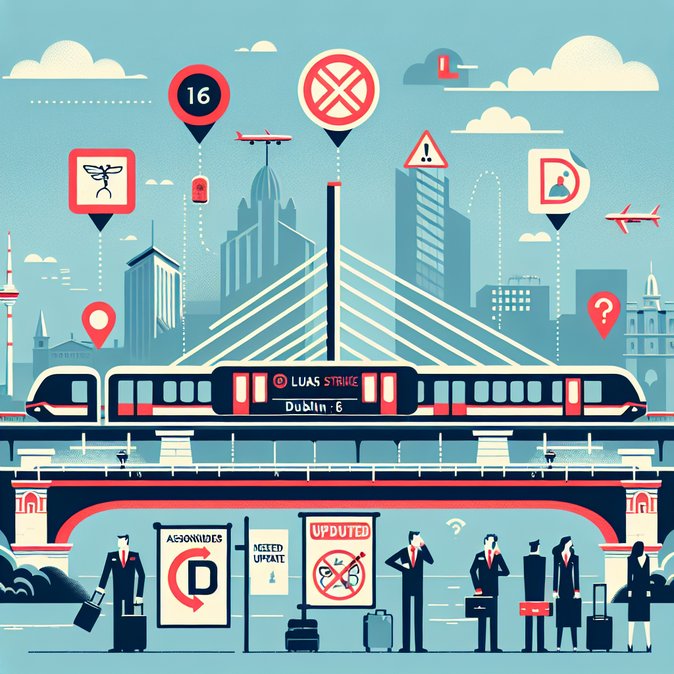
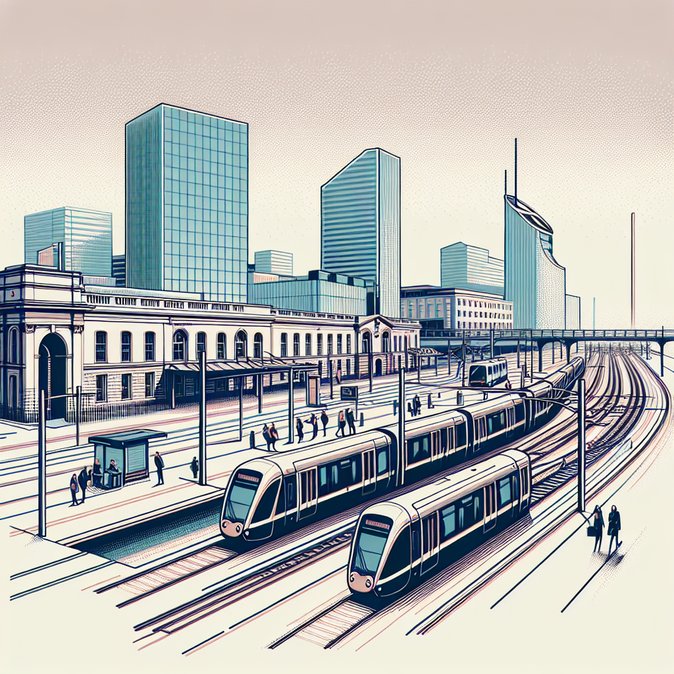
Business travellers and holidaymakers transiting through Dublin faced a morning of uncertainty on 15 December 2025 after the Luas Red Line was partially suspended and Irish Rail’s DART services were briefly halted between Pearse and Grand Canal Dock. Operators blamed an unspecified “operational issue” on the tram line and a vehicle strike on a city-centre rail bridge for the rail stoppage. Services resumed within hours, but only after knock-on delays and overcrowding at transfer points.
The disruption came just days after a system-wide Green Line shutdown caused by a safety-circuit fault, renewing questions about the resilience of Dublin’s light-rail infrastructure. Transport for Ireland (TFI) activated mutual-ticketing arrangements, allowing Luas passengers to use Dublin Bus at no extra cost, but many travellers complained of missed inter-city connections and tighter transfer windows for flights departing Dublin Airport.
![Luas and DART Disruptions Snarl Dublin Commuting Corridor on 15 December]()
Whether you are entering Ireland for a quick business meeting or a longer assignment, make sure transport hiccups aren’t compounded by paperwork surprises: VisaHQ’s Ireland portal (https://www.visahq.com/ireland/) lets travellers check visa requirements, complete online applications, and track approvals in real time. Having documents sorted in advance means that if rail links falter, you can focus on re-routing rather than rushing to embassy counters.
For corporate mobility managers, the incident underlines the importance of contingency planning for last-mile transport. Advisories issued by several relocation firms recommend that assignees build at least 45 minutes of buffer when travelling between Dublin’s city centre and the airport over the holiday peak. Companies with large commuter workforces are also re-examining flexible-working policies and emergency-ride agreements with taxi platforms.
Long-term, the National Transport Authority’s capital plan earmarks nearly €1 billion for rail-bridge renewals and signalling upgrades, but most projects will not break ground until 2027. Until then, employers and travellers should expect more ad-hoc service suspensions, particularly during winter weather events or high-traffic weekends.
The disruption came just days after a system-wide Green Line shutdown caused by a safety-circuit fault, renewing questions about the resilience of Dublin’s light-rail infrastructure. Transport for Ireland (TFI) activated mutual-ticketing arrangements, allowing Luas passengers to use Dublin Bus at no extra cost, but many travellers complained of missed inter-city connections and tighter transfer windows for flights departing Dublin Airport.
Whether you are entering Ireland for a quick business meeting or a longer assignment, make sure transport hiccups aren’t compounded by paperwork surprises: VisaHQ’s Ireland portal (https://www.visahq.com/ireland/) lets travellers check visa requirements, complete online applications, and track approvals in real time. Having documents sorted in advance means that if rail links falter, you can focus on re-routing rather than rushing to embassy counters.
For corporate mobility managers, the incident underlines the importance of contingency planning for last-mile transport. Advisories issued by several relocation firms recommend that assignees build at least 45 minutes of buffer when travelling between Dublin’s city centre and the airport over the holiday peak. Companies with large commuter workforces are also re-examining flexible-working policies and emergency-ride agreements with taxi platforms.
Long-term, the National Transport Authority’s capital plan earmarks nearly €1 billion for rail-bridge renewals and signalling upgrades, but most projects will not break ground until 2027. Until then, employers and travellers should expect more ad-hoc service suspensions, particularly during winter weather events or high-traffic weekends.