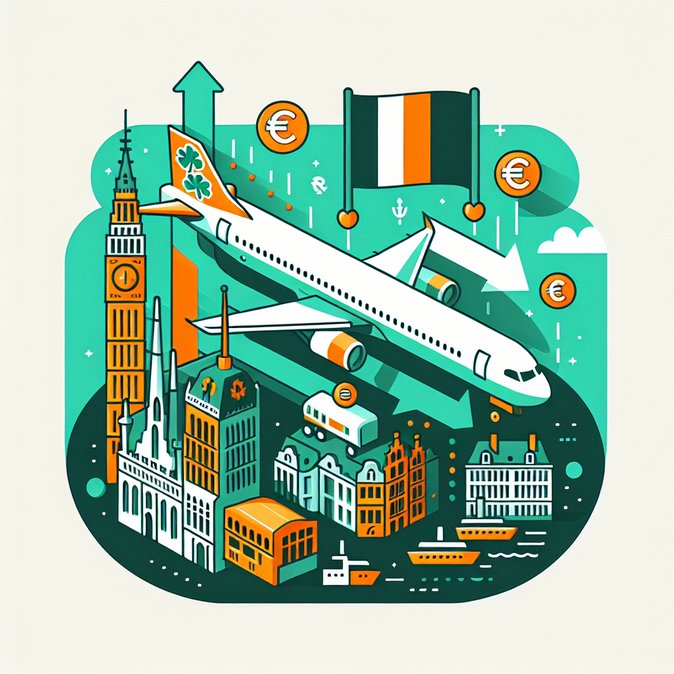
Dublin-based Ryanair has fired the opening salvo in what could become a wider European battle over green taxation. In a statement on 13 December, the carrier said it will slash 22 percent of its Brussels capacity for winter 2026-27—around one million seats—after Belgium confirmed plans to raise its national flight tax to €10 per departing passenger and Charleroi city proposed an additional €3 levy. Five aircraft will be pulled from Belgian bases and 20 routes scrapped.
Ryanair argues the combined taxes undermine price-sensitive leisure demand and divert traffic to lower-cost airports. While the cuts are aimed at Belgium, they reverberate in Ireland: Brussels ranks among Dublin Airport’s top five EU destinations, handling 600,000 passengers a year, many of them EU officials and corporate travellers. A 22 percent reduction in feeder capacity could see fares on the Dublin–Brussels route rise and force passengers onto connections via London or Amsterdam.
The move also sets a precedent for future responses to environmental levies closer to home. The Irish Government is consulting on a Sustainable Aviation Fuel (SAF) mandate and reviewing airport charges at Dublin and Cork. Industry groups warn that if Ireland pursues a similar tax route without rebates for regional airports, Ryanair and competing carriers might rethink planned expansions in Shannon, Knock and Kerry.
![Ryanair to Remove 1 Million Seats After Belgian Tax Hike—Irish Airline Warns of Wider Cuts]()
For travellers who may now face multi-stop itineraries or last-minute re-routing, keeping track of visa and transit requirements is crucial. VisaHQ’s Ireland portal (https://www.visahq.com/ireland/) lets passengers and travel managers quickly check entry rules, file online applications and receive live status alerts for Schengen, UK or other visas—streamlining compliance while airlines recalibrate their networks.
Business-travel managers should monitor airline inventory for Q4 2026 and secure corporate fares early. Expatriate staff commuting between EU institutions and Irish HQs may need to build in longer routings or use high-speed rail from Paris or Frankfurt.
Ryanair has given Belgium until April 2026 to reconsider. If levies remain, the airline says an additional three million seats could disappear across continental Europe—an early sign that fiscal environmentalism may collide head-on with network planning.
Ryanair argues the combined taxes undermine price-sensitive leisure demand and divert traffic to lower-cost airports. While the cuts are aimed at Belgium, they reverberate in Ireland: Brussels ranks among Dublin Airport’s top five EU destinations, handling 600,000 passengers a year, many of them EU officials and corporate travellers. A 22 percent reduction in feeder capacity could see fares on the Dublin–Brussels route rise and force passengers onto connections via London or Amsterdam.
The move also sets a precedent for future responses to environmental levies closer to home. The Irish Government is consulting on a Sustainable Aviation Fuel (SAF) mandate and reviewing airport charges at Dublin and Cork. Industry groups warn that if Ireland pursues a similar tax route without rebates for regional airports, Ryanair and competing carriers might rethink planned expansions in Shannon, Knock and Kerry.

For travellers who may now face multi-stop itineraries or last-minute re-routing, keeping track of visa and transit requirements is crucial. VisaHQ’s Ireland portal (https://www.visahq.com/ireland/) lets passengers and travel managers quickly check entry rules, file online applications and receive live status alerts for Schengen, UK or other visas—streamlining compliance while airlines recalibrate their networks.
Business-travel managers should monitor airline inventory for Q4 2026 and secure corporate fares early. Expatriate staff commuting between EU institutions and Irish HQs may need to build in longer routings or use high-speed rail from Paris or Frankfurt.
Ryanair has given Belgium until April 2026 to reconsider. If levies remain, the airline says an additional three million seats could disappear across continental Europe—an early sign that fiscal environmentalism may collide head-on with network planning.