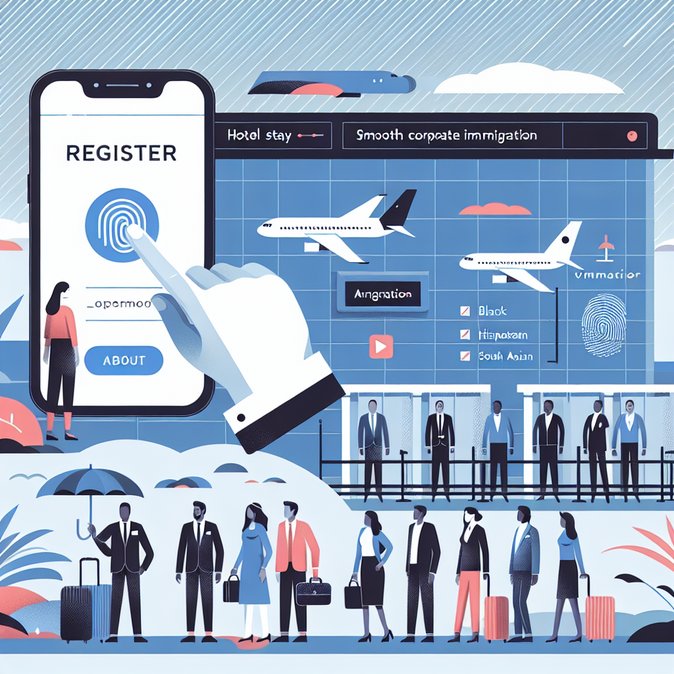
Dubai’s Department of Economy and Tourism (DET) has activated a unified, city-wide contact-less hotel check-in platform that lets visitors complete every step of registration—ID upload, biometric scan and digital signature—on their smartphones before they land. Once verified, the digital profile remains valid until the traveller’s passport or Emirates ID expires, allowing repeat guests to bypass reception and unlock their room with a quick facial scan.
The system extends the biometric fast-track already in use at Dubai International Airport’s immigration and boarding gates, creating an aircraft-door-to-pillow journey with no paper documents. DET says all 800-plus licensed hotels and holiday homes can integrate the free API, giving two- to five-star properties equal access to the technology.
![Dubai rolls out city-wide contact-less hotel check-in linked to immigration biometrics]()
For travellers who still need to arrange entry formalities, VisaHQ can make the process just as frictionless as Dubai’s new hotel system. Its online platform (https://www.visahq.com/united-arab-emirates/) guides applicants through every step of securing a UAE visa, offers document pickup and delivery in select cities, and provides real-time status tracking—so guests arrive with paperwork sorted and are free to enjoy the city’s seamless check-in experience.
For corporate mobility managers, the benefits are immediate: large project teams and MICE groups should see reception queues shrink dramatically, freeing staff for higher-value concierge tasks. Hoteliers gain real-time visibility of arrival flows and can push dynamic room-upgrade offers the moment immigration clearance is confirmed. Early adopters report first-time enrolment in under two minutes and repeat stays in less than 15 seconds.
Because the platform uses the same government-verified biometric backbone as Smart-Gates, data security is comparable with border-control standards—an important reassurance for compliance officers handling VIP or sensitive-project travel. Travel-risk consultants note, however, that guests with incomplete digital profiles will revert to traditional desk check-in, so firms should remind employees to upload clear passport scans well in advance.
The system extends the biometric fast-track already in use at Dubai International Airport’s immigration and boarding gates, creating an aircraft-door-to-pillow journey with no paper documents. DET says all 800-plus licensed hotels and holiday homes can integrate the free API, giving two- to five-star properties equal access to the technology.

For travellers who still need to arrange entry formalities, VisaHQ can make the process just as frictionless as Dubai’s new hotel system. Its online platform (https://www.visahq.com/united-arab-emirates/) guides applicants through every step of securing a UAE visa, offers document pickup and delivery in select cities, and provides real-time status tracking—so guests arrive with paperwork sorted and are free to enjoy the city’s seamless check-in experience.
For corporate mobility managers, the benefits are immediate: large project teams and MICE groups should see reception queues shrink dramatically, freeing staff for higher-value concierge tasks. Hoteliers gain real-time visibility of arrival flows and can push dynamic room-upgrade offers the moment immigration clearance is confirmed. Early adopters report first-time enrolment in under two minutes and repeat stays in less than 15 seconds.
Because the platform uses the same government-verified biometric backbone as Smart-Gates, data security is comparable with border-control standards—an important reassurance for compliance officers handling VIP or sensitive-project travel. Travel-risk consultants note, however, that guests with incomplete digital profiles will revert to traditional desk check-in, so firms should remind employees to upload clear passport scans well in advance.